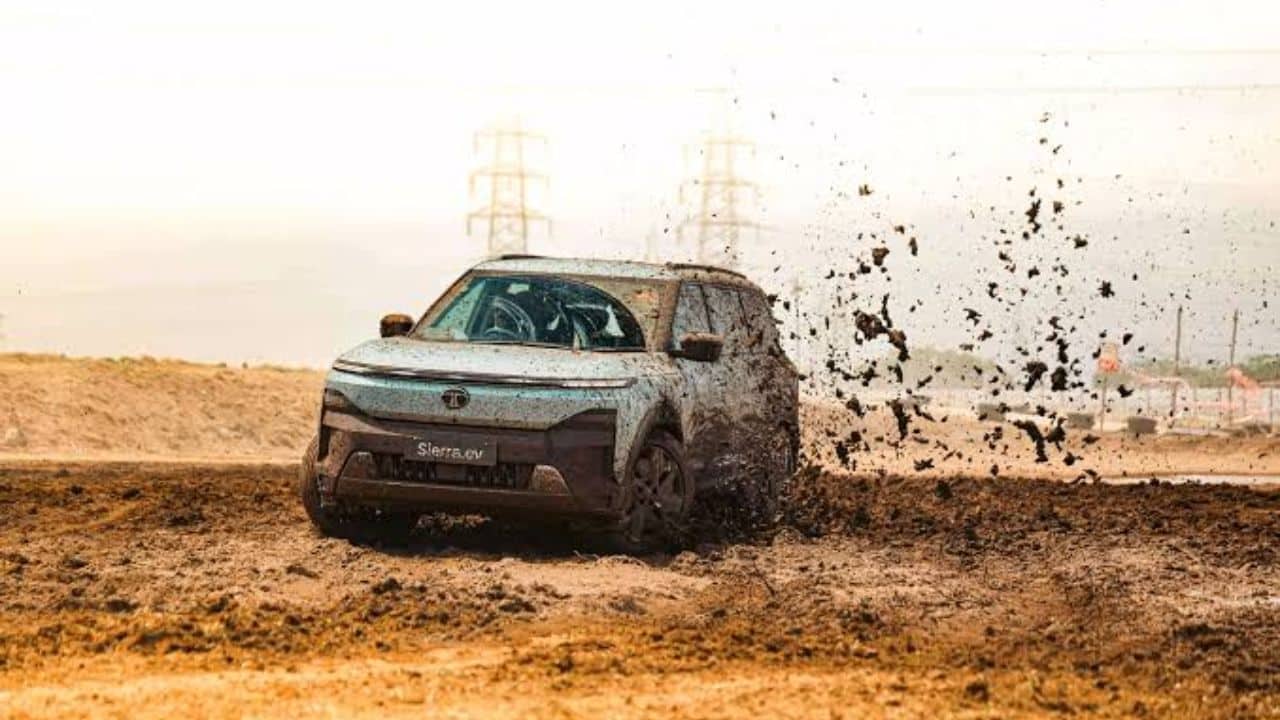

Most Sierra EV buyers narrow their decision down to trim and budget, then hit a wall on one specific question: do I actually need QWD, or am I just paying Rs 1.2 lakh extra for a badge I’ll never use? This isn’t a spec comparison, that exists elsewhere. This is a decision guide, built to get you to an actual answer based on how you drive, not how the brochure reads.
The Quick Answer
If you’re short on time: pick RWD unless you have a specific, recurring reason to need all-wheel drive, off-roading, genuinely bad unpaved roads on your regular route, or hilly terrain with loose surfaces. For everyone else, RWD gets you more range, a bigger frunk, and a meaningfully lower price for capability you were unlikely to use anyway. Read on if you want the reasoning, not just the verdict.
Why This Decision Trips People Up
The instinct with AWD, on any vehicle, is to treat it as a strict upgrade, more grip, more safety, more capability, so why wouldn’t you want it if you can afford it? On the Sierra EV specifically, that instinct leads a lot of buyers astray, because QWD isn’t a pure upgrade here. It comes with a real cost beyond the Rs 1.2 lakh price difference: your claimed range actually drops from 665 km to 624 km, and your frunk shrinks from 55 litres to 35 litres. You’re not just paying more for QWD, you’re trading away range and storage to get it.
That’s the piece most comparison charts bury in a footnote. Once you see it clearly, the decision stops being “can I afford the upgrade” and becomes “is off-road capability worth giving up range and storage for.”
🚀 Join Our Tech Community!
Get the latest news, updates, and tech trends delivered straight to your phone. Never miss an update!
Ask Yourself This One Question
Forget the spec sheet for a second. Think about the last twelve months of your actual driving. Did you regularly encounter mud, sand, loose gravel, or genuinely unpaved stretches where a standard SUV’s ground clearance and traction control weren’t enough? Not potholes, not broken city roads, those are handled fine by any Sierra EV variant with its 205 mm ground clearance and standard ESC. We’re talking about actual low-traction terrain: monsoon-flooded rural roads, hill stations with loose gravel switchbacks, or weekend off-roading as a genuine hobby.
If you nodded yes, QWD is doing real work for you and the trade-offs are worth accepting. If you had to think hard to come up with an example, or the honest answer is “not really, but it’d be nice to have,” that’s a strong signal you’re buying peace of mind rather than a genuine capability requirement, and RWD will serve you just as well for meaningfully less money.
What RWD Gives You That QWD Doesn’t
It’s worth stating this plainly because QWD tends to dominate the conversation: RWD isn’t the compromised option here, it’s arguably the smarter default for most Indian buyers. You get the full 665 km claimed range on the 75 kWh pack, a larger 55-litre frunk, access to the smaller and cheaper 63 kWh battery if you want to save further, and a starting price nearly Rs 5-7 lakh lower than the QWD flagship depending on which RWD trim you pick. Every RWD variant also carries the same core safety suite as QWD, six airbags, Level 2 ADAS, ESC, all-wheel disc brakes, so you’re not sacrificing everyday safety by skipping the second motor.
What QWD Gives You That’s Genuinely Hard to Replicate
To be fair to QWD, its advantages aren’t marketing fluff. The 504 Nm combined torque and six terrain response modes, Normal, Grass/Snow, Mud-ruts/Gravel, Sand, Rock Crawl, and Custom, are real engineering, not badge decoration. Tata’s dune-climb demonstration in the UAE was performed specifically on the QWD version because the RWD variant genuinely couldn’t have pulled it off. If your driving regularly puts you in conditions closer to that demonstration than to a daily city commute, no amount of ground clearance or ESC on the RWD variant substitutes for a second motor actually driving the front wheels.
QWD also happens to be quicker, a claimed 5.8 seconds to 100 kmph, which some buyers will want purely for the driving experience rather than any off-road need. That’s a legitimate reason to choose it too, just a different one from “I need AWD,” and worth being honest with yourself about which reason is actually yours.
The Budget Reality Check
Here’s a practical way to think about the Rs 1.2 lakh gap between the RWD and QWD versions of the Empowered A trim: that’s roughly enough to cover the optional 7.2 kW home charger (Rs 49,000) with a meaningful amount left over, or it’s close to the entire price difference between the Adventure and Empowered trims elsewhere in the lineup. Put another way, choosing QWD “just in case” is money that could otherwise buy you a full trim upgrade or a home charging setup with change to spare. That’s not an argument against QWD if you need it, but it’s a useful frame for deciding whether you genuinely do.
A Middle Path Worth Knowing About
If you’re drawn to the Empowered A trim’s complete feature list but you’re on the fence specifically about the drivetrain, remember that Tata sells the Empowered A in RWD form too, at Rs 24.79 lakh, a full Rs 1.2 lakh below the QWD version. This means you don’t have to trade down to a lesser trim just to skip QWD. You can have the top feature set and the better range and frunk space, and simply decide against the second motor if your driving doesn’t call for it. A lot of buyers don’t realise this option exists and assume Empowered A automatically means AWD.
Two Scenarios, Two Different Right Answers
Scenario one: You live in a metro city, commute daily on paved roads, and take the occasional highway trip to a nearby city for weekends. RWD is the clear answer here. The 75 kWh RWD Adventure or Empowered gets you strong range, a lower price, and there’s simply nothing in this driving pattern that QWD would meaningfully improve.
Scenario two: You live somewhere with genuinely rough terrain, regularly drive through monsoon-affected unpaved stretches, or head to hill stations or rural family property a few times a year over roads a standard SUV struggles with. QWD earns its price here. The range trade-off is real, but it’s a fair exchange for capability you’ll actually use, not capability you’re hoping to need someday.
Most buyers fall closer to scenario one than they initially think, which is worth sitting with honestly before booking the pricier variant.
Frequently Asked Questions
Should I pick RWD or QWD if I mostly drive in the city?
RWD. City driving, even on rough or pothole-heavy roads, doesn’t require the low-traction capability QWD is built for, and RWD gives you better range and a lower price for that use case.
Is QWD worth it just for the extra safety?
Not particularly on regular paved roads. Electronic Stability Control, ABS and all-wheel disc brakes are standard across every Sierra EV variant, RWD included, and handle everyday wet-road safety. QWD’s advantage is specifically in off-road, low-traction conditions, not routine monsoon driving on tarmac.
Can I get the top Empowered A features without QWD?
Yes. The Empowered A trim is available in RWD form at Rs 24.79 lakh, a full Rs 1.2 lakh below the QWD version, with the same feature list.
Does choosing QWD reduce the Tata Sierra EV’s range?
Yes, the QWD Empowered A claims 624 km against the RWD 75 kWh Empowered A’s 665 km, a 41 km reduction due to the added weight and drag of the second motor.