
Battery capacity and charging speed are usually the first two things a buyer checks before shortlisting an EV, and rightly so, since they decide how the car actually fits into daily life rather than how it looks in a brochure. The Tata Sierra EV, launched at Rs 18.79 lakh (ex-showroom), is offered with two distinct battery packs and three drivetrain configurations, and the differences between them matter more than they might first appear. This guide breaks down exactly what each battery option delivers, how fast it charges, what range you can realistically expect, and how Tata’s battery warranty stacks up.
Tata Sierra EV Battery Options
The Sierra EV shares its underlying Acti.ev+ platform, and specifically its larger battery pack and motors, with the Tata Harrier EV. Buyers get a choice of two battery packs: a 63 kWh unit and a 75 kWh unit, with the 75 kWh pack further split into a single-motor rear-wheel-drive version and a dual-motor all-wheel-drive version.
| Battery Pack | 63 kWh | 75 kWh (1 motor) | 75 kWh (2 motors) |
|---|---|---|---|
| Drivetrain | RWD | RWD | AWD |
| Power output | 238 PS | 209 PS | 209 PS rear + 140 PS front |
| Torque | 315 Nm | 315 Nm | 504 Nm combined |
| Claimed range (MIDC) | 565 km | 665 km | 624 km |
| DC fast charging (20-80%) | 25 minutes | 26 minutes | 26 minutes |
A detail worth flagging clearly here, because it trips up a lot of buyers comparing spec sheets: the smaller 63 kWh battery actually produces more power (238 PS) than the single-motor 75 kWh version (209 PS). Bigger battery does not automatically mean a punchier motor in this lineup, so if outright acceleration in daily driving matters more to you than outright range, don’t assume the 75 kWh pack is the faster car unless you’re specifically buying the AWD dual-motor version.
The 63 kWh pack is only offered with rear-wheel drive, and it’s exclusive to the lower Pure, Pure S, Adventure and Empowered trims. The 75 kWh pack is available on Adventure, Empowered and Empowered A, and only the Empowered A trim unlocks the dual-motor AWD configuration. In other words, if all-wheel drive is a must-have for you, the 75 kWh battery and the top trim are the only route in, there’s no way to get AWD with the smaller pack.
🚀 Join Our Tech Community!
Get the latest news, updates, and tech trends delivered straight to your phone. Never miss an update!
MIDC Range vs Real-World Range
Tata’s headline claim of 665 km comes from the MIDC (Modified Indian Driving Cycle) test, which is India’s standardised method for measuring EV range under controlled conditions. It’s worth understanding what that number actually represents before treating it as a promise.
MIDC testing is generally considered more representative of Indian driving conditions than the older ARAI cycle used for combustion vehicles, since it factors in stop-start city driving patterns more heavily. Even so, it’s still a lab test, run without the load of a full cabin, without air conditioning running continuously, and typically at moderate speeds that don’t reflect real highway cruising or bumper-to-bumper traffic with the AC blasting through an Indian summer.
For the Sierra EV specifically, expect real-world range to land meaningfully below the claimed 665 km figure, particularly in city driving with the AC on and in stop-start traffic where regenerative braking helps but can’t fully offset constant acceleration. Based on how comparable Tata EVs on the same Acti.ev+ platform have performed in owner hands, a realistic expectation for the 75 kWh pack is somewhere in the broad range of city driving efficiency, though we’d recommend treating any specific number cautiously until genuine owner-reported data accumulates after the July 15 delivery start. Highway range at consistent higher speeds also tends to be somewhat lower than city range on most EVs, since aerodynamic drag increases sharply at speed, the opposite pattern from how petrol or diesel mileage typically behaves.
The AWD variant’s claimed range of 624 km, lower than the RWD 75 kWh’s 665 km despite using the same battery pack, is a useful illustration of this principle in Tata’s own numbers: the extra front motor and all-wheel-drive hardware add weight and mechanical drag, which costs range even before real-world conditions are factored in.
Charging Speed and Options
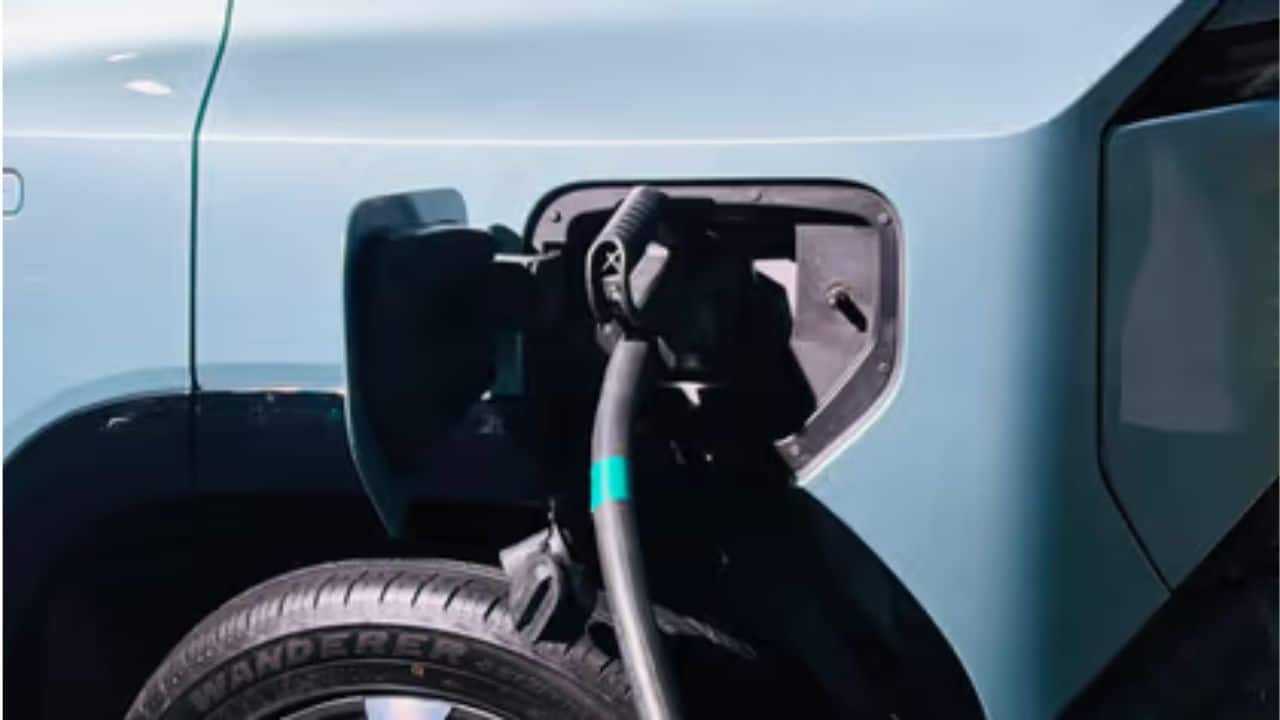
The Sierra EV supports three charging methods, and knowing which one to use in which situation makes a real difference to both convenience and long-term battery health.
DC fast charging: The Sierra EV supports up to 120 kW DC fast charging, which takes the battery from 20 to 80 percent in approximately 25 minutes on the 63 kWh pack and 26 minutes on the 75 kWh pack. This is the option to use on highway trips or when you need a quick top-up between errands, since it’s by far the fastest way to add range. It’s not intended for daily use, though, since frequent DC fast charging generates more heat in the battery cells and can accelerate long-term degradation compared to slower AC charging.
Home AC charging: An optional 7.2 kW AC charger is available for Rs 49,000, sold separately from the vehicle itself and worth budgeting for upfront since it’s not bundled into the ex-showroom price. This is the charging method most owners will actually use day to day, plugging in overnight and waking up to a full battery. At 7.2 kW, a full charge from empty on the 75 kWh pack would take roughly 10-11 hours, which comfortably fits an overnight charging window for most households.
Portable charging: A 3.3 kW portable charger option is also available, designed for situations where a dedicated home charging point isn’t installed, such as charging from a standard higher-capacity wall socket. This is meaningfully slower than the 7.2 kW home charger and is best treated as a backup or travel option rather than a primary daily charging method.
A Practical Charging Routine for Indian Owners
For most Indian buyers, the sensible approach is to rely on slow AC charging at home for the bulk of daily top-ups, reserving DC fast charging for genuine long-distance trips or days when you’re in a real hurry. Charging to 100 percent every single night isn’t necessary and, per general EV battery care guidance, isn’t ideal for long-term cell health either. Keeping the daily charge target somewhere around 80 percent, and only charging to 100 percent when you know you need the extra range for a specific trip, is a habit worth building from day one of ownership.
Charging Infrastructure Availability
Tata Motors operates one of the more extensive EV charging networks among Indian manufacturers, and Sierra EV buyers get access to this as part of the ownership package. Tata’s own network spans a large number of charging stations across the country, with 24×7 emergency charging support currently available in five cities. This matters more than it might seem on paper, since charging infrastructure outside major metros remains genuinely patchy in India, and having a manufacturer-backed support line for emergencies is a real practical advantage over buying an EV from a brand with a thinner charging network.
That said, public DC fast charging availability still varies significantly by region. Buyers in metro cities and along major highways connecting them will find charging considerably easier than buyers in smaller towns or more remote areas, where home charging becomes less of a convenience and more of a necessity. If you’re considering the Sierra EV specifically for regular long-distance highway travel rather than predominantly city use, it’s worth mapping out charging stations along your typical routes before committing, rather than assuming coverage will match what you’re used to with petrol pumps.
Battery Warranty
Tata backs both the 63 kWh and 75 kWh battery packs with a lifetime warranty, which Tata defines specifically as a period of 15 years from the date of the vehicle’s first registration with the local RTO, in line with the Motor Vehicles Act, 1988. This is a genuinely strong warranty term in the current Indian EV market and directly addresses one of the biggest hesitations prospective EV buyers still have: the fear of an expensive battery replacement bill years down the line.
It’s worth noting that manufacturer battery warranties typically come with conditions around minimum guaranteed capacity retention over that period, rather than promising the battery will perform identically to day one for the full 15 years. Buyers should check the exact warranty document at the time of purchase for the specific capacity retention percentage guaranteed, since this detail affects what “lifetime” actually means in practical terms if a capacity dispute ever arises.
Battery Care Tips for Sierra EV Owners
A few habits genuinely extend real-world battery health on any EV, and they apply directly to the Sierra EV given its lithium-ion chemistry and liquid-cooled pack:
- Avoid leaving the vehicle parked at 100 percent charge for extended periods, particularly in direct sun during Indian summers, since heat combined with a full state of charge is one of the faster paths to accelerated degradation.
- Use DC fast charging when you need it, but don’t make it your default daily charging method if a home AC charger is available; reserve fast charging for road trips and genuine time-pressure situations.
- Keep the charge level between roughly 20 and 80 percent for routine daily use, and only charge to 100 percent when you specifically need the extra range for an upcoming trip.
- Avoid routinely running the battery down to very low levels before charging; occasional deep discharges are fine, but making it a habit adds unnecessary stress to the cells.
None of this is Sierra EV-specific advice exactly, it applies broadly to lithium-ion EV batteries, but it’s worth restating here since following it properly is the single biggest factor an owner actually controls in determining how much of that 15-year warranty period the battery performs close to its original capacity.
Frequently Asked Questions
How many battery options does the Tata Sierra EV have?
The Sierra EV offers two battery packs: a 63 kWh unit with a claimed MIDC range of 565 km, and a 75 kWh unit offered in both single-motor RWD (665 km claimed) and dual-motor AWD (624 km claimed) configurations.
How long does the Tata Sierra EV take to fast charge?
On a 120 kW DC fast charger, the Sierra EV charges from 20 to 80 percent in approximately 25 minutes on the 63 kWh pack and 26 minutes on the 75 kWh pack.
Does the Tata Sierra EV come with a home charger included?
No. The 7.2 kW AC home charger is an optional purchase costing Rs 49,000, separate from the vehicle’s ex-showroom price.
What is the Tata Sierra EV’s battery warranty?
Tata offers a lifetime battery warranty on both battery packs, defined as 15 years from the vehicle’s first registration date.
Is the real-world range of the Tata Sierra EV lower than the claimed MIDC figure?
Yes, as with virtually all EVs, real-world range in city traffic with air conditioning running will typically come in below the MIDC-claimed figure. Genuine owner-reported range data will become available after deliveries begin in mid-July 2026.