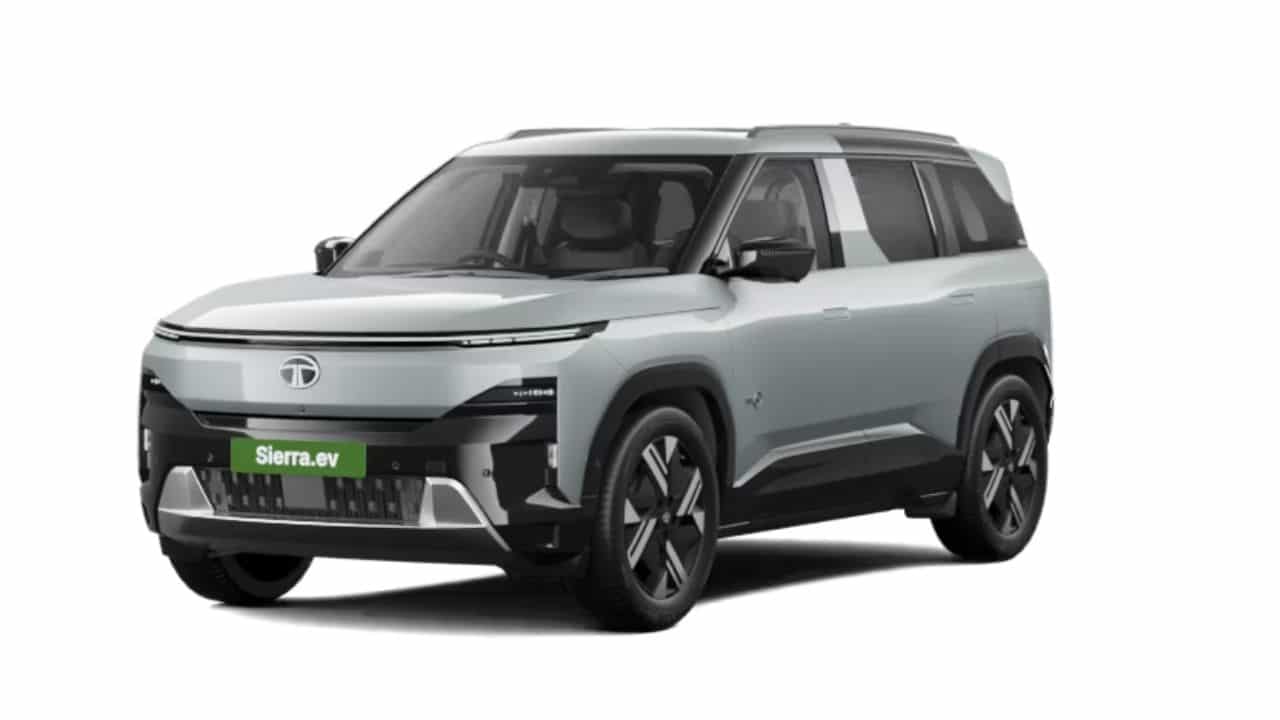

Tata Motors has launched the Sierra EV at Rs 18.79 lakh (ex-showroom), bringing an electric powertrain to a nameplate that Indian buyers have waited years to see back on the road. Built on the same Acti.ev+ platform as the Harrier EV, the Sierra EV borrows its bigger battery pack and electric motors from that car while keeping the retro-inspired styling of the ICE Sierra largely intact. Bookings are open and deliveries begin July 15, 2026.
This covers every price and specification detail an Indian buyer would actually need before signing on the dotted line: on-road costs, real usable range across both battery options, how the AWD version performs, what’s different between the five variants, and how it stacks up against the Hyundai Creta Electric, Mahindra BE 6, and the rest of the compact electric SUV segment.
Tata Sierra EV Price in India (July 2026)
The Sierra EV is sold in five variants, each pairing a specific battery pack and drivetrain combination. Not every variant gets every battery, so the table below is worth reading carefully before you pick a trim.
| Variant | 63 kWh RWD | 75 kWh RWD | 75 kWh AWD |
|---|---|---|---|
| Pure | Rs 18.79 lakh | — | — |
| Pure S | Rs 19.99 lakh | — | — |
| Adventure | Rs 20.99 lakh | Rs 22.19 lakh | — |
| Empowered | Rs 22.79 lakh | Rs 23.79 lakh | — |
| Empowered A | — | Rs 24.79 lakh | Rs 25.99 lakh |
All prices are ex-showroom and exclude the charger. A 7.2 kW AC home charger is a separate purchase at Rs 49,000, which is worth factoring into your budget since it’s not bundled in.
🚀 Join Our Tech Community!
Get the latest news, updates, and tech trends delivered straight to your phone. Never miss an update!
On-road pricing runs meaningfully higher once RTO registration, road tax and insurance are added, and this varies a fair bit by state. As a reference point, the range-topping Empowered A AWD variant works out to roughly Rs 27.42 lakh on-road in Mumbai. If you’re comparing cities, it’s worth checking the exact on-road figure for your RTO before booking, since EV road tax exemptions differ from state to state and can move the final number by a lakh or more either way.
Which Variant Should You Buy?
The Pure and Pure S trims exist mainly to hit an attractive starting price and get first-time EV buyers into the segment. If you actually want the Sierra EV’s usable real-world range, the 63 kWh Adventure at Rs 20.99 lakh is the realistic starting point for most buyers, since it adds a meaningfully longer feature list over the base Pure without a huge price jump. Buyers chasing outright range should look at the 75 kWh RWD Adventure or Empowered, both of which carry Tata’s 665 km MIDC-claimed figure. The AWD-only Empowered A makes sense if you specifically want the dual-motor setup for off-road capability or the sharper 5.8-second 0-100 kmph time, not if range is your priority, since the AWD’s claimed range actually drops to 624 km compared to the RWD 75 kWh’s 665 km.
Battery Pack, Range & Charging
The Sierra EV comes with two battery pack options and three powertrain configurations.
| Battery Pack | 63 kWh | 75 kWh (single motor) | 75 kWh (dual motor) |
|---|---|---|---|
| Electric motors | 1 | 1 | 2 |
| Claimed range (MIDC) | 565 km | 665 km | 624 km |
| Power | 238 PS | 209 PS | 209 PS rear + 140 PS front |
| Torque | 315 Nm | 315 Nm | 504 Nm |
| 0-100 kmph | Not specified | Not specified | 5.8 seconds |
| DC fast charging (20-80%) | 25 minutes | 26 minutes | 26 minutes |
| Drivetrain | RWD | RWD | AWD |
A few things stand out here. The 63 kWh battery actually makes more power (238 PS) than the base single-motor 75 kWh unit (209 PS), which is a slightly unusual spec to see on paper, so don’t assume the bigger battery automatically means the quicker car in single-motor guise. The AWD version is where Tata unlocks real performance, with 504 Nm of combined torque getting the Sierra EV to 100 kmph in a claimed 5.8 seconds, quick enough to worry hot hatches, not just rival SUVs.
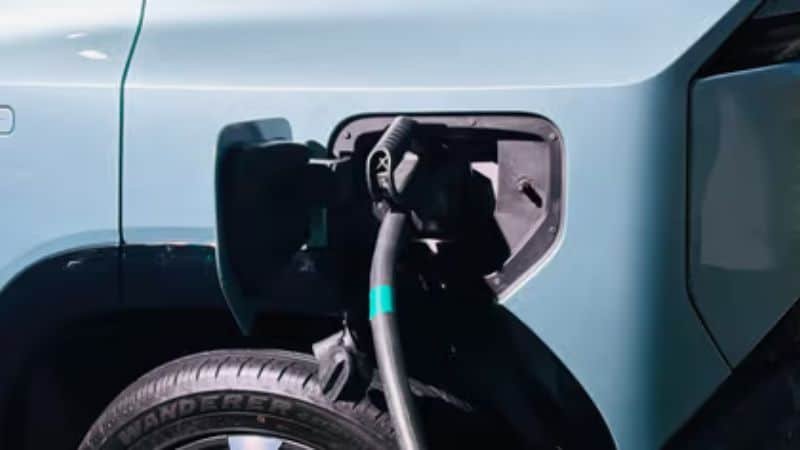
On charging, the Sierra EV supports 120 kW DC fast charging, taking the battery from 20 to 80 percent in around 25-26 minutes depending on the pack. For home charging, the optional 7.2 kW AC charger will fully replenish the battery overnight, and there’s also a 3.3 kW portable charger option for those relying on a standard wall socket in a pinch. Tata backs both battery packs with a lifetime warranty, defined as 15 years from the date of first registration, which is a genuinely reassuring number for anyone worried about battery degradation costs down the line.
As with any manufacturer-claimed range figure, treat 665 km MIDC as a lab number rather than a promise. MIDC testing (Modified Indian Driving Cycle) is closer to real conditions than the older ARAI cycle, but real-world range in Indian city traffic, with the AC running through summer, will still come in lower, likely in the 450-550 km range for the 75 kWh pack based on how similar Tata EVs have performed in owner hands. This is still comfortably enough for a week of city commuting on a single charge for most Indian buyers.
Performance & Driving Experience
The Sierra EV’s dual-motor AWD variant is the one to pay attention to if outright performance matters to you. With 504 Nm on tap and a Boost mode for extra shove during overtakes, it’s genuinely quick off the line for an SUV this size. The single-motor RWD versions are more relaxed, tuned for smooth, near-silent everyday driving rather than outright pace, which suits the Sierra’s laid-back, retro character better than a sportier tune would.
Off-road capability is where the AWD variant separates itself further. It gets six terrain response modes: Normal, Grass/Snow, Mud-ruts/Gravel, Sand, Rock Crawl, and Custom. Tata even used the Sierra EV to set a record climbing the Tal Moreeb sand dune in the UAE ahead of launch, which, marketing stunt or not, does suggest the AWD system has genuine low-traction capability rather than just a badge.
Ground clearance stands at 205 mm, which should handle most speed breakers and moderately broken city roads without scraping, though it’s not dramatically higher than what you’d get on a well-set-up petrol SUV in this segment.
Design & Dimensions
The Sierra EV is 4,340 mm long, 1,841 mm wide, and 1,715 mm tall, with a 2,730 mm wheelbase. That’s a genuinely large footprint for what’s being positioned as a compact-to-midsize electric SUV, and the long wheelbase should translate into decent rear legroom, though we’d recommend sitting in one at a dealership if rear-seat space is a priority for your family.
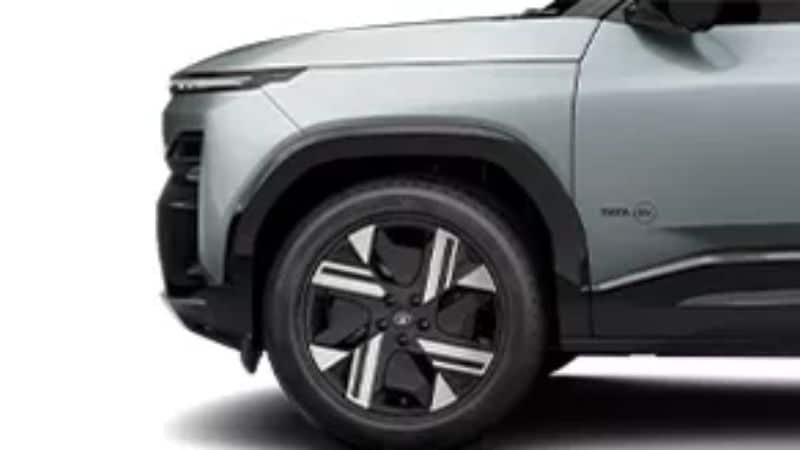
Visually, the EV sticks close to the ICE Sierra’s boxy, upright silhouette and retro-inspired Alpine window styling, a deliberate callback to the original 1992 Sierra. The key differences: a closed-off, body-coloured front panel replaces the ICE version’s glossy black grille (since there’s no engine to feed air to), the LED headlamps sit lower on the bumper, and a full-width LED light bar runs across both the front and rear. It rides on 19-inch dual-tone alloy wheels, gets flush-fitting door handles, black roof rails, and thick black wheel-arch cladding.
Seven colour options are available: Nainital Nocturne (borrowed from the Harrier EV, AWD-only), Rishikesh Rapids (new to the Sierra EV), Bengal Rouge, Andaman Adventure, Pristine White, Coorg Cloud, and Pure Grey.
Boot Space & Frunk
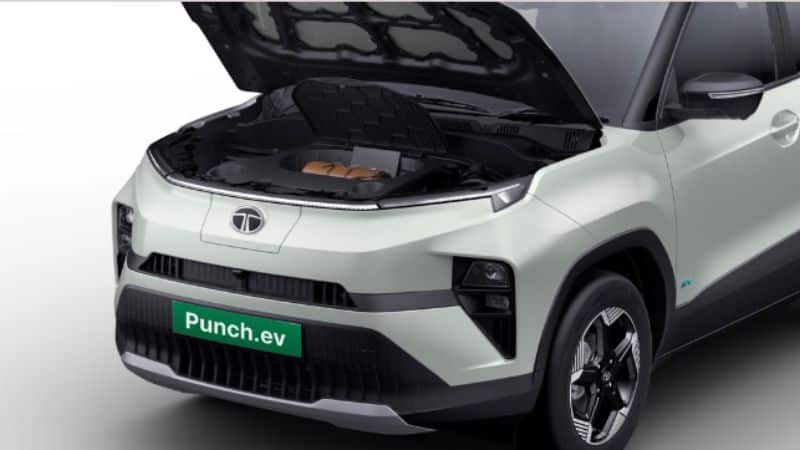
Practicality is a strong point here. The Sierra EV offers 622 litres of boot space with all seats up, genuinely useful for a family that road-trips regularly. On top of that, there’s a front trunk (frunk) since there’s no engine occupying that space: 55 litres on the RWD variants, reduced to 35 litres on the AWD version because the front motor eats into that space. The frunk is handy for stashing charging cables separately from luggage, keeping the main boot clean.
Interior & Features
The cabin layout mirrors the ICE Sierra closely, carrying over the four-spoke steering wheel, AC vents, door armrests and centre console, with a dual-tone upholstery scheme that gives the EV a slightly more premium feel than its petrol sibling. A three-screen setup dominates the dashboard: a 12.3-inch touchscreen infotainment display, a 12.3-inch co-passenger entertainment screen, and a 10.25-inch digital driver’s display.
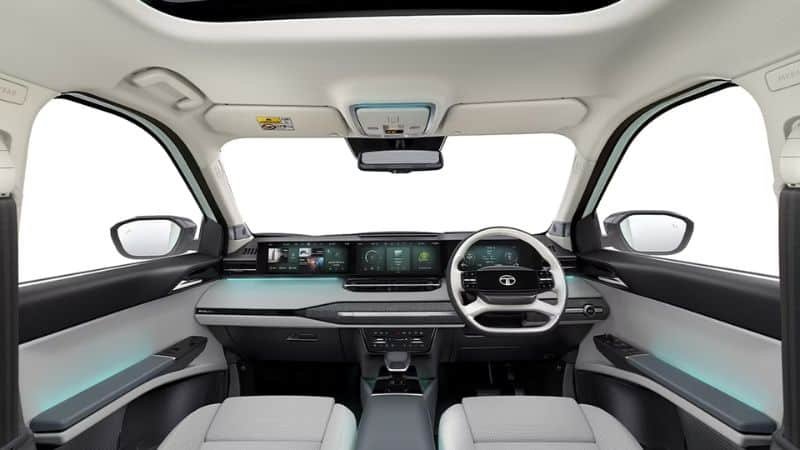
Comfort features are generous for the segment. Both front seats are ventilated and get 6-way power adjustment, with a memory function on the driver’s side. The front passenger seat gets a Boss mode, letting the driver adjust it remotely, useful when you’re chauffeuring someone in the back. Rear passengers get their own AC vents, USB Type-C charging ports, manual sunshades, and a centre armrest.
Other notable features include a panoramic sunroof (Tata calls it the segment’s largest), a head-up display, a wireless phone charger, an NFC card key, an air purifier, gesture-controlled powered tailgate, and a 12-speaker JBL sound system. One small gripe worth flagging honestly: the touch-sensitive climate control panel is finished in gloss black, which looks good in photos but shows fingerprints and smudges quickly and isn’t as intuitive to operate on the move as physical buttons.
EV-specific features include Vehicle-to-Load (V2L) and Vehicle-to-Vehicle (V2V) charging, letting the Sierra EV power external devices or even top up another EV. It also gets Summon Mode and auto-park assist, both carried over from the Harrier EV, plus an in-car payment feature called DrivePay for tolls and parking.
Safety Features
Safety kit on the Sierra EV includes Level 2 ADAS, a 540-degree camera system with a transparent-view mode that effectively shows what’s under the bonnet area for tight manoeuvring, six airbags, electronic stability control, an electronic parking brake with auto-hold, tyre pressure monitoring, ISOFIX child seat anchors, all-wheel disc brakes, and front and rear parking sensors. A formal crash-test rating from Bharat NCAP or Global NCAP hadn’t been published at the time of writing, though Tata’s own internal dual-truck crash testing has been cited by the company as giving it confidence in a strong result.
Tata Sierra EV vs Rivals
The compact-to-midsize electric SUV space in India has gotten genuinely competitive, and the Sierra EV enters a segment with some strong existing options.
| Model | Starting Price (ex-showroom) | Claimed Range |
|---|---|---|
| Tata Sierra EV | Rs 18.79 lakh | Up to 665 km |
| Hyundai Creta Electric | Rs 18.03 lakh | 473 km |
| Mahindra BE 6 | Rs 18.90 lakh | Up to 682 km |
| Maruti e Vitara | Check current pricing | Varies by variant |
| MG Windsor EV | Rs 14.10 lakh | Check current range |
| Tata Curvv EV | Check current pricing | Varies by variant |
Against the Creta Electric, the Sierra EV’s bigger claimed range and AWD option are the clear differentiators, though the Creta carries stronger brand trust and a more established service network for buyers who prioritise that over outright numbers. Against the Mahindra BE 6, it’s a closer fight: both offer genuinely long range and strong on-paper performance, and the choice there is likely to come down to styling preference and dealership experience more than any single spec. The Tata Curvv EV, also from Tata’s own stable, undercuts the Sierra EV meaningfully on price with a similar EV platform underneath, so buyers on a tighter budget who don’t need the Sierra’s boxier stance or AWD option should cross-shop that too before deciding.
Pros and Cons
What works in the Sierra EV’s favour: genuinely class-leading claimed range on the 75 kWh pack, a spacious 622-litre boot plus a usable frunk, a lifetime battery warranty that removes a major ownership worry, and an AWD option with real off-road-capable terrain modes that most rivals in this price band don’t offer at all. The retro Sierra styling also gives it a road presence that’s harder to find in this segment, where most electric SUVs still look fairly generic.
On the other side, the touch-only climate control panel is a genuine everyday annoyance, the AWD variant is only available on the top Empowered A trim so you can’t get all-wheel drive without also paying for the fully loaded feature set, and real-world range will need to be verified by owners once deliveries begin, since MIDC-claimed figures on any EV should be treated as a ceiling, not an expectation.
Should You Buy the Tata Sierra EV?
Buy the Sierra EV if you want one of the longest-range electric SUVs currently sold in India, need genuine boot and frunk practicality for a family that travels, and are drawn to styling that stands out from the sea of similarly-shaped electric SUVs on Indian roads today. The 75 kWh RWD Adventure or Empowered variants make the most sense for buyers prioritising range and value together.
Skip it, or at least wait a few months, if you specifically want AWD without paying for the fully loaded Empowered A trim, or if you’d rather see independent Bharat NCAP crash-test results and real owner-reported range figures before committing over Rs 20 lakh to a freshly launched model. Early software performance on new EV platforms can be inconsistent in the first few months after launch, so buyers who aren’t in a hurry may be better served waiting for the first wave of ownership reviews to settle any doubts.
Frequently Asked Questions
What is the Tata Sierra EV price in India?
The Tata Sierra EV price starts at Rs 18.79 lakh (ex-showroom) for the base Pure variant and goes up to Rs 25.99 lakh (ex-showroom) for the top-spec Empowered A AWD variant.
What is the real-world range of the Tata Sierra EV?
Tata claims up to 665 km on the MIDC cycle for the 75 kWh RWD version. Real-world range in Indian city traffic with AC running will typically be lower than the claimed figure; owner-reported numbers will give a clearer picture once deliveries begin in mid-July 2026.
Does the Tata Sierra EV come with all-wheel drive?
Yes, but only on the top Empowered A variant paired with the 75 kWh battery. This AWD version uses a dual-motor setup producing 504 Nm of combined torque and a claimed 0-100 kmph time of 5.8 seconds.
How long does the Tata Sierra EV take to charge?
On a 120 kW DC fast charger, the battery goes from 20 to 80 percent in approximately 25-26 minutes depending on the battery pack. Home AC charging using the optional 7.2 kW charger will take considerably longer, suited to overnight charging.
What is the boot space of the Tata Sierra EV?
The Sierra EV offers 622 litres of boot space with all seats up, plus an additional frunk of 55 litres on RWD variants and 35 litres on the AWD variant.