

Open the spec sheet of any electric vehicle sold in India and you’ll run into a wall of terms: kWh, BMS, kW charging, AC versus DC, regenerative braking. None of it is complicated once you separate the three systems doing the actual work: the battery that stores energy, the motor that turns it into motion, and the charging system that puts energy back in. This walks through each one in plain language, with enough technical grounding that you can actually read a spec sheet and know what you’re looking at.
The Battery Pack: Where the Energy Lives
An EV’s battery pack is built from many individual cells grouped into modules, then packaged together into the pack you see quoted on a spec sheet. It stores energy chemically and releases it as direct current (DC) electricity to power the motor.
Battery Capacity (kWh)
Capacity is measured in kilowatt-hours (kWh) and represents the total energy the pack can hold. A larger kWh figure generally means more range, but it also means more weight and a higher price, since the battery is typically the single most expensive component in an EV. This is why manufacturers often offer the same model with two or three battery size options, letting buyers trade range against upfront cost.
The Battery Management System (BMS)
Every EV battery pack runs a Battery Management System in the background. The BMS continuously monitors cell temperature, voltage, and overall health, and it’s what keeps individual cells balanced and operating safely within their limits. Think of it as the battery’s nervous system: it’s the reason a pack doesn’t overheat or overcharge even under hard, repeated fast charging.
🚀 Join Our Tech Community!
Get the latest news, updates, and tech trends delivered straight to your phone. Never miss an update!
Battery Cooling
Because batteries perform best and last longest within a specific temperature range, cooling matters, especially in India’s climate. Passive, air-based cooling is simpler and cheaper but less consistent. Liquid cooling actively circulates coolant through the pack and generally holds temperature more consistently under hard use or on a hot afternoon in direct sun, which matters more here than in cooler markets.
Battery Degradation: What It Actually Means
Battery degradation is the gradual, natural loss of a battery’s maximum usable capacity over time and use. It isn’t a fault. Every lithium-ion battery degrades to some extent, the same way a phone battery holds less charge after two years than it did on day one.
A few habits meaningfully affect how fast this happens:
- Frequent fast charging generates more heat than slow AC charging and accelerates wear if done constantly
- Regularly charging to 100 percent and letting the battery sit there under heat adds stress
- Long periods parked at very low charge is also hard on the cells
- Prolonged exposure to extreme heat, parked in direct sun through an Indian summer, for instance, speeds up degradation regardless of charging habits
The practical takeaway: for daily use, charge to somewhere around 80 percent rather than always topping up to full, save 100 percent charges for days you actually need the extra range, and lean on slow overnight AC charging as your default rather than routinely using DC fast chargers.
Battery Warranty: The Number That Matters Most
Because the battery is both the most expensive part of an EV and the part most likely to degrade over time, its warranty deserves more attention than almost any other spec. Manufacturers typically cover the battery separately from the rest of the vehicle, often for a longer period, and the warranty usually guarantees a minimum capacity retention (for example, a stated percentage of original capacity) by the end of the warranty term, not just a straightforward replacement window. Read this document specifically rather than assuming it mirrors the standard vehicle warranty; the terms vary meaningfully between manufacturers.
The Electric Motor: How EVs Actually Move
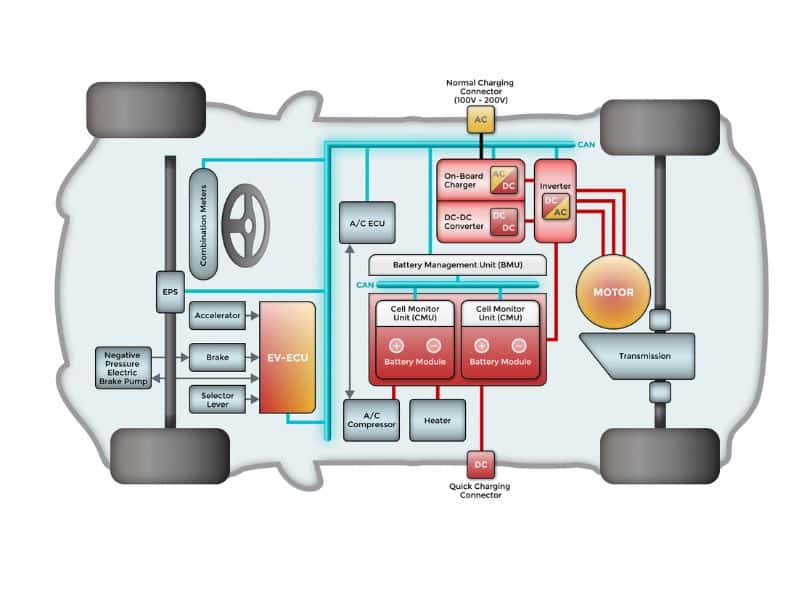
The electric motor converts electrical energy from the battery into the mechanical motion that turns the wheels. Structurally, it’s a far simpler machine than a petrol engine, with none of the pistons, valves, or multi-speed gearing that an ICE vehicle needs.
The defining trait of an electric motor is instant torque delivery. A petrol engine needs to build revs before it makes meaningful power, which is why a small-capacity petrol hatchback can feel sluggish off the line. An electric motor delivers close to its maximum torque from a dead stop, which is why even an EV with modest power figures on paper tends to feel genuinely quick pulling away from a signal, a trait Indian city drivers notice almost immediately.
Motors also work in reverse during braking. When you lift off the accelerator or press the brake, the motor can act as a generator, feeding energy back into the battery instead of that energy simply being lost as heat in the brake discs, as it would be in a purely mechanical braking system. This is regenerative braking, and it does two useful things at once: it recovers energy that would otherwise be wasted, and it reduces wear on the conventional friction brakes, since the motor is doing a share of the deceleration work.
The Inverter and Controller
Two supporting components manage how the battery and motor talk to each other.
The inverter converts the DC electricity stored in the battery into the alternating current (AC) most electric motors actually run on, and it reverses that conversion during regenerative braking so the recovered energy can go back into the battery as DC.
The controller decides how much power actually reaches the motor at any given moment, based on how far you’ve pressed the accelerator. It works closely with the inverter to translate a smooth pedal input into smooth, responsive acceleration, rather than an abrupt on-off surge of power.
Neither component shows up as a headline spec the way battery capacity or motor power does, but their tuning is a big part of why two EVs with similar on-paper numbers can feel noticeably different to drive.
Charging: How Energy Gets Back Into the Battery
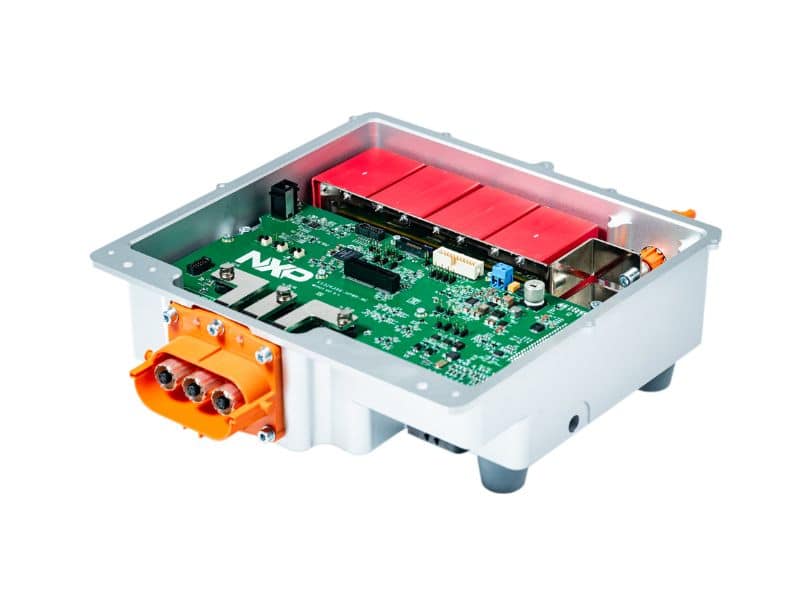
Charging is simply the process of moving electrical energy from an external source into the battery pack. How fast that happens depends on the power delivered, measured in kilowatts (kW), and on the vehicle’s own onboard charging hardware.
AC (Slow) Charging vs DC (Fast) Charging
| Charging Type | Typical Use Case | Speed | Where You’ll Find It |
|---|---|---|---|
| AC (Slow) Charging | Overnight home charging, long workplace parking | Slowest, gentlest on the battery | Home wall units, office/mall AC points |
| DC Fast Charging | Topping up during a highway stop or short break | Much faster, higher power delivery | Public charging stations, highway hubs |
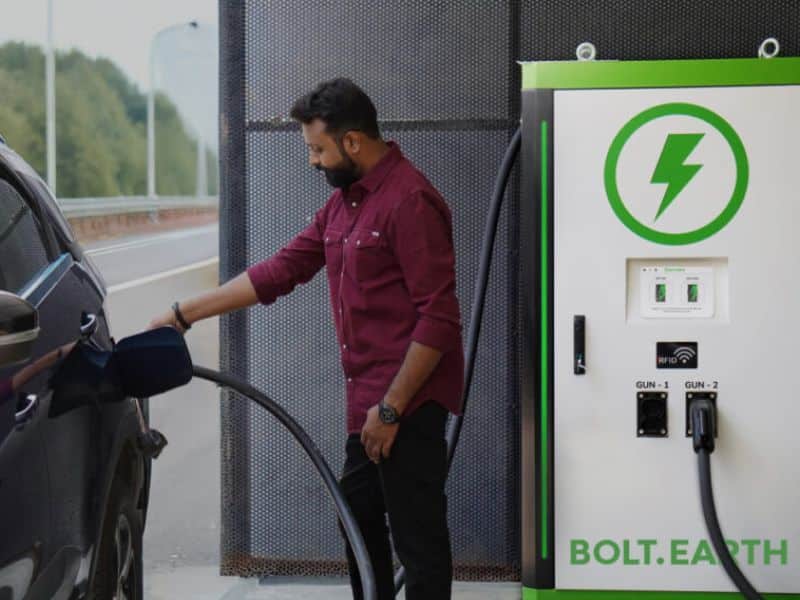
Slow AC charging is what most EV owners in India rely on day to day. It’s cheaper, gentler on long-term battery health, and works well with the natural overnight parking window most people already have. DC fast charging exists for the situations where speed matters more than battery-friendliness, a highway trip or an unplanned low-battery situation, and it’s typically found at dedicated public stations rather than at home, since it needs significantly more powerful infrastructure than a domestic connection can usually provide.
Home Charging
Home charging uses either a standard power outlet or a dedicated wall-mounted charging unit installed at your residence. It’s almost always the slowest option on this list, but it’s also the most convenient and usually the cheapest per unit of energy, which is why it tends to be the backbone of daily EV ownership for anyone with access to a private parking spot.
Public Charging
Public charging stations, at malls, office complexes, and dedicated charging hubs, may offer AC, DC, or both. These matter most for EV owners without home charging access, and for anyone covering distances beyond a single charge on a road trip. Coverage has been expanding steadily in Indian metros, though density and reliability outside major cities and highway corridors still lag behind petrol pump availability, so it’s worth checking realistic coverage along your actual routes before assuming a public charger will always be nearby when you need one.
Charging Connectors
Charging connectors are the physical plug standards that link a vehicle to a charging point. Different connector types exist for AC and DC charging, and not every manufacturer or charging network uses the same standard. Before buying, it’s worth confirming which connector type your shortlisted EV uses and checking that it’s actually compatible with the public charging network you’re most likely to use, rather than discovering a mismatch after the fact.
Charging Speed in Practice
Higher-rated charging power generally means faster charging, but the real-world speed also depends on the vehicle’s own onboard charger, and on the battery’s temperature and current charge level, since charging speed typically tapers as a battery gets closer to full. This is a normal part of how lithium-ion batteries behave, not a fault, and it’s the same reason your phone charges faster from 20 to 80 percent than it does from 80 to 100.
How These Three Systems Work Together
It helps to see the full loop in one place. You plug in and charge the battery pack, drawing energy through the charging port and, for AC charging, through the vehicle’s onboard charger, which converts incoming AC power to the DC the battery stores. When you drive, the battery sends DC power to the inverter, which converts it to AC for the motor, while the controller regulates exactly how much power flows based on your accelerator input. When you brake or lift off, that flow partially reverses: the motor acts as a generator, the inverter converts the resulting AC back to DC, and the BMS manages that returning energy as it goes back into the pack. Every EV on Indian roads, whether it’s an electric scooter or a full-size electric SUV, runs some version of this same basic loop.
Frequently Asked Questions
What does kWh mean on an EV spec sheet?
kWh (kilowatt-hour) is the unit used to measure battery capacity, essentially how much total energy the pack can store. A higher kWh figure generally means a longer range, but also more weight and a higher price.
Is DC fast charging bad for an EV battery?
Occasional DC fast charging is fine and is exactly what it’s designed for. Relying on it as your everyday charging method rather than as an occasional convenience generates more heat and can accelerate battery degradation faster than routine slow AC charging.
Should I charge my EV to 100 percent every time?
For daily use, most manufacturers and battery experts recommend charging to around 80 percent rather than always topping up to full, saving 100 percent charges for days you specifically need the extra range. Letting the battery sit at 100 percent under heat for extended periods adds unnecessary stress on the cells.
Do all EVs use the same charging connector?
No. Different manufacturers and charging networks use different AC and DC connector standards, and they aren’t universally interchangeable. Confirm your EV’s connector type against the charging network you plan to use before buying.
Why does an EV feel quick even with modest power figures?
Electric motors deliver close to their maximum torque almost instantly from a standstill, unlike a petrol engine that needs to build revs first. That instant torque is why EVs often feel more responsive off the line in city driving than their headline power figure alone would suggest.