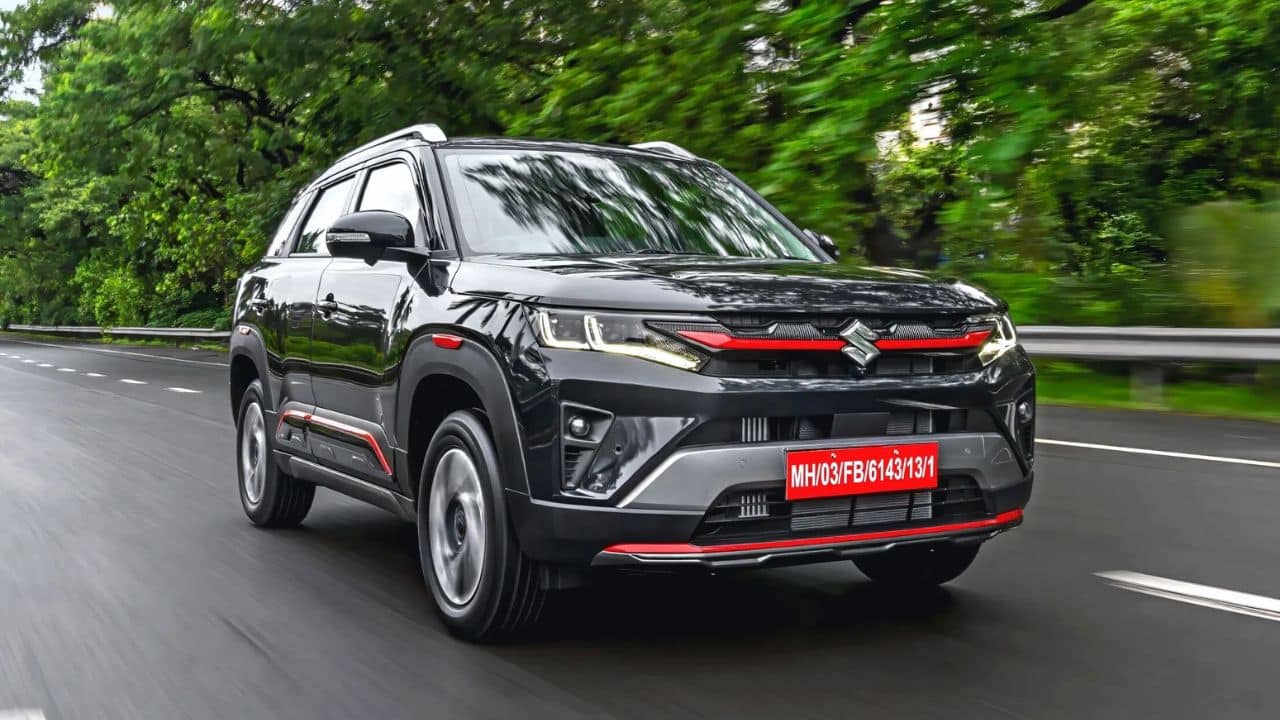

The 2026 Brezza facelift brings real, meaningful changes, not a cosmetic refresh dressed up as news. But it’s not without genuine compromises either, some of them baked into how Maruti has structured the variant lineup rather than the car itself. Here’s an honest look at both sides, not a list padded out to look balanced.
The Pros
A genuinely new turbo engine, not a badge exercise. The 1.0-litre Boosterjet turbo-petrol, borrowed from the Fronx, makes 110 PS and 170 Nm. That torque figure is the real story, it’s meaningfully more than the naturally aspirated engine’s 139 Nm, and it shows up exactly where you’d want it: pulling away from a flyover incline, overtaking on a two-lane highway, or hauling a full car of passengers without the engine feeling strained.
A confirmed 5-star Bharat NCAP rating, where none existed before. The outgoing Vitara Brezza was never independently crash-tested by Bharat NCAP. The 2026 facelift has been, scoring 30.41/32 for adult occupant protection and 43/49 for child occupant protection. Six airbags are now standard across every single variant, not gated to higher trims the way they used to be.
CNG buyers finally get their boot back. The switch to an underbody-mounted CNG tank, borrowed from the Victoris, resolves a genuine long-standing complaint. The old boot-mounted cylinder ate close to half the luggage space; the new design preserves the full 328-litre boot even on CNG variants.
🚀 Join Our Tech Community!
Get the latest news, updates, and tech trends delivered straight to your phone. Never miss an update!
A well-judged mid-range variant in the ZXi. It’s the only trim offering all three powertrains, manual petrol, automatic petrol, and CNG, while still including the sunroof, touchscreen, wireless charger, and push-button start that actually matter day to day. Most buyers won’t feel like they’re missing anything essential by stopping here rather than stretching to the ZXi+.
Maruti’s service network advantage remains intact. Whatever else changes generation to generation, Maruti’s dealer and service reach into smaller towns and cities is genuinely broader than most rivals, a real practical consideration if you don’t live in a metro with dense multi-brand service options.
The Cons
The Boosterjet turbo is manual-only. If you specifically want a turbo-petrol paired with an automatic gearbox, the Brezza doesn’t offer that combination at all, at any trim, at any price. Rivals like the Fronx, Sonet, and Syros all offer their turbo-petrol engines with an automatic option. This is arguably the single biggest functional gap in the entire lineup.
No diesel option, at all. For buyers with genuinely high monthly running who’ve historically leaned on diesel’s efficiency advantage, the Brezza simply isn’t in the conversation. Both the Nexon and the Venue continue to offer diesel, the Venue now even with an automatic for the first time.
CNG isn’t available on the range-topping ZXi+. If you want the top-spec Brezza with the biggest screen and the most features, CNG is off the table entirely. You’re choosing between the flagship trim and the lowest running costs, not both.
Advanced safety features are inconsistently distributed. Cruise control, blind-spot warning, rear cross-traffic alert, and TPMS are all exclusive to Boosterjet variants from ZXi upward. Buy the naturally aspirated ZXi, and you don’t get any of these, even though it’s nominally the same trim level. This kind of engine-gated feature distribution is easy to miss when comparing trim names rather than the full spec sheet.
The Boosterjet’s ARAI mileage is actually lower than the standard petrol’s. This surprises a lot of buyers who assume a smaller-displacement turbo automatically means better efficiency. It doesn’t here, the Boosterjet’s 19.96-20.47 kmpl trails the naturally aspirated manual’s best figure of up to 21.09 kmpl. If mileage is your primary concern on petrol, the turbo isn’t the more efficient choice.
Ground clearance is respectable but not class-leading. At 198 mm, the Brezza is comfortable for typical speed breakers and moderately broken roads, but rivals like the Tata Nexon offer a bit more at 208 mm, a small but real difference for buyers regularly dealing with rougher terrain.
It’s genuinely too new for real-world mileage or long-term reliability data. Having launched on July 24, 2026, there’s no owner-reported mileage, no real-world service cost data, and no long-term reliability track record yet, specifically for this facelift. The Boosterjet engine itself has some history via the Fronx, but the Brezza’s own application of it is unproven at this point.
Pros and Cons at a Glance
| Pros | Cons |
|---|---|
| Genuinely capable new turbo engine with real low-end torque | Turbo is manual-only, no automatic option |
| Confirmed 5-star Bharat NCAP rating, 6 airbags standard on all variants | No diesel engine offered at any trim |
| CNG boot space finally fixed with underbody tank | CNG unavailable on the top ZXi+ trim |
| Well-balanced ZXi trim covers most genuine buyer needs | Key safety tech (cruise control, blind-spot warning, TPMS) is engine-gated, not trim-gated |
| Strong Maruti service network reach | Turbo’s ARAI mileage is lower than the naturally aspirated engine’s |
| Ground clearance trails some rivals slightly | |
| No real-world ownership or mileage data yet, too new |
Who Should Still Buy It Despite the Cons
If you don’t need diesel, don’t specifically require a turbo automatic, and value Maruti’s service network and the newly confirmed safety credentials, the cons here are mostly edge-case limitations rather than dealbreakers for the average buyer. The ZXi trim in particular sidesteps most of the feature-gating complaints by giving you flexibility across all three powertrains.
Frequently Asked Questions
What is the biggest drawback of the 2026 Maruti Brezza?
The most significant limitation is that the Boosterjet turbo-petrol engine is available only with a manual gearbox, with no automatic option, and the car doesn’t offer a diesel engine at any trim.
Is the 2026 Brezza worth buying despite these cons?
For most buyers who don’t specifically need a turbo automatic or diesel, yes. The core improvements, the 5-star Bharat NCAP rating, 6 standard airbags, and the fixed CNG boot space issue, address genuine long-standing weaknesses in the nameplate.
Does the Brezza 2026 have any real-world mileage or reliability data yet?
No. The car launched on July 24, 2026, so genuine owner-reported mileage and long-term reliability data aren’t available yet. Only ARAI-certified figures exist at this stage.
Which Brezza variant avoids most of the listed cons?
The ZXi trim minimizes the impact of most cons, since it’s the only trim offering all three powertrains together with a genuinely useful features list, though it doesn’t resolve the lack of a turbo automatic or diesel option, which apply across the entire range.