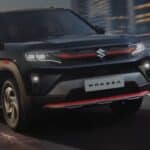


Kia gives buyers two compact SUVs to consider against the Brezza, not one, and they’re genuinely different propositions rather than badge-engineered twins. The Sonet is the smaller, sharper-priced option; the Syros sits above it as a roomier, more feature-dense sub-4-metre SUV that overlaps with the Seltos on some counts. Add the newly turbocharged Brezza into the mix, and this comparison has more genuine trade-offs than most three-way matchups in this segment.
The Three Cars at a Glance
| Factor | Maruti Brezza 2026 | Kia Sonet | Kia Syros |
|---|---|---|---|
| Ex-showroom price range | ₹7.40 lakh – ₹13.01 lakh | ₹7.41 lakh – ₹16.9 lakh | ₹8.42 lakh – ₹15.82 lakh |
| Entry petrol | 1.5L NA (103 PS/139 Nm) | 1.2L NA Smartstream (83 PS/115 Nm) | No naturally aspirated option |
| Turbo-petrol | 1.0L Boosterjet (110 PS/170 Nm), MT only | 1.0L turbo (118-120 PS/172 Nm), MT/iMT/DCT | 1.0L turbo (120 PS/172 Nm), MT/DCT |
| Diesel option | No | Yes, 1.5L | Yes, 1.5L CRDi (116 PS/250 Nm) |
| CNG option | Yes, manual only | No | No |
| Bharat NCAP rating | 5-star | Not confirmed for India-spec (see safety section) | 5-star (30.21/32 AOP, 44.42/49 COP) |
| ADAS | Feature-gated to Boosterjet ZXi+ | Level 1 | Level 2 on select variants |
| Boot space | 328 litres | 385 litres | 390-465 litres (sliding rear seats) |
Powertrain: Three Genuinely Different Approaches
The Brezza’s turbo-petrol Boosterjet makes 110 PS and is manual-only. Both Kia SUVs offer their 1.0-litre turbo-petrol, making a slightly stronger 118-120 PS, with automatic options, the Sonet offers iMT and DCT choices, while the Syros offers DCT alongside manual. If a turbo-petrol paired with an automatic gearbox is a requirement, both Kias currently beat the Brezza outright, since the Boosterjet has no automatic option at all.
Diesel is where Kia pulls further ahead. Both the Sonet and Syros offer a 1.5-litre diesel engine, something the Brezza doesn’t have in any form. The Syros’s diesel specifically makes 116 PS and 250 Nm, a genuinely strong torque figure for this segment, useful for buyers regularly loaded up with passengers or doing long highway stretches.
The Brezza claws back ground with CNG, an option neither Kia offers. If factory-fitted CNG is a requirement for your running-cost calculations, the Brezza is the only one of these three that offers it, and its underbody tank design means you’re not sacrificing boot space to get it either.
🚀 Join Our Tech Community!
Get the latest news, updates, and tech trends delivered straight to your phone. Never miss an update!
Safety: A More Complicated Picture Than It First Looks
This needs to be handled carefully because the numbers can be misread. The Syros has a confirmed 5-star Bharat NCAP rating, scoring 30.21/32 for adult occupant protection and 44.42/49 for child occupant protection, tested specifically for the Indian market. The Brezza also carries a 5-star Bharat NCAP rating from its own 2026 testing.
The Sonet’s safety story is genuinely murkier and worth flagging directly rather than glossing over: a Sonet variant built for export to South Africa, fitted with only 2 airbags, scored a 1-star Global NCAP rating in mid-2026. This is not the India-spec Sonet, which comes with 6 airbags standard, but it’s a reasonable data point for a cautious buyer to be aware of, since it reflects on the same base platform even if the tested configuration differs from what’s sold domestically. As of publishing, a confirmed Bharat NCAP rating specifically for the India-spec Sonet was not found in available sources. If crash-test transparency and a confirmed current rating matter to your decision, that’s a genuine point in the Syros’s and Brezza’s favour over the Sonet right now.
On ADAS specifically, the Syros offers Level 2 on select variants, radar and camera-based, including features like smart cruise control and lane assist, though some recent reports note certain higher-end ADAS and 360-degree camera features were trimmed from specific Syros variants in a 2026 update, so it’s worth confirming exact variant-level availability with a dealer before assuming a specific feature is included. The Sonet offers Level 1 ADAS. The Brezza’s advanced safety features are narrower still, tied specifically to Boosterjet ZXi and above, without a full Level 2 suite.
Space and Practicality
The Syros’s sliding rear seat mechanism allows boot space to flex between 390 and 465 litres depending on configuration, comfortably ahead of both the Sonet’s 385 litres and the Brezza’s fixed 328 litres. If interior flexibility and outright cargo capacity matter to you, the Syros is the clear winner here, and it’s part of why Kia positions it as sitting between the Sonet and the larger Seltos rather than as a direct Sonet replacement.
Features and Cabin Technology
The Syros is the most loaded of the three, with a panoramic dual-pane sunroof, dual 12.3-inch screens, ventilated front and rear seats, and a Harman Kardon sound system on higher trims. The Sonet counters with its own strong feature set, dual 10.25-inch screens, a Bose sound system, ventilated front seats, and a powered driver’s seat, at a lower starting price than the Syros. The Brezza’s top ZXi+ trim brings a 10.1-inch touchscreen, ventilated front seats, and Suzuki Connect, competitive but generally a step behind both Kias on outright cabin tech at the top end.
Price Comparison
All three start reasonably close together: the Brezza and Sonet both open around ₹7.40 lakh ex-showroom, with the Syros starting slightly higher at ₹8.42 lakh. At the top end, the Sonet’s range extends furthest to ₹16.9 lakh, ahead of the Syros’s ₹15.82 lakh and the Brezza’s roughly ₹13.01 lakh ceiling. The Brezza’s narrower price band partly reflects its narrower engine and transmission spread, no diesel, no turbo automatic, compared to either Kia.
Which Should You Buy?
Choose the Brezza 2026 if you specifically want factory CNG, prefer Maruti’s typically lower service costs and the widest dealer network reach into smaller towns, or don’t need diesel or Level 2 ADAS.
Choose the Sonet if you want the most affordable entry point into Kia’s design and feature language, don’t need diesel-level torque or Level 2 ADAS, and are comfortable with the current uncertainty around a confirmed India-spec Bharat NCAP rating, worth double-checking with Kia directly before you buy if this genuinely concerns you.
Choose the Syros if space and flexibility are priorities, if you want a confirmed 5-star Bharat NCAP rating alongside strong diesel torque, or if the sliding rear seat and larger boot capacity genuinely matter for how you’ll use the car day to day.
Frequently Asked Questions
Does the Kia Sonet have a Bharat NCAP rating?
A confirmed Bharat NCAP rating specifically for the India-spec Sonet was not found as of publishing. A South Africa-spec export variant with 2 airbags scored 1-star in Global NCAP testing, but this differs from the India-spec car, which has 6 airbags standard. Buyers concerned about this should confirm current safety-testing status directly with Kia.
Which of the three offers CNG?
Only the Maruti Brezza offers a factory-fitted CNG option among these three SUVs. Neither the Sonet nor the Syros currently offers CNG.
Which has the most boot space, Brezza, Sonet, or Syros?
The Syros offers the most, with boot space flexing between 390 and 465 litres thanks to its sliding rear seats, ahead of the Sonet’s 385 litres and the Brezza’s 328 litres.
Is the Kia Syros just a more expensive Sonet?
Not exactly. The Syros sits between the Sonet and the larger Seltos, with more interior space, a sliding rear seat, and generally more feature content, but without a naturally aspirated engine option, which the Sonet offers.