

Charging infrastructure is the single biggest practical variable in Indian EV ownership, more than range, more than price, and more than almost anything else on a spec sheet. It’s also the area where marketing optimism and on-the-ground reality diverge the most. This guide covers how India’s charging network actually looks right now, what the different connector standards and charger types mean in practice, and what to genuinely check before you assume charging won’t be a problem for you.
How Big Is India’s Charging Network, Really?
India had 27,737 registered public EV charging stations installed and 22,753 operational as of March 2026, according to Ministry data tabled in Parliament, with the total crossing 29,000 once semi-public locations are included. That’s real, substantial growth. The network has grown roughly six-fold since 2022, when the country had only about 5,000 public chargers.
But growth in absolute numbers doesn’t mean the network is keeping pace with demand. With EV registrations climbing and the current ratio sitting at roughly one public charger for every 235 electric vehicles on the road, India remains well short of the global benchmark of one charger per 6 to 20 EVs that markets like the US and China operate closer to. To hit the government’s own 30 percent EV penetration target by 2030, the country would need an estimated 1.32 million public charging stations, more than 40 times the current installed base, according to ORF projections.
There’s also a meaningful gap between “installed” and “actually working.” A CEEW survey found that 70 percent of Indian EV owners had encountered a non-functional charger during a public charging attempt. A charger showing up on a map or an app doesn’t guarantee it will work when you arrive, which is worth knowing before you plan a trip around a single charging point rather than having a backup option in mind.
🚀 Join Our Tech Community!
Get the latest news, updates, and tech trends delivered straight to your phone. Never miss an update!
The honest summary: infrastructure is real, growing fast, and increasingly reliable in metro areas and along major highway corridors, but it’s uneven, thinner in Tier 2 and 3 cities, and a meaningful share of the installed base isn’t currently operational at any given time.
Where the Growth Is Actually Coming From
The current expansion is being driven by a mix of policy push and private investment. Under PM E-DRIVE, the central government has allocated roughly ₹2,000 crore specifically for public charging infrastructure, targeting 72,300 charging stations across 50 national highway corridors, with subsidies of up to 80 percent available on the upstream power infrastructure needed to connect a charging site to the grid. Getting from today’s installed base to that target is an aggressive build-out, but one that’s realistic given current investment momentum.
Beyond the highway corridor push, states have also simplified the process of setting up chargers, standardising electricity tariffs for charging points and streamlining the connection process for public, semi-public, and private charging setups, which has made it administratively easier for private operators and businesses to add charging capacity without navigating a separate approval process in every state.
Connector Standards: What Actually Plugs Into What
One of the most practical things to understand before buying an EV is which connector standard your vehicle uses, since not every charger supports every connector, and a mismatch means a charging point you drove to is simply unusable for your vehicle.
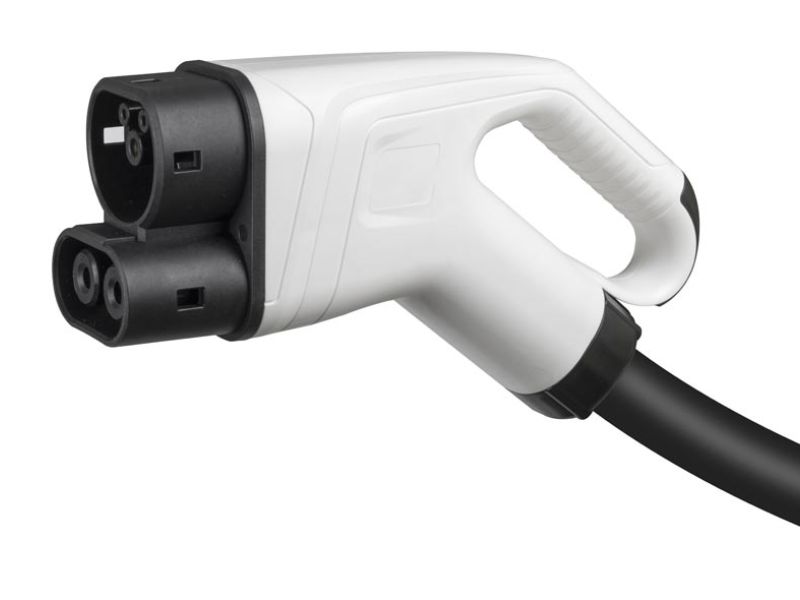
For electric cars, the Combined Charging System (CCS2) is the dominant standard for DC fast charging and is mandated for all new four-wheeler DC chargers in India, with all major manufacturers selling in the country, including Tata Motors, MG, Hyundai, and Mahindra, building CCS2-compatible vehicles. For AC charging, the standard is Type 2 (IEC 62196), typically used for slower charging in the 7 to 22 kW range.
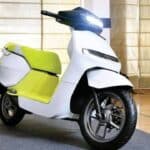
Two- and three-wheelers generally use a different standard altogether. India has developed its own Bharat AC-001 and Bharat DC-001 connector standards specifically for lighter electric vehicles, distinct from the CCS2 standard used by cars. If you’re buying an electric scooter, don’t assume it shares a connector with an electric car; check the specific standard your model uses before assuming compatibility with a given charging network.
Charger Types by Speed
| Charger Type | Connector | Typical Power | Best For |
|---|---|---|---|
| AC Slow | Bharat AC-001 | Around 3.3 kW | Two/three-wheeler home charging |
| AC Fast | Type 2 | 7 to 22 kW | Home/workplace car charging |
| DC Fast | CCS2 | 25 to 60 kW | Public charging, quicker top-ups |
| DC Ultra-Fast | CCS2 | 100 to 350 kW | Highway corridors, rapid charging |
| Legacy DC | Bharat DC-001 | Around 15 kW | Older two/three-wheeler DC setups |
AC chargers currently dominate the installed base, while DC fast charging remains the binding gap in the network, meaning the slower home and workplace charging layer is comparatively well developed even where fast public charging is still thin.
Home Charging: Still the Backbone of Ownership
For any EV owner with access to a private parking spot, home charging remains the most reliable and cost-effective way to charge, regardless of how public infrastructure develops. A home charger, whether a simple wall-mounted AC unit or, for two-wheelers, sometimes even a standard socket, means daily charging happens overnight without depending on network coverage or a charger’s live operational status at all.
If you don’t have access to home or workplace charging, your ownership experience will lean much more heavily on the state of the public network described above, which makes it worth actually testing your regular routes for genuine charger availability before buying, rather than assuming coverage based on a map showing a nearby pin that may or may not be operational.
Public Charging Networks: What to Expect
Public charging in India comes through a mix of standalone charging point operators, automaker-backed networks, and chargers installed at malls, office parks, and dedicated highway hubs. Coverage is strongest in and around major metro cities and along key national highway corridors, both by design, since PM E-DRIVE’s highway corridor allocation specifically targets that gap, and because that’s where commercial charging economics currently work best for operators.
A few practical points matter more than the marketing:
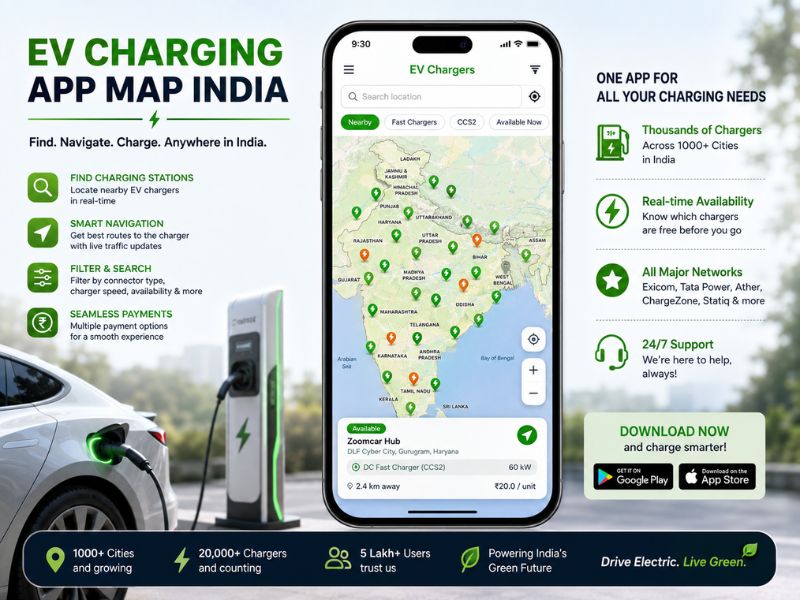
- Check real-time status through an app before relying on a specific charger, since a station shown as available on a map isn’t guaranteed to be functional or unoccupied when you arrive.
- Have a backup charging point in mind for any unfamiliar route, given the meaningful share of non-functional chargers reported by owners.
- Fast chargers are more common on highway corridors than within city centres, where slower AC charging tends to be more common at malls and office locations.
- Coverage outside Tier 1 cities is genuinely thinner, so a smaller-town or semi-urban buyer should do more homework on local charger availability than a metro buyer needs to.
Battery Swapping: An Alternative Worth Knowing About
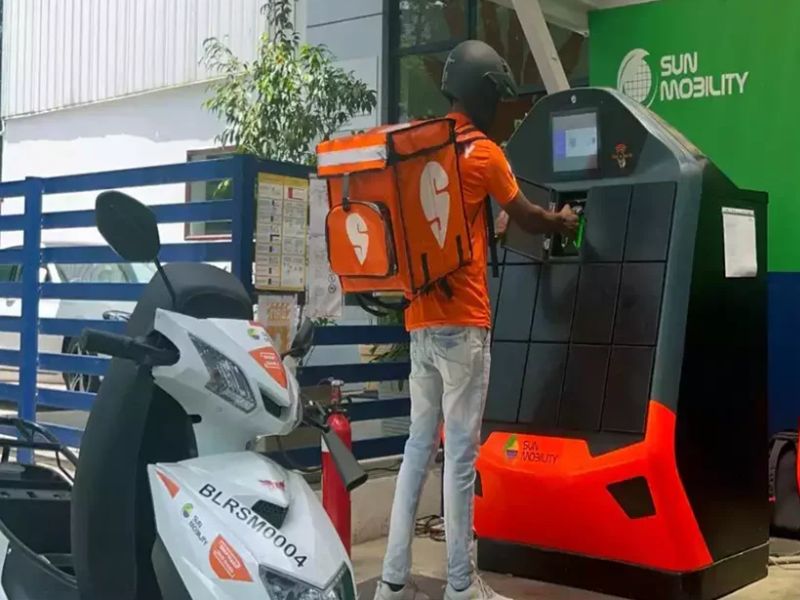
Rather than plugging in and waiting, battery swapping lets an owner exchange a depleted battery for a fully charged one at a swap station, sidestepping charging time entirely. This model has seen the most traction in the electric two- and three-wheeler segment, where companies offering Battery-as-a-Service style swapping have built out dedicated swap networks in select cities.
Swapping isn’t universally available and depends heavily on your specific vehicle being built to support it and your city having an active swap network for that brand, so it’s not something to assume by default. Where it is available, it genuinely removes charging-time anxiety from ownership, worth checking specifically if you’re shopping for an electric scooter in a city with an established swap network.
Interoperability: Why This Matters for You as a Buyer
India has been pushing charging networks toward interoperability, meaning a charger from one operator should ideally work with an app or account from another through shared protocols like OCPP (Open Charge Point Protocol), and public chargers are increasingly required to register on a central government database so they’re discoverable regardless of which operator installed them.
In practice, this is still a work in progress. Some networks interoperate smoothly through roaming agreements; others still effectively require you to use a specific operator’s own app. Before relying heavily on public charging, it’s worth checking whether the apps and networks common in your city and along your regular routes actually interoperate with each other, rather than assuming universal compatibility.
What This Means for Your Buying Decision
None of this should be read as a reason to avoid an EV. It should be read as a reason to be specific and honest about your own situation rather than assuming national-level infrastructure statistics apply evenly everywhere.
If you have home or workplace charging access and mostly drive within a metro city or along well-covered highway corridors, the current state of India’s charging network is genuinely sufficient for daily ownership, and the network is improving month by month. If you don’t have home charging access, live outside a major metro, or regularly drive routes with thin coverage, do the specific homework, check actual charger density and real-world reliability along your routes, before assuming the broader national growth numbers will translate into a charger being there when you need one.
Frequently Asked Questions
How many public EV charging stations does India have?
India had 27,737 registered public EV charging stations as of March 2026, with 22,753 of them operational, according to Ministry data tabled in Parliament. Including semi-public locations, the total crosses 29,000.
Is India’s charging network enough for the number of EVs on the road?
Not yet, at a national ratio level. India currently has roughly one public charger for every 235 electric vehicles, compared to a global benchmark of one charger per 6 to 20 EVs, meaning infrastructure growth still trails EV adoption despite rapid recent expansion.
What connector does my EV need for public charging?
Most electric cars sold in India use CCS2 for DC fast charging and Type 2 for AC charging. Electric two- and three-wheelers typically use India’s own Bharat AC-001 or Bharat DC-001 standards instead. Confirm your specific model’s connector before assuming compatibility with a given charging network.
Are public EV chargers in India reliable?
Not uniformly. A CEEW survey found that 70 percent of Indian EV owners had encountered a non-functional public charger, so it’s worth checking real-time app status before relying on a specific charging point, especially on unfamiliar routes.
Is battery swapping available for all EVs in India?
No. Battery swapping is mainly available for select electric two- and three-wheeler models in cities with an active swap network for that specific brand. It isn’t a universal option, and it needs to be checked for your specific vehicle and city rather than assumed.