
EV incentives in India come from two layers that work independently of each other: a central government scheme that applies (with restrictions) nationwide, and individual state policies that vary enormously and change on their own schedule. Very few buyers actually understand how these two layers interact, and getting this wrong by even a few thousand rupees or a missed deadline is common. This guide explains the mechanics clearly so you know exactly what to check before you buy, rather than relying on a dealer’s summary or something you read months ago.
The single most important thing to understand upfront: every specific figure in this space is genuinely time-sensitive. Central scheme timelines have already been adjusted more than once since launch, and state policies get revised, extended, or quietly allowed to lapse with little warning. Treat everything below as a framework for understanding how the system works, and verify the live numbers directly before you budget.
The Central Scheme: From FAME to PM E-DRIVE
India’s EV subsidy story runs through a few distinct schemes, and knowing the sequence helps you avoid confusing an expired scheme’s numbers with what’s actually live today.
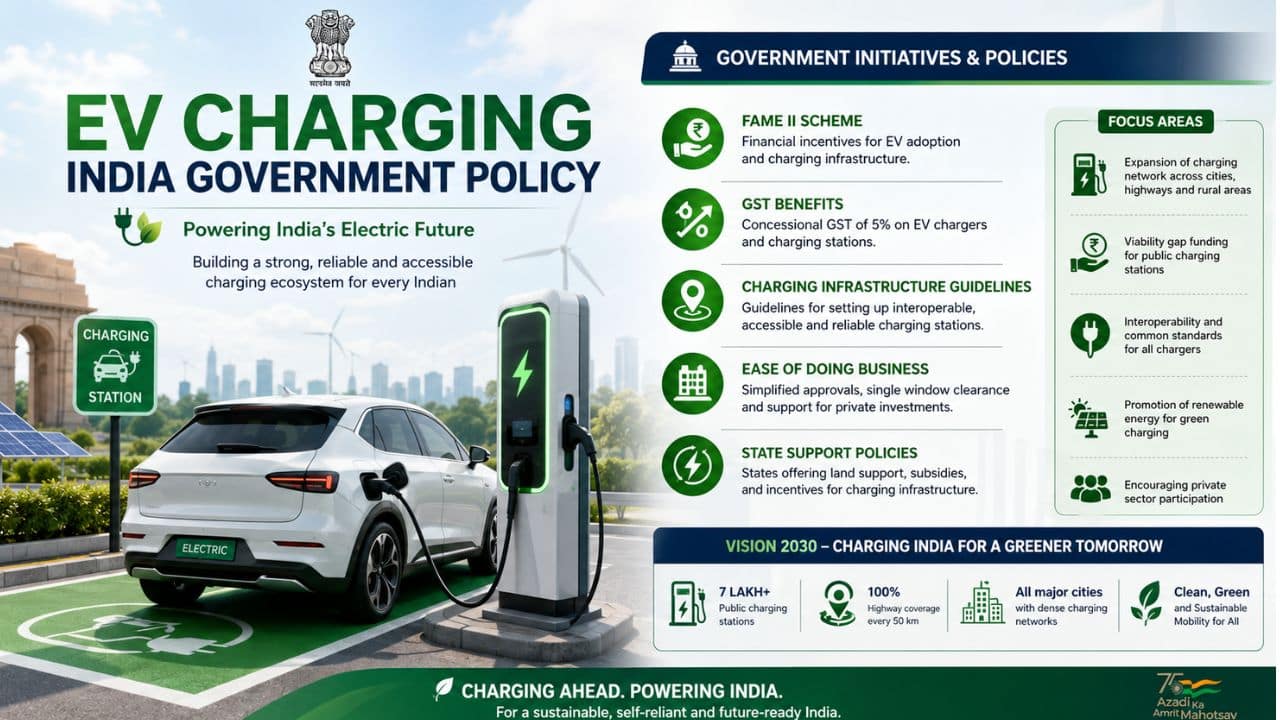
FAME II, the second phase of the Faster Adoption and Manufacturing of Electric Vehicles scheme, ended in March 2024, and a PM E-DRIVE is the scheme actually disbursing subsidies right now. You may see “FAME III” referenced in industry commentary and some articles, but as of this writing it has not been formally notified as an operational scheme. Treating FAME III as live policy, before a fresh cabinet-approved notification exists, can lead buyers to make decisions based on a scheme that technically doesn’t yet exist in operational form. If you see “FAME III” figures quoted anywhere, treat them as industry anticipation rather than confirmed policy until you can verify them against an official government notification.
🚀 Join Our Tech Community!
Get the latest news, updates, and tech trends delivered straight to your phone. Never miss an update!
What PM E-DRIVE Actually Covers
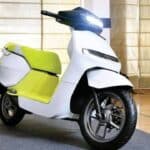
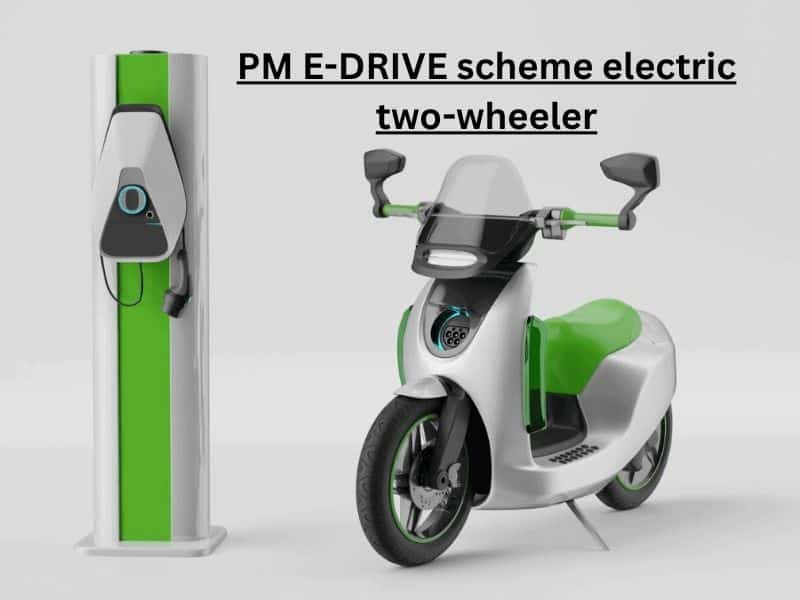
The demand incentive under PM E-DRIVE applies mainly to electric two-wheelers, three-wheelers, buses, trucks, and ambulances, plus support for public charging infrastructure. The buyer-facing incentive for electric two-wheelers and three-wheelers is currently ₹2,500 per kWh of battery capacity, capped at ₹5,000 per vehicle. This is a noticeably lower per-kWh rate than the old FAME II scheme offered, so don’t assume the older, larger subsidy figures you may remember still apply.
Eligibility isn’t automatic for every electric two-wheeler. The vehicle’s ex-factory price generally needs to stay within a set ceiling, around ₹1.5 lakh, for the two-wheeler to qualify. A higher-end electric scooter above that price threshold may not qualify for the central incentive at all, regardless of how the dealer prices the on-road figure.
Unlike two-wheelers and three-wheelers, private electric cars do not currently have a broad-based, guaranteed central purchase subsidy under PM E-DRIVE in the way FAME II briefly piloted for a small number of car models. If you’re buying an electric car, don’t assume a central subsidy applies to your purchase by default. Check directly with the manufacturer or dealer whether any specific central incentive currently applies to your model.
Timelines Keep Shifting, So Check the Live Deadline
Scheme deadlines for two-wheelers and three-wheelers have already moved once since PM E-DRIVE launched. The demand incentive for electric two-wheelers and three-wheelers was originally set to end on March 31, 2026, but has since been extended, with two-wheelers now running until July 31, 2026, and e-rickshaws and e-carts continuing until March 31, 2028. A separate three-wheeler cargo category closed to new claims in late 2025. This kind of mid-scheme adjustment is common enough that you should always confirm the live cutoff on the official PM E-DRIVE portal or with your dealer before assuming a subsidy will still be available on your purchase date, rather than working from a date you saw in an article some months back.
State-Level EV Incentives: Why Location Changes Everything
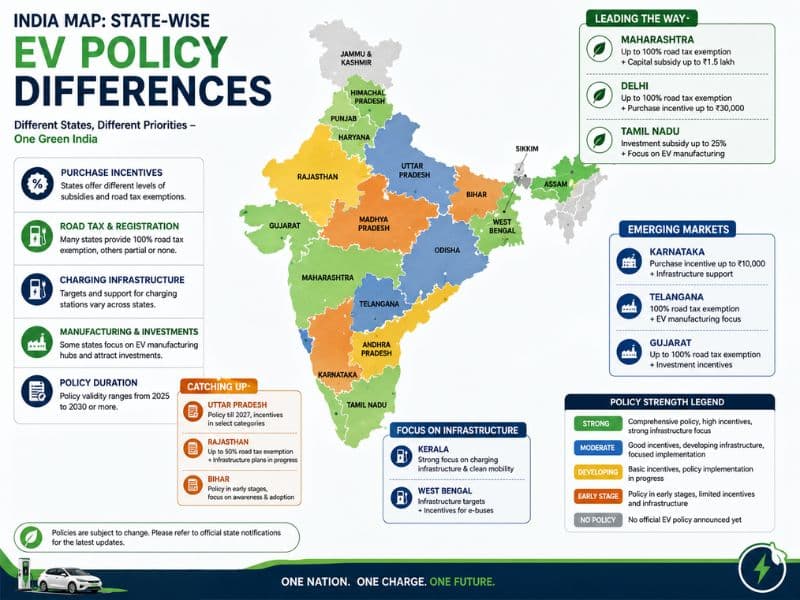
On top of whatever central incentive applies, individual states run their own EV policies, and these can matter more to your final on-road price than the central scheme does, especially for electric cars. States commonly offer some combination of a direct purchase incentive, a road tax waiver, and a registration fee waiver, but the specifics vary so much from state to state that a generic national figure is close to meaningless.
A few examples illustrate just how differenty states approach this, though every one of these should be reconfirmed at the time of purchase rather than treated as fixed:bridging scheme called EMPS concluded in September 2024. It was succeeded by PM E-DRIVE (PM Electric Drive Revolution in Innovative Vehicle Enhancement), which launched on 1 October 2024 with a ₹10,900 crore outlay and originally ran through 2026, before being extended to run through March 31, 2028.
- Delhi’s EV policy has offered a full road tax waiver, a full registration fee waiver, a purchase incentive for two-wheelers and autos, and incentives running up to ₹1.5 lakh for cars, along with a scrapping incentive for replacing an old petrol or diesel vehicle with an EV.
- Maharashtra’s EV policy has offered a road tax exemption for EVs, with the exemption period subject to periodic extension.
- Road tax has been fully waived in states including Maharashtra, Tamil Nadu, and Madhya Pradesh, while it stopped being waived in Uttar Pradesh after its exemption expired in late 2025, and Karnataka now applies a tax based on price bands rather than a flat waiver.
- Gujarat has applied a reduced road tax rate for EVs rather than a full waiver.
This spread tells you two things clearly. First, the same EV can cost meaningfully different amounts on-road depending purely on which state you register it in. Second, a benefit that existed in a state a year ago may already be gone, reduced, or restructured by the time you’re actually at the dealership. Neither of these is something you can safely assume without checking.
How to Actually Check Your State’s Current Policy
Rather than relying on a blog post or even a dealer’s verbal summary, check your state transport department’s official notification directly, or ask the dealership to show you the specific current notification rather than quoting a remembered figure. Dealers dealing in EVs regularly should have this readily available, and a dealer who can’t produce the current notification when asked is worth being cautious of on this specific point.
Road Tax and Registration Fee Waivers Explained
It’s worth understanding what these two benefits actually are, since they’re often the largest single savings a state offers and get confused with each other.
Road tax is a state-level tax charged at the time of vehicle registration, calculated as a percentage of the vehicle’s price in most states. Many states offer EVs a partial or full exemption from this tax, which is a genuinely significant saving since road tax on a petrol or diesel vehicle can run into a meaningful percentage of the on-road price.
Registration fee is a separate, generally smaller charge for the RTO registration process itself. Some states waive this specifically for EVs in addition to the road tax exemption, though not every state that waives road tax also waives the registration fee, so check both separately rather than assuming one implies the other.
Because both of these are calculated into the “on-road price” a dealer quotes you, an EV’s on-road price advantage over an equivalent petrol vehicle in a state with strong waivers can be considerably larger than the ex-showroom price difference alone would suggest. This is also exactly why comparing only ex-showroom prices between an EV and a petrol equivalent gives you an incomplete, and often misleading, picture.
GST and Income Tax Benefits
Beyond direct subsidies and state waivers, EVs in India also benefit from tax treatment at the national level that’s worth knowing about, since it applies more consistently across states than the purchase incentives do.
Electric vehicles are taxed at a concessional GST rate, well below the higher rate applied to most petrol and diesel vehicles, which is baked into the ex-showroom price you’re quoted rather than something you need to separately claim.
For buyers financing an EV purchase through a loan, Section 80EEB of the Income Tax Act has provided a deduction on interest paid on an EV loan, available to individual taxpayers under specified conditions. Eligibility criteria and the deduction limit are worth confirming with a tax advisor or the current Income Tax Department guidance for your specific financial year, since income tax provisions are reviewed periodically in the union budget and can be revised.
A Practical Checklist Before You Budget for Incentives
Before you factor any subsidy or waiver into your EV budget, work through this in order:
- Confirm whether your specific vehicle category (two-wheeler, three-wheeler, or car) currently qualifies for a central PM E-DRIVE incentive, and check the live deadline for that category.
- Confirm your vehicle’s ex-factory price falls within any eligibility ceiling that applies to the central incentive.
- Check your specific state’s current road tax policy for EVs, not a figure from an older article.
- Check whether your state separately waives the registration fee.
- Ask the dealership to show you the actual current state notification, not a verbal summary.
- If financing, confirm current Section 80EEB eligibility with a tax advisor for the applicable financial year.
- Get the final, all-inclusive on-road price in writing before you commit, with each incentive itemised separately rather than folded into one number you can’t verify.
Why This Space Changes So Often
It’s worth understanding why EV policy in India moves as much as it does, since it explains why a “just Google it” approach often surfaces outdated figures. Central scheme budgets are fixed allocations spread over a defined period, so incentive rates and deadlines get adjusted as the scheme approaches its funding or unit caps, exactly what happened with the two-wheeler deadline extension already discussed above. State policies, meanwhile, are reviewed and renewed on their own political and budgetary cycles, entirely independent of the central scheme’s timeline. The two layers moving on different schedules is precisely why a figure that was accurate six months ago can be wrong today, and why this article deliberately avoids treating any single rupee figure as permanent.
Frequently Asked Questions
Is FAME III currently active in India?
Not as a formally notified, operational scheme as of this writing. The scheme currently disbursing subsidies is PM E-DRIVE, which launched in October 2024. Treat “FAME III” references as industry anticipation rather than confirmed policy until an official cabinet notification exists.
Do electric cars get a central government subsidy in India?
Not a broad, guaranteed one under the current PM E-DRIVE scheme, unlike electric two-wheelers and three-wheelers, which do have a defined per-kWh incentive. Check directly with the manufacturer or dealer whether any specific central incentive currently applies to the exact car model you’re considering.
Does every state offer a road tax waiver on EVs?
No. Some states offer a full waiver, some offer a reduced rate, and some have let a previous waiver expire without renewing it. Road tax treatment varies significantly by state and changes over time, so confirm your specific state’s current policy before budgeting.
How do I find the current EV subsidy for my state?
Check your state transport department’s official notification directly, or ask your dealership to show you the specific current document rather than quoting a remembered figure. Given how often these policies change, a source from even a year ago may already be outdated.
Is the electric two-wheeler subsidy the same as it was under FAME II?
No. The current PM E-DRIVE incentive rate for electric two-wheelers is lower per kWh than what FAME II offered. Don’t assume older subsidy figures you may remember still apply to a purchase today.