

Owning an EV changes more than just your fuel bill. The service schedule looks different, the things that can go wrong are different, and a few habits around charging and battery care matter far more than they ever did with a petrol or diesel vehicle. None of this is complicated, but it’s genuinely different, and most new EV owners in India spend their first few months figuring it out by trial and error rather than knowing it upfront. This guide covers what actually changes.
What EV Maintenance Actually Involves
An EV needs less routine maintenance than a petrol or diesel vehicle because it simply has fewer components that wear out. There’s no engine oil to change, no spark plugs to replace, no exhaust system to worry about, and in most cases no multi-speed transmission to service. That alone removes a large chunk of what a typical ICE service visit covers.
What remains is a shorter but still real list. Tyres need regular pressure checks and rotation, same as any vehicle, and arguably matter more on an EV since the extra weight of the battery pack can affect wear patterns slightly differently than a comparable petrol vehicle. Brakes need periodic inspection, though wear tends to be lower than on an ICE vehicle thanks to regenerative braking doing a share of the deceleration work, which means brake pads on an EV often last noticeably longer between replacements. Cabin filters still need periodic replacement, especially relevant in dusty or heavily polluted Indian cities. Coolant for the battery and motor cooling system needs checking as per the manufacturer’s schedule, since consistent temperature control is genuinely important for battery longevity, particularly through an Indian summer. Periodic software updates, often pushed remotely by the manufacturer, are also a normal part of EV ownership and can occasionally improve range estimation, charging behaviour, or fix minor software bugs.
Where to Get an EV Serviced
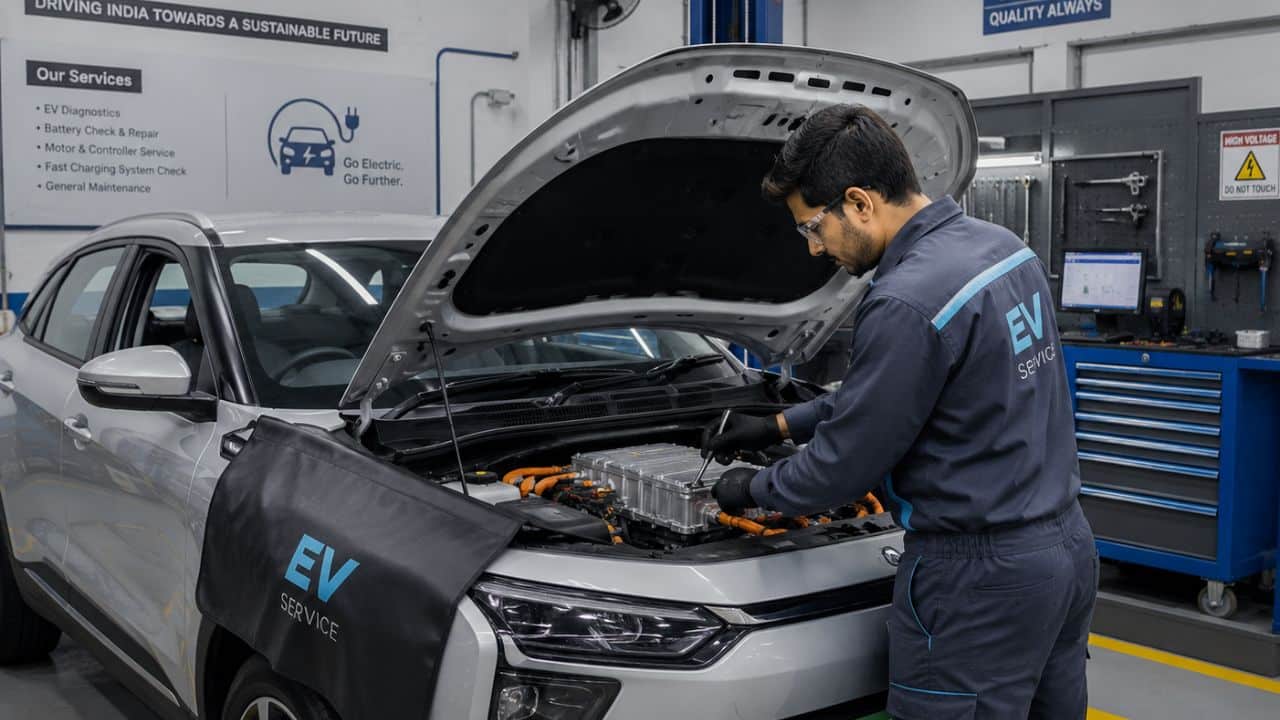
This is the one area where EV ownership genuinely diverges from what most Indian car and bike owners are used to. Anything touching the high-voltage battery pack or the electric drive unit needs a manufacturer-authorised or otherwise properly qualified EV technician, not a general neighbourhood mechanic. The diagnostic equipment and training involved are specific to EV powertrains, and working on high-voltage components without the right training carries genuine safety risk.
🚀 Join Our Tech Community!
Get the latest news, updates, and tech trends delivered straight to your phone. Never miss an update!
This makes service network reach a practical concern rather than a minor detail, especially for buyers outside major metros. Before you’re deep into ownership, know exactly where your nearest authorised EV service centre is and what typical turnaround times look like for common issues. In a metro city this is usually straightforward. In a smaller town or semi-urban area, it’s worth confirming directly with the dealership rather than assuming support will be nearby when you actually need it, since EV-qualified technicians and spare parts availability still lag behind the ICE service network built up over decades.
Battery Care: The Habits That Actually Matter
The battery is the most expensive component in an EV, and how you charge and use it day to day has a real effect on how much capacity it retains over the years. None of this requires special equipment or effort, just a few habits worth building early.
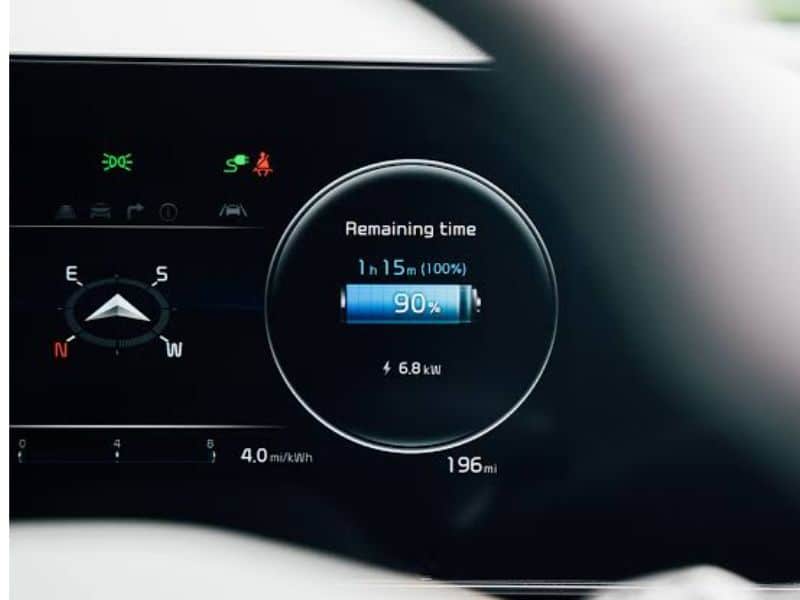
Avoid charging to 100 percent every single day. For daily use, charging to around 80 percent is generally easier on the battery, and saving a full charge for days you actually need the extra range is a better long-term habit than routinely topping up all the way.
Don’t let the battery sit at very low charge for extended periods. Both extremes, sitting near empty and sitting at full for a long stretch, add more stress to the cells than keeping the battery in a comfortable middle range most of the time.
Lean on slow AC charging as your everyday default rather than routinely using DC fast chargers. Fast charging is genuinely useful for a highway stop or an unplanned low-battery situation, but it generates more heat than slow charging, and relying on it constantly accelerates wear faster than overnight AC charging would.
Avoid leaving the vehicle parked in direct, harsh sun for long periods where possible, particularly through peak Indian summer months. Heat is one of the more significant factors in long-term battery degradation, and this is one of the few battery-care factors that’s genuinely more relevant in Indian conditions than in cooler markets.
None of this means the battery will fail without these habits. Degradation is a normal, gradual process every lithium-ion battery goes through. These habits simply slow that process down and help the pack hold more of its original capacity by the time your warranty period ends.
Understanding Your Battery Warranty
The battery warranty is worth revisiting once you actually own the vehicle, not just at the point of purchase. Most manufacturers guarantee a minimum capacity retention (for example, a stated percentage of original capacity) by the end of the warranty period, rather than simply promising to keep the battery working at all. Know this figure for your specific vehicle, and know what the manufacturer’s process looks like if your battery’s actual capacity falls below the guaranteed threshold before the warranty period ends.
It’s also worth keeping a record of any battery-related service visits or diagnostic reports from your authorised service centre. If you ever need to make a warranty claim, or if you plan to sell the vehicle later, a documented service history that shows genuine battery health data is far more useful than simply asserting the battery is fine.
EV Insurance: What’s Different
EV insurance in India can carry a different premium structure compared to an equivalent petrol or diesel vehicle, largely reflecting the higher replacement cost of the battery pack, which is typically the single most expensive component to repair or replace if damaged. It’s worth comparing actual quotes for your specific model rather than assuming the premium will land in the same range as a similar-looking ICE vehicle.
When comparing policies, check specifically how the policy treats the battery pack: whether it’s covered under the standard own-damage section or requires a specific add-on, and what the claim process looks like for a suspected battery issue after an accident or flood exposure. Also check whether the policy covers home charging equipment, since damage to a wall-mounted charger isn’t always assumed to be included in a standard vehicle policy.
Common EV Ownership Issues and What They Usually Mean
A few issues come up often enough in real-world EV ownership that it’s worth knowing what they typically indicate before they happen to you.
Reduced range compared to when the vehicle was new is often simply gradual battery degradation, a normal process, though a sudden or sharp drop is worth getting checked at an authorised service centre rather than assumed to be normal wear.
A charging fault or the vehicle not accepting a charge can stem from several sources: the charging cable, the connector, the vehicle’s onboard charger, or the external charging point itself. Before assuming the worst, try a different charging point if one is available, since a faulty public charger is a more common culprit than a faulty vehicle.
Dashboard warnings related to the battery or drive unit should never be ignored or assumed to resolve on their own. These are specifically flagged as needing inspection by a qualified EV technician, since they can indicate anything from a minor sensor fault to a genuine issue with the high-voltage system.
Reduced regenerative braking feel is sometimes just the vehicle’s software adjusting regen strength based on battery temperature or charge level, which is normal, but it’s worth mentioning at your next service visit if it feels persistently different from when the vehicle was new.
Running Cost: Keeping It Low Over Time
The running cost advantage of an EV over a petrol or diesel vehicle comes mainly from the price difference between electricity and fuel, but a few habits affect how much of that advantage you actually realise day to day.
Charging at home overnight on your standard domestic electricity tariff is almost always cheaper per kilometre than relying heavily on public DC fast charging, which typically carries a higher per-unit cost. If home charging access is available to you, it’s worth using it as your primary method rather than defaulting to public charging out of convenience.
Driving style affects EV efficiency roughly the same way it affects a petrol vehicle’s mileage: smoother acceleration and consistent speeds use less energy per kilometre than aggressive acceleration and hard braking, even accounting for some of that energy being recovered through regenerative braking.
Tyre pressure matters more than most owners realise. Underinflated tyres increase rolling resistance and reduce range on any vehicle, but the effect is often more noticeable on an EV since every bit of extra energy draw directly eats into the battery’s usable range for that trip.
EV Ownership for Two-Wheelers vs Cars
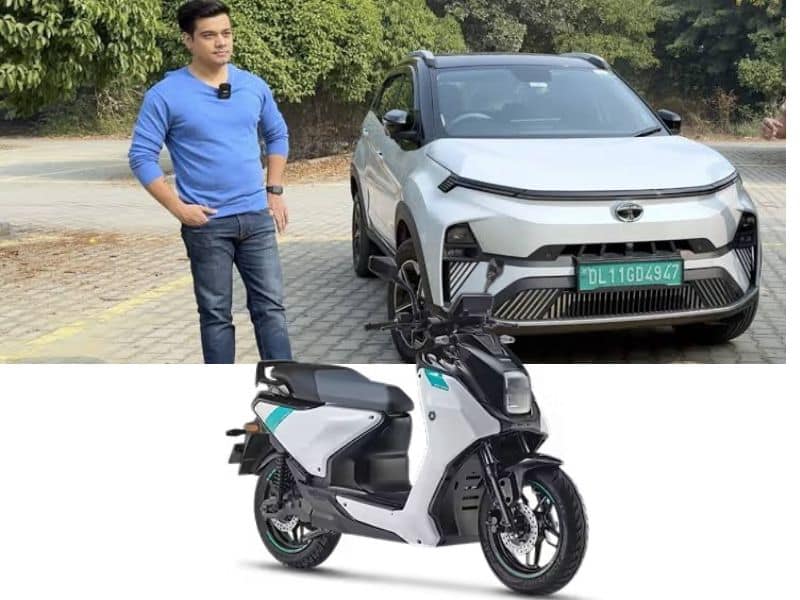
Ownership priorities shift slightly depending on whether you’re running an electric scooter or an electric car. For a scooter, maintenance is generally simpler overall, since the vehicle has fewer systems to begin with, and battery swapping, where available in your city, removes charging logistics from the ownership equation entirely. For a car, the AC system draws more heavily on the battery, so keeping an eye on how AC use affects your real-world range becomes a more regular part of ownership, especially through summer months. Service network gaps also tend to matter more for cars, since a car breakdown or service need is often harder to work around temporarily than a scooter issue would be.
Frequently Asked Questions
How often should an EV be serviced in India?
This depends on the manufacturer’s specific service schedule, which should be followed as stated in your vehicle’s manual. Generally, EVs need fewer service visits than petrol or diesel vehicles since there’s no engine oil, spark plugs, or exhaust system to maintain, though tyres, brakes, cabin filters, and battery cooling still need regular attention.
Can a regular mechanic service my EV?
A regular mechanic can typically handle basic items like tyres and cabin filters, but anything involving the high-voltage battery pack or electric drive unit needs a manufacturer-authorised or otherwise qualified EV technician, due to the specialised diagnostic equipment and safety training required.
Does EV insurance cost more than petrol car insurance in India?
It can, largely because the battery pack is expensive to repair or replace, which affects the vehicle’s insured value and claim costs. Compare actual quotes for your specific model rather than assuming the premium will match a similar petrol or diesel vehicle.
Is it bad to charge my EV to 100 percent every day?
For daily use, charging to around 80 percent is generally considered easier on long-term battery health than always charging to full. Reserve 100 percent charges for days you genuinely need the extra range rather than making it a daily habit.
What should I do if my EV shows a battery warning light?
Get it inspected by an authorised or qualified EV technician promptly rather than continuing to drive and hoping it resolves on its own. A battery or drive-unit warning can range from a minor sensor issue to something more serious, and it’s not something to diagnose by guesswork.