
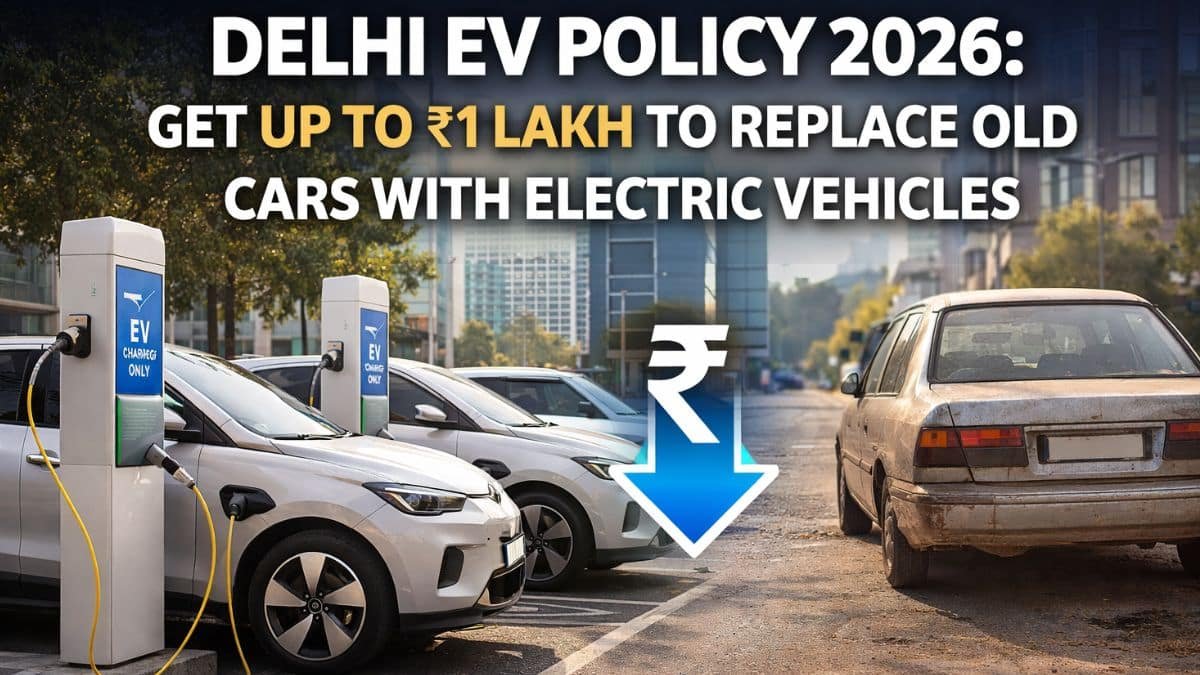

Delhi is taking another strong step towards cleaner transportation with the upcoming EV Policy 2026, which focuses on encouraging people to move away from older, polluting vehicles. The government is planning to offer attractive incentives, including benefits of up to ₹1 lakh, to those who choose to replace their old petrol or diesel cars with electric vehicles. This move reflects a broader effort to tackle air pollution and promote sustainable mobility in the capital.
Incentives to Replace Old Vehicles
One of the key highlights of the new policy is its focus on replacing outdated vehicles with cleaner alternatives. Instead of simply restricting old cars, the government is offering financial motivation to make the transition easier. Individuals who scrap their older vehicles and switch to electric cars can receive incentives that may go up to ₹1 lakh.
This approach is expected to encourage more people to voluntarily move towards electric mobility rather than being forced by regulations alone.
A Step Towards Cleaner Air
Delhi has long struggled with high pollution levels, and older vehicles contribute significantly to the problem. By promoting electric vehicles through financial support, the government aims to reduce emissions from the transport sector.
🚀 Join Our Tech Community!
Get the latest news, updates, and tech trends delivered straight to your phone. Never miss an update!
The EV Policy 2026 is not just about promoting new technology it is also about improving the quality of air and creating a healthier environment for residents. Encouraging cleaner vehicles is one of the most effective ways to achieve this goal.
Additional Support for EV Buyers
Beyond the scrappage incentive, the policy is expected to include several other benefits to make electric vehicles more affordable. These may include exemptions on road tax and registration fees, as well as subsidies linked to battery capacity.
There could also be financial support in the form of lower interest rates on loans, which would help reduce the overall cost of ownership. These combined benefits are designed to make EVs a practical option for a larger section of buyers.
Option to Convert Existing Vehicles
Another interesting aspect of the policy is the encouragement of vehicle retrofitting. Instead of buying a new electric car, some owners may choose to convert their existing petrol or diesel vehicles into electric ones.
To support this, the government is expected to offer incentives for retrofitting, making it a cost-effective alternative. This option adds flexibility and ensures that more people can participate in the shift towards electric mobility.
Improving Charging Infrastructure
For electric vehicles to become truly convenient, a strong charging network is essential. The Delhi government is planning to expand the number of charging stations across the city, including in residential areas and public spaces.
Better infrastructure will help reduce concerns related to charging and range, making EV ownership more practical for everyday use.
Encouraging Wider EV Adoption
The EV Policy 2026 is part of a long-term vision to increase the share of electric vehicles on Delhi’s roads. Previous policies have already made a positive impact, and this updated version aims to accelerate that progress.
By offering better incentives and improving infrastructure, the government hopes to make electric vehicles a common choice rather than a niche option.