

A commuter motorcycle in India lives and dies by one number: how far it goes on a litre of petrol. Everything else, styling, features, even outright reliability, tends to matter less to this specific buyer than the monthly fuel bill. That’s not a criticism, it’s just what the segment optimizes for, and it’s why the same handful of names keep showing up on every mileage list year after year.
This guide isn’t organized by price bracket the way our budget-based guides are. It’s organized around what actually makes a bike a good commuter, mileage, comfort over a repeated daily ride, service network reach, and total running cost, and it looks slightly above the strict under-₹1-lakh range where relevant, since a few 125cc options are worth the extra spend for certain riders.
What Actually Defines a Good Commuter Bike
Before the list, it’s worth being clear about what separates a genuine commuter from a bike that just happens to be affordable. A real commuter prioritizes fuel efficiency above acceleration, keeps maintenance simple and cheap, and rides comfortably enough over the same 15 to 30 km stretch, five or six days a week, that it doesn’t wear the rider down over months of repeated use. Styling and features are a bonus here, not the point.
Hero Splendor Plus: Still the Reference Point
The Splendor Plus remains the bike every other commuter in this list gets measured against, and its claimed mileage figures, commonly cited between 70 and 83 kmpl depending on the specific variant and Hero’s XTEC updates, are why. Real-world figures typically land somewhat below the claimed number once you factor in city traffic and AC-free riding conditions Hero can’t fully control for in testing, but even a conservative real-world estimate keeps it near the top of the segment.
🚀 Join Our Tech Community!
Get the latest news, updates, and tech trends delivered straight to your phone. Never miss an update!
Hero’s service network is the other half of this bike’s case. Even small towns with no other authorized two-wheeler service center usually have a Hero outlet, which matters enormously if something needs fixing and you’re not near a metro.
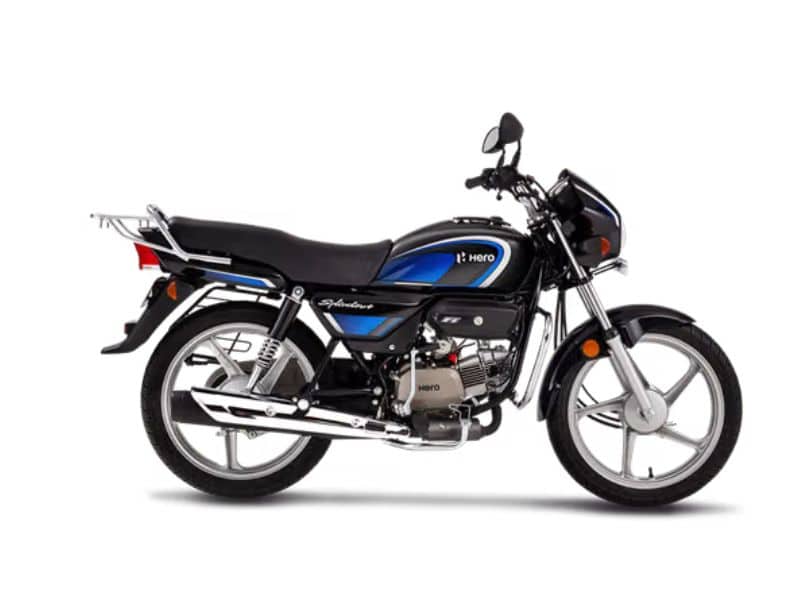
Hero HF Deluxe: The Budget Workhorse
Priced lower than the Splendor Plus, typically starting somewhere in the high ₹50,000s to low ₹80,000s ex-showroom depending on variant, the HF Deluxe strips things down further and still returns mileage figures competitive with, and by some owner reports slightly ahead of, the Splendor. Farmers, milk suppliers, and delivery riders gravitate to this bike specifically because it does one job without drama, year after year, and parts and service remain cheap and widely available.
It’s genuinely basic, don’t expect alloy wheels or a digital console on the base trim. For a rider whose only requirement is the lowest total cost of ownership, that’s precisely the point.
TVS Sport: Lightweight and Genuinely Efficient
The TVS Sport starts around ₹58,000 to ₹60,000 ex-showroom, making it one of the most affordable bikes on this entire list, and it backs that price with mileage figures commonly cited around 70 kmpl. Its lighter overall build helps here, less mass for the engine to move generally translates to better efficiency, and the same lightness makes it easy to filter through tight traffic gaps.
The trade-off is a more basic feature set even by commuter standards, and a slightly firmer ride on rough patches compared to some rivals tuned specifically for comfort.
TVS Radeon: Comfort-Focused Efficiency
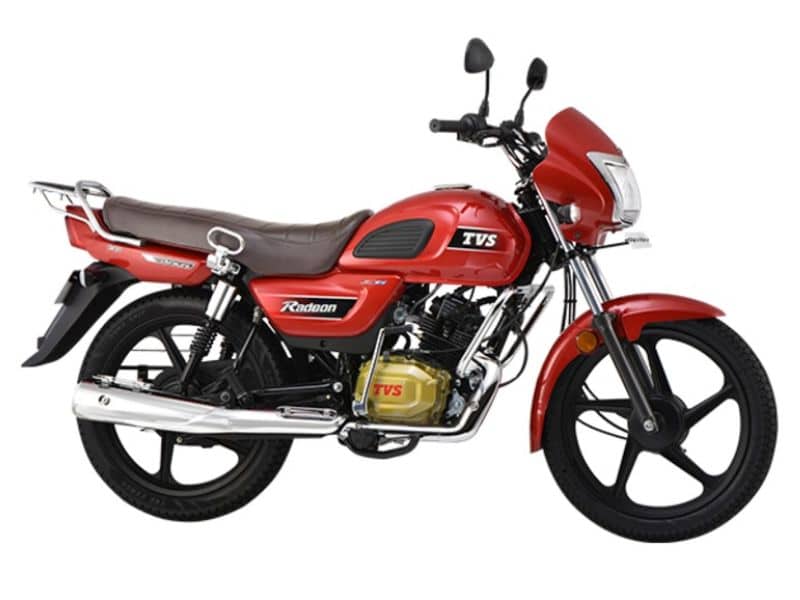
Where the Sport leans into being lightweight and cheap, the Radeon aims at riders who want similar mileage, typically cited around 65 to 69 kmpl, with noticeably better ergonomics for a longer daily ride. Higher trims add a front disc brake, alloy wheels, and a full LCD dashboard with trip data, features that push it slightly upmarket without losing the core commuter value proposition.
If your commute is on the longer side, 20 km or more each way, and comfort over that repeated distance matters as much as the fuel bill, the Radeon is worth the small step up from the Sport.
Bajaj Platina 110: Built for Bad Roads
Bajaj tuned the Platina’s suspension specifically softer than most rivals in this class, and it shows the moment you hit a stretch of broken road or a poorly maintained speed breaker. Mileage sits competitively around 70 kmpl, so you’re not sacrificing efficiency for that comfort, which is a genuinely useful combination for commuters riding through semi-urban or rural stretches where road quality varies more than it does on a smooth city arterial road.
Bajaj CT 110X: The Rugged Option
For commuters whose route includes unpaved sections or monsoon-flooded lanes, the CT 110X brings reinforced hardware and higher ground clearance while still returning mileage in the same 70 kmpl neighborhood as its more road-focused siblings. It’s less refined and less comfortable over long, smooth stretches than the Platina, but for a rider who genuinely needs durability over polish, that’s the right trade to make.
Honda Shine 100 and SP125: When You Want a Bit More
Honda’s Shine 100 sits in the same mileage territory as the Hero and Bajaj options above, generally around 70 kmpl, while carrying Honda’s specific reputation for engine refinement and consistent after-sales quality. Step up to the SP125 at around ₹89,000 ex-showroom and mileage stays strong even as displacement climbs to 124cc, with meaningfully more mid-range pull for riders who occasionally need to overtake or carry a pillion up an incline without the engine straining.
Neither bike wins outright on mileage against the segment’s absolute leaders, but both offer a real refinement and reliability edge that a chunk of commuter buyers specifically pay for.
Bajaj Freedom 125: The CNG Wildcard
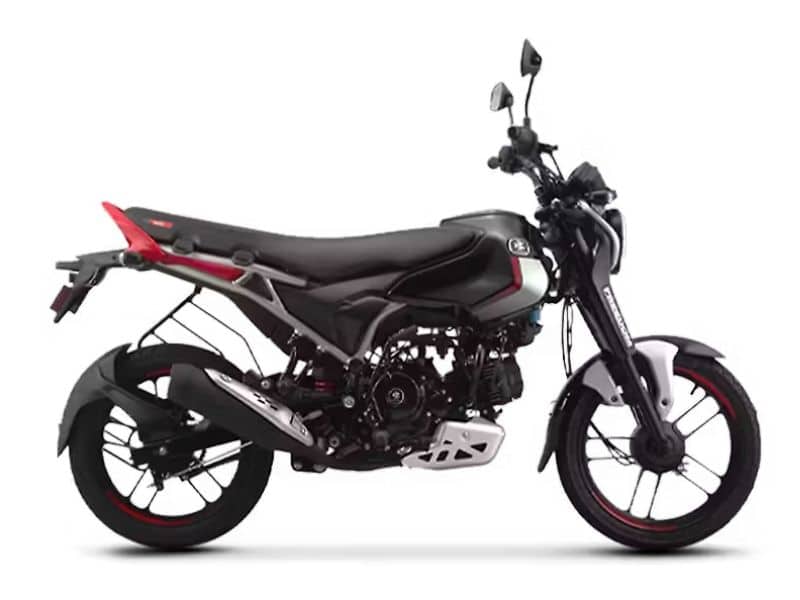
Worth a specific mention here, the Freedom 125 runs a CNG-petrol dual setup that can push running costs below even the best petrol-only commuters on this list, for riders with reliable access to CNG refueling. It’s not a fit for every city, and it eats into some underseat storage, but for the right buyer it’s genuinely the lowest-running-cost option in this entire guide.
Commuter Comparison at a Glance
| Motorcycle | Approx. Claimed Mileage | Approx. Ex-Showroom Price | Best For |
|---|---|---|---|
| Hero Splendor Plus | 70–83 kmpl | ₹72,900–₹77,500 | Overall benchmark, widest service reach |
| Hero HF Deluxe | ~70 kmpl | ₹58,000–₹85,000 | Absolute lowest cost of ownership |
| TVS Sport | ~70 kmpl | ₹58,000–₹60,000 | Lightest, most affordable option |
| TVS Radeon | 65–69 kmpl | Mid commuter bracket | Comfort on longer daily commutes |
| Bajaj Platina 110 | ~70 kmpl | ~₹72,900 | Comfort on rough, broken roads |
| Bajaj CT 110X | ~70 kmpl | ₹73,000–₹82,000 | Rural and unpaved-route riders |
| Honda Shine 100 | ~70 kmpl | ₹79,800 | Refinement and Honda’s service reputation |
| Honda SP125 | Slightly lower than 100cc rivals | ~₹89,000 | Riders who need more pull, pillion use |
| Bajaj Freedom 125 (CNG) | Lower running cost via CNG | Contact dealer | Cost-conscious riders with CNG access |
Claimed Mileage vs What You’ll Actually See
Every figure above is a manufacturer-claimed number, tested under controlled conditions that don’t fully reflect Indian city traffic, AC-free open-road testing aside. Expect real-world mileage to run roughly 10 to 15 percent below the claimed figure once you factor in stop-start traffic, frequent braking, and less-than-ideal tyre pressure maintenance, which a lot of owners simply don’t stay on top of. Riding style matters more than people expect too, a rider who accelerates gently and avoids unnecessary hard braking can genuinely close a meaningful chunk of that gap through habit alone.
If you want the single safest, most proven commuter with the widest service reach in the country, the Hero Splendor Plus remains the default answer. Riders chasing the absolute lowest cost of ownership should look at the Hero HF Deluxe or TVS Sport instead, both undercut the Splendor on price while staying competitive on mileage. Pick the TVS Radeon or Bajaj Platina 110 if comfort over a longer daily ride matters more than shaving off the last few hundred rupees, and go with the CT 110X specifically if your route includes rough or unpaved stretches. For riders in a city with reliable CNG access, the Bajaj Freedom 125 is worth serious consideration purely on running cost. Match the bike to your actual daily route and distance, that decision matters more here than anywhere else in the two-wheeler market.
Frequently Asked Questions
Which commuter motorcycle has the best real-world mileage in India?
The Hero Splendor Plus and Hero HF Deluxe consistently rank at or near the top across independent mileage comparisons, with claimed figures in the 70 to 83 kmpl range depending on variant. Real-world figures will sit somewhat below the claimed number for any bike on this list, so treat the comparison as relative rather than an exact number you’ll see day to day.
Is a 125cc commuter worth the extra cost over a 100cc bike?
If your commute includes highway stretches, regular pillion riding, or frequent overtaking, yes, the added mid-range torque on something like the Honda SP125 genuinely changes the experience. For a short, flat, mostly solo commute, a 100cc bike will do the job for less money and typically better mileage.
Does riding style really affect mileage that much?
Yes. Gentle throttle application, maintaining correct tyre pressure, and avoiding unnecessary hard braking can meaningfully close the gap between claimed and real-world mileage. Two riders on the identical bike can see a noticeably different kmpl figure purely based on habits.