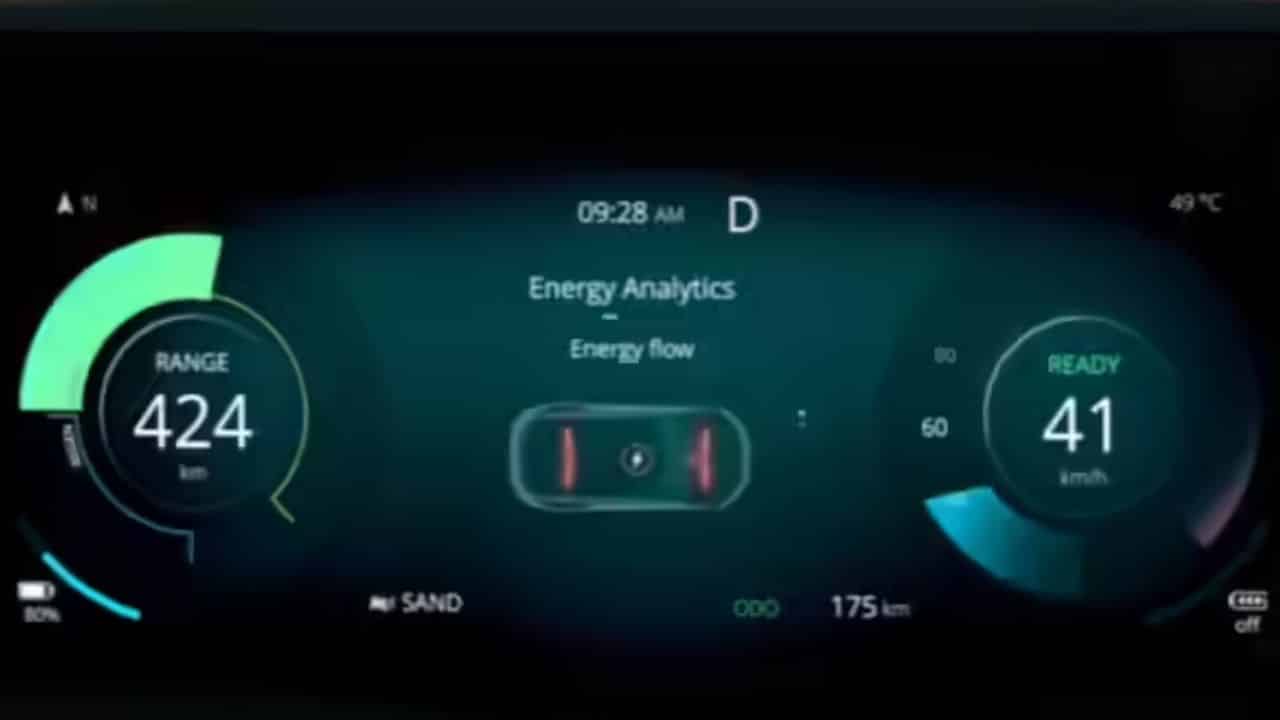

Tata Sierra EV claims up to 665 km of range on the Sierra EV’s 75 kWh battery pack. That number is real, it’s not fabricated or exaggerated, but it’s also not what most owners will see on their dashboard on a typical Tuesday commute. Understanding the gap between claimed and real-world range, and why that gap exists, is essential before you plan your ownership around a number that was never designed to reflect everyday driving.
What the 665 km Claim Actually Measures
The Sierra EV’s range figures come from the MIDC (Modified Indian Driving Cycle) test, India’s standardised method for measuring vehicle range and efficiency under controlled laboratory conditions. MIDC is generally considered more representative of Indian driving patterns than the older ARAI test cycle used for combustion vehicles, since it accounts more heavily for stop-start city driving.
Even so, it remains a lab test. It’s conducted on a chassis dynamometer under controlled temperature conditions, without passengers or cargo loading down the vehicle, without air conditioning running continuously, and at speeds and acceleration patterns that follow a defined test protocol rather than how you or I actually drive in bumper-to-bumper traffic or on an open highway. The 665 km figure represents the best-case outcome under those specific, controlled conditions, not a guarantee of what you’ll see in daily use.
Why Real-World Range Is Always Lower
Several factors consistently pull real-world EV range below the claimed figure, and none of them are specific to the Sierra EV, they apply to every electric vehicle sold anywhere.
🚀 Join Our Tech Community!
Get the latest news, updates, and tech trends delivered straight to your phone. Never miss an update!
Air conditioning use. Running the AC continuously, which most Indian owners will do for the majority of the year given the climate, draws meaningfully from the battery in a way lab testing doesn’t fully replicate under everyday conditions.
Driving style. Aggressive acceleration and higher average speeds both increase energy consumption significantly compared to the smooth, moderate driving pattern a test cycle follows.
Vehicle load. A car full of passengers and luggage weighs more than a lab-test vehicle running empty, and more weight means more energy needed to move it.
Traffic conditions. Stop-start city traffic, ironically, can be reasonably efficient for EVs thanks to regenerative braking recovering energy during deceleration, but genuinely heavy, prolonged traffic with constant AC use still tends to reduce range compared to free-flowing conditions.
Highway speeds. This is where EVs typically lose the most ground against their claimed figures. Aerodynamic drag increases sharply with speed, and sustained highway cruising at 100 kmph-plus consumes noticeably more energy per kilometre than city driving, the opposite pattern from how a petrol or diesel car’s mileage typically behaves.
Temperature extremes. Both very hot and very cold conditions affect battery efficiency, though Indian summers specifically stress the battery through heat rather than cold, making AC-related range loss a bigger factor here than it might be in colder climates.
What Range to Realistically Expect
Since the Sierra EV only began deliveries in mid-July 2026, there isn’t yet a meaningful body of genuine owner-reported range data to draw from. What can be said with reasonable confidence, based on how comparable EVs on similar platforms have performed in Indian ownership conditions, is that real-world range in mixed city driving with AC running typically lands somewhere between 65 and 80 percent of the MIDC-claimed figure, with sustained highway driving at higher speeds often landing toward the lower end of that range or below it.
Applied loosely to the Sierra EV’s claimed figures, that would suggest a realistic city-driving expectation somewhere in the broad 400-530 km range for the 75 kWh pack, and correspondingly less for the 63 kWh pack’s 565 km claim. These are directional estimates based on general EV range-degradation patterns, not confirmed Sierra EV-specific figures, and should be treated as a planning buffer rather than a promise. Once genuine owner data accumulates, this article will be updated with confirmed real-world figures.
Why This Gap Isn’t a Reason to Distrust the Claim
It’s worth being clear that a gap between claimed and real-world range isn’t evidence of a misleading claim, it’s simply how standardised testing works across the entire automotive industry, for EVs and combustion vehicles alike. Every manufacturer’s claimed figures, whether it’s range, mileage, or fuel efficiency, come from a standardised test cycle designed for consistent comparison between vehicles, not for predicting any individual owner’s exact real-world number. The 665 km claim is genuinely useful for comparing the Sierra EV against rivals like the Hyundai Creta Electric or Mahindra BE 6 on a level playing field, since all of them are tested under the same MIDC protocol. It’s just not the number to budget your actual trip planning around.
How to Plan Trips Using Realistic Range Expectations
The practical approach is to treat the claimed MIDC figure as a ceiling and build in a working buffer for actual trip planning. For daily city commuting, even a conservative real-world estimate on either battery pack should comfortably cover a week or more between charges for most urban drivers, so range anxiety shouldn’t be a major concern for typical city use.
For longer highway trips, plan charging stops around a more conservative range estimate than the claimed figure, particularly if you’ll be running the AC and cruising at sustained higher speeds for extended stretches. Checking your actual remaining range on the dashboard periodically during a long drive, rather than assuming a fixed distance-per-percent based on the claimed figure, is the more reliable way to manage a trip until you’ve built up personal experience with how your specific driving style affects your car’s real-world efficiency.
Frequently Asked Questions
Is the Tata Sierra EV’s claimed 665 km range accurate?
The 665 km figure is an accurate MIDC test result under controlled lab conditions, but it isn’t representative of real-world driving with AC running, traffic, and highway speeds, all of which typically reduce range below the claimed figure.
What real-world range should I expect from the Tata Sierra EV?
Confirmed owner-reported figures aren’t yet available since deliveries only began in mid-July 2026. Based on how comparable EVs perform in Indian conditions, real-world range for the 75 kWh pack is likely to fall somewhere below the 665 km claim, particularly with AC use and highway driving.
Does highway driving reduce EV range more than city driving?
Generally, yes. Aerodynamic drag increases sharply at higher speeds, making sustained highway cruising less efficient than city driving, where regenerative braking during frequent stops helps recover some energy.
Why is EV range tested differently from how people actually drive?
Standardised test cycles like MIDC exist to allow fair, consistent comparison between different vehicles under identical conditions, not to predict any individual owner’s real-world result, which varies with driving style, load, weather, and traffic.