
The single most common question around electric motorcycles isn’t about power or price, it’s how far will it actually go, and how do I keep it charged. Both questions have less straightforward answers than a spec sheet suggests. A claimed range figure and your real daily experience can differ meaningfully, and charging itself works nothing like walking into a petrol pump for a five-minute top-up. This guide breaks down both honestly, without the marketing gloss.
What Determines an Electric Motorcycle’s Range
Range is the distance an electric motorcycle can travel on a full battery charge, and it depends on far more than just battery size. A larger battery, measured in kilowatt-hours (kWh), generally means more stored energy and therefore more potential range, but how that energy actually gets used on the road depends on several other factors working together.
Riding speed matters more than most buyers expect. Higher speeds create more aerodynamic drag, which drains the battery faster per kilometer than gentle, steady-speed riding does. Throttle behavior plays a similarly large role, aggressive acceleration and frequent hard throttle inputs consume noticeably more energy than smooth, gradual riding.
Rider weight and any additional load also affect range, a heavier rider or a loaded pillion means the motor works harder to maintain the same speed, which pulls more from the battery. Terrain matters too, climbing inclines demands more power than flat riding, while descents can sometimes claw a little range back through regenerative braking, where fitted.
🚀 Join Our Tech Community!
Get the latest news, updates, and tech trends delivered straight to your phone. Never miss an update!
Weather and ambient temperature genuinely affect battery performance as well. Extreme heat, common across much of India for a good part of the year, can affect battery efficiency and, over time, long-term battery health if the vehicle regularly sits in direct sun or charges in very high ambient temperatures.
Why Real-World Range Differs From the Claimed Figure
Manufacturers test and certify range figures under specific, controlled conditions that rarely match everyday Indian riding. A motorcycle claiming 150 km on a full charge might realistically deliver noticeably less in stop-start city traffic with the throttle used aggressively, and somewhat more if ridden gently at steady speeds on an open road. This isn’t unique to electric two-wheelers, petrol vehicles show a similar gap between certified and real-world mileage, but the gap matters more for EVs specifically because running out of charge mid-ride is a bigger practical problem than running low on petrol, given how much longer recharging takes compared to refueling.
A sensible approach when shopping is to treat the claimed range as a best-case ceiling, not a guaranteed daily figure, and to plan your actual riding pattern around a meaningfully lower real-world expectation, particularly if your commute involves heavy traffic or hot weather.
How Charging Actually Works
Charging replenishes the battery by drawing electricity from an external power source, and the two broad categories are home charging and public charging, each suited to different situations.
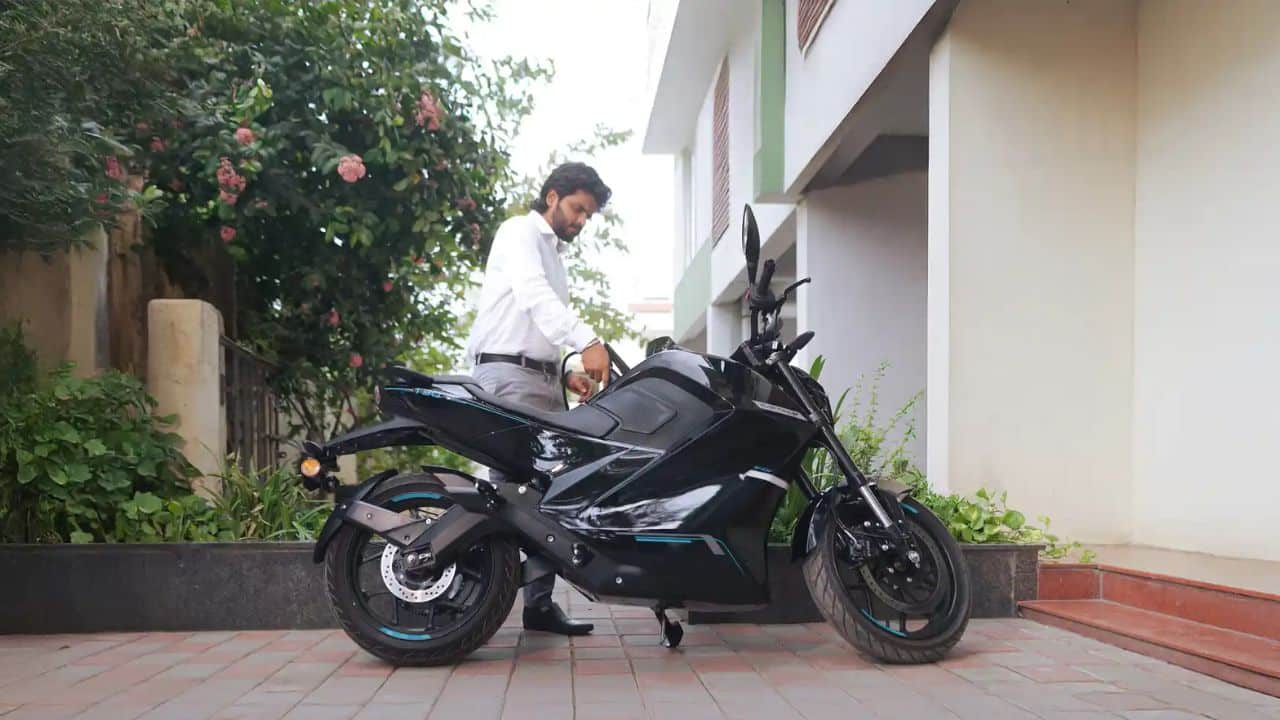
Home charging uses a standard power outlet or a dedicated wall-mounted charging unit at your residence, typically overnight. This is slower than public fast charging but is usually the most convenient and cost-effective option for daily use, since the motorcycle simply charges while parked overnight and is ready each morning without any extra effort.
Public charging stations, where available, are installed at malls, office complexes, highway stops, and dedicated charging hubs. Some electric motorcycles support faster charging at compatible public stations, cutting charging time significantly compared to a home outlet, though public charging infrastructure specifically built for two-wheelers is still less widespread in India than car-focused charging networks.
Some electric motorcycle models, notably several commuter-focused ones, use a removable battery design, letting you physically carry the battery pack indoors to charge it at a wall socket without needing any dedicated charging equipment installed at home. This is a genuinely practical feature for riders living in apartments or areas without easy access to a private parking spot with power.
How Long Charging Actually Takes
Charging time depends on the battery’s capacity and the power output of the charging source, and it’s slower across the board than refueling a petrol bike, that trade-off is a fundamental part of owning an electric motorcycle, not a defect specific to one model. A typical home charge from a low battery to full commonly takes several hours, often done overnight, while compatible fast-charging options, where available and supported by the specific motorcycle, can bring charging time down considerably for a partial top-up.
Exact charging times vary significantly by model, battery size, and the charger used, so always check the manufacturer’s specific charging time figures for both standard and fast-charging options rather than assuming a general industry average applies to a particular bike.
Planning Realistic Daily Use
The practical question for most buyers isn’t the maximum possible range, it’s whether the bike comfortably covers a typical day’s riding with margin to spare. Start by honestly estimating your actual daily distance, commute plus errands, and compare that against the real-world range you can reasonably expect, not the claimed figure.
A rider with a short, predictable commute and reliable home charging access has the easiest ownership experience, since the bike can charge fully overnight every night regardless of range anxiety. A rider with a longer or less predictable daily distance, or without reliable home charging, needs to think more carefully about public charging access along their actual routes, or consider a model with a removable battery that can be charged more flexibly.
Battery Health and Charging Habits
How you charge affects the battery’s long-term health, not just how far you can ride today. Frequently charging to a full 100 percent and letting the battery run down to very low levels repeatedly can accelerate battery degradation over time, compared to keeping the charge level in a more moderate range for daily use where the manufacturer allows this flexibility. Extreme heat exposure during charging, common in Indian summers, is also worth being mindful of, parking and charging in shade where possible is a simple habit that helps protect long-term battery condition.
Frequently Asked Questions
Does riding an electric motorcycle in city traffic use more or less range than highway riding?
It depends on the specific riding pattern. Stop-start city traffic with frequent hard acceleration tends to drain range faster per kilometer than smooth, steady-speed riding, but sustained high-speed highway riding also increases energy consumption due to aerodynamic drag. Gentle, steady-speed riding in moderate traffic typically delivers the best real-world range.
Can I fast-charge an electric motorcycle every day without damaging the battery?
Frequent fast charging can contribute to faster battery degradation over time compared to regular, slower home charging, though the exact impact varies by battery chemistry and manufacturer design. Where possible, using fast charging occasionally for genuine need rather than as a daily default is generally the more battery-friendly habit.
How much does hot Indian weather actually affect electric motorcycle range and battery life?
Extreme heat can reduce charging efficiency and, over the long term, contribute to faster battery degradation if the vehicle regularly charges or sits parked in direct sun during peak summer temperatures. Parking in shade and avoiding charging during the hottest part of the day, where practical, helps protect battery health over time.
Is a removable battery better than a fixed, non-removable one?
It depends on your living situation. A removable battery is genuinely more convenient if you don’t have dedicated home charging infrastructure, since you can carry it indoors to charge at any standard power outlet. A fixed battery, paired with a proper home charging setup, can offer other advantages depending on the specific model, so the better choice comes down to your actual charging access rather than one design being universally superior.