
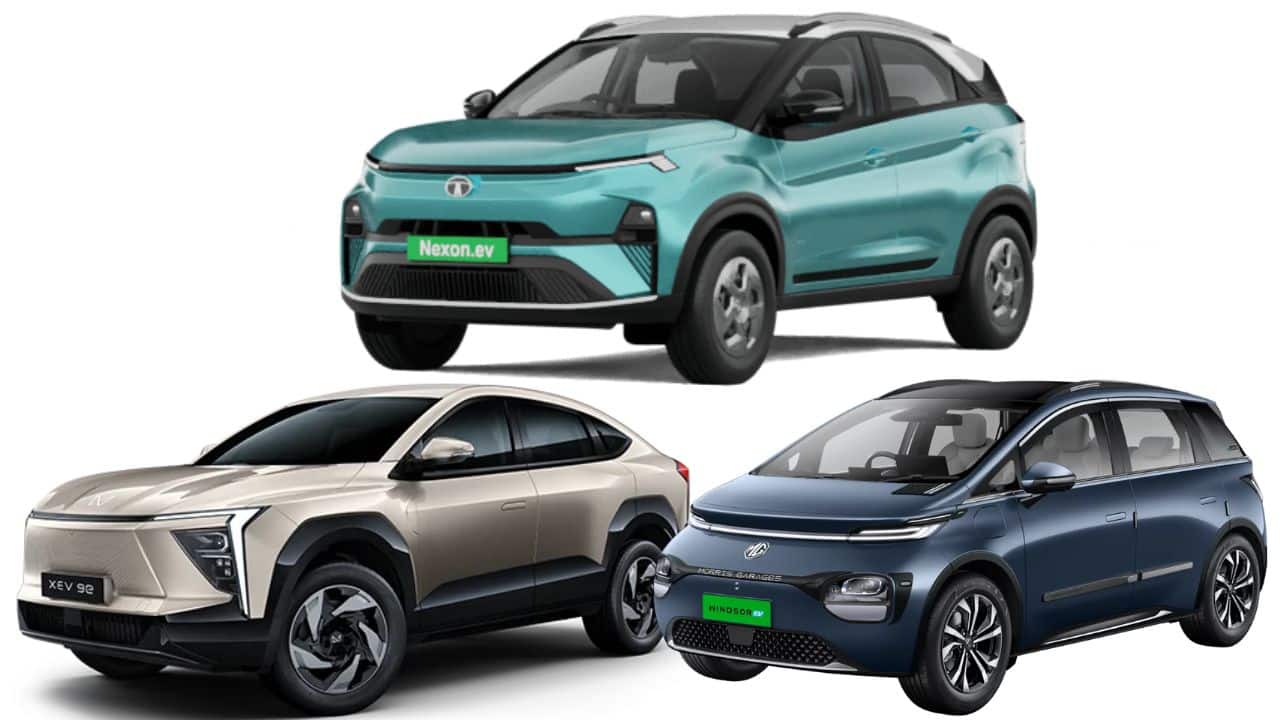

Three brands now control the overwhelming majority of India’s electric car market. Tata Motors, Mahindra and JSW MG Motor India together retailed 26,897 electric passenger vehicles in July 2026, out of a total market of 32,609 units, according to Vahan-based tracking compiled by Autocar India. That works out to a combined 82.5% share, a level of concentration that leaves every other EV car manufacturer in India, from Maruti Suzuki to BYD to Vinfast, fighting over less than a fifth of the market. But the three leaders arrived at July’s numbers through three genuinely different stories, and the wholesale data behind each brand’s retail figure tells you which of those stories is actually built to last.
The Retail Scoreboard
| OEM | July 2026 Retail | July 2025 Retail | YoY Growth | July 2026 Market Share | July 2025 Market Share |
|---|---|---|---|---|---|
| Tata Motors | 13,578 | 6,712 | +102% | 41.6% | 37.7% |
| Mahindra | 7,677 | 3,416 | +125% | 23.5% | 19.2% |
| JSW MG Motor | 5,642 | 5,900 | −4% | 17.3% | 33.1% |
| Rest of market | 5,712 | 1,795 | +218% | 17.5% | 10.1% |
| Total EV car market | 32,609 | 17,823 | +83% | 100% | 100% |
Market share figures are calculated against Autocar India’s Vahan-sourced total for each period. Tata Motors’ own commentary on the month described crossing the 40% EV market share mark, which this data confirms. Mahindra’s share gain and MG’s share loss are similarly consistent with the brands’ own July 2026 statements to the trade press.
The single biggest shift here is MG. A brand that held roughly a third of the EV car market just a year ago now holds barely half that, even though its actual unit volume barely moved, 5,900 units in July 2025 versus 5,642 in July 2026. MG didn’t lose customers in absolute terms so much as it stood still while the rest of the market, chiefly Tata and Mahindra, grew explosively around it.
Tata: Winning on Both Ends of the Pipeline
Tata’s retail number is only half the story. The company dispatched 15,217 EVs to dealers in July, a figure disclosed in its own Regulation 30 filing, well ahead of the 13,578 units that Vahan data shows were actually registered. That gap of roughly 1,600 units means Tata isn’t just winning at the showroom, it’s actively building inventory ahead of the festive season, a sign of confidence that current demand will hold or grow through August, September and October. The freshly launched Sierra EV, with deliveries starting mid-July, adds further momentum that hasn’t fully shown up in retail numbers yet. Tata’s position going into the festive quarter looks structurally strong on both the supply side and the demand side at once.
🚀 Join Our Tech Community!
Get the latest news, updates, and tech trends delivered straight to your phone. Never miss an update!
Mahindra: Demand Outrunning Its Own Supply
Mahindra’s July was arguably the most organically impressive of the three, precisely because its wholesale dispatches lagged behind retail. The company shipped 6,483 EVs across the XEV 9S, XEV 9e, BE 6 and XUV400 combined, while Vahan data shows 7,677 units were actually registered, a gap of roughly 1,200 units in the opposite direction from Tata’s. That means Mahindra’s 125% year-on-year retail growth and four-point market share gain happened even as the brand was drawing down existing dealer stock rather than flooding the channel with fresh units. The XEV 9S is now doing the heavy lifting, with 4,131 units dispatched, while the older BE 6 and XEV 9e are declining sharply on the wholesale side as dealers work through inventory built in earlier months. If Mahindra can scale XEV 9S dispatches further without denting demand, this is the kind of share gain that tends to prove durable, because it’s demand-led rather than channel-led.
MG: Record Wholesale, But Retail Hasn’t Followed
MG’s July was the strangest of the three. The company posted a company-record 8,158 units in total wholesale dispatches, its third consecutive monthly record, with its New Energy Vehicle portfolio, comprising the Comet EV, Windsor EV, ZS EV, Cyberster and M9, accounting for more than 80% of that total, or upwards of 6,500 electrified units. That’s a wholesale figure comfortably ahead of MG’s 5,642-unit retail count for the month. Put plainly, MG is pushing more EVs into its dealer network than it is currently able to sell through it, which is a materially different pattern from either Tata’s balanced strength or Mahindra’s supply-constrained demand. Whether this is a deliberate bet on stronger festive-season retail catching up, or an early sign of building dealer stock pressure specific to MG’s EV lineup, will only be clear once August’s retail numbers are in. Either way, a brand trying to defend a rapidly eroding market share by pushing wholesale volume, without retail following at the same pace, is a pattern worth watching closely into the festive quarter.
Frequently Asked Questions
Which company has the highest EV car market share in India as of July 2026?
Tata Motors leads with a 41.6% share of India’s electric passenger vehicle market in July 2026, having crossed the 40% mark, according to Vahan-based retail data. Mahindra ranks second at 23.5%, followed by JSW MG Motor India at 17.3%.
Why did MG’s EV market share fall so sharply in July 2026?
MG’s actual unit sales stayed roughly flat, 5,900 units in July 2025 versus 5,642 in July 2026, but the overall EV car market grew 83% year-on-year around it. Because MG’s own volumes didn’t grow while the market nearly doubled, its share fell from about 33% to roughly 17% over the same period.
Is Mahindra’s EV car growth in July 2026 driven by wholesale or retail?
Retail. Mahindra’s dispatches to dealers, 6,483 units, actually trailed its retail registrations of 7,677 units in July 2026, meaning the brand’s 125% year-on-year growth reflects genuine customer demand drawing down existing dealer stock rather than the channel being stocked up with fresh supply.