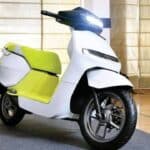


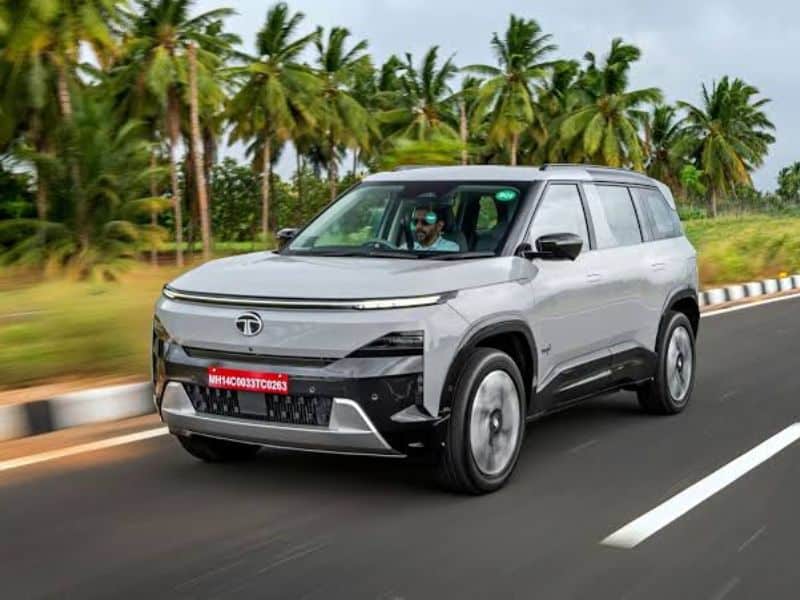
The Tata Sierra EV isn’t built as a hardcore off-roader, but the quad-wheel-drive (QWD) variant comes with six terrain modes, an Off-road Assist system, and 205mm of ground clearance that put it a step ahead of most electric SUVs sold in India when the tarmac runs out. It’s not a Thar Roxx rival. It’s a monocoque SUV that can handle broken trails, wet grass, and moderate mud without much drama, and that’s a fair description of what most Indian buyers actually need.
What Are the Six Terrain Modes on the Tata Sierra EV?
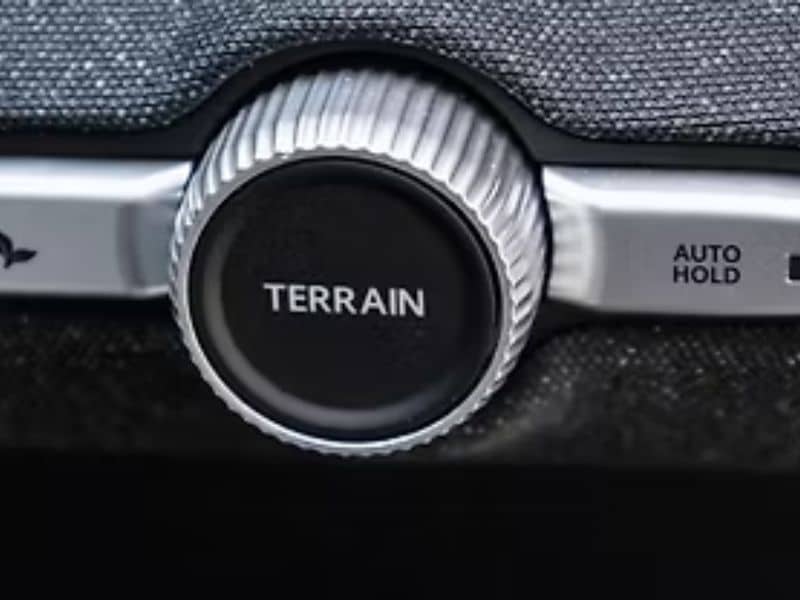
The Sierra EV’s QWD variant gets six terrain modes: Normal, Grass, Mud/Ruts/Gravel, Sand, Rock Crawl, and Custom. Each mode retunes throttle response, torque distribution between the front and rear motors, and the traction and stability control thresholds for that specific surface.
Rock Crawl mode, for instance, dials back throttle sensitivity for slow, deliberate wheel placement over uneven rocks and logs. Sand mode does close to the opposite, keeping revs and power delivery higher so the tyres don’t bog down in loose terrain. Custom mode lets the driver manually adjust individual parameters rather than accepting a preset, which is a genuinely useful option if you know the specific trail you’re tackling better than Tata’s engineers do.
There’s also a Boost Mode, first shown publicly when Tata put a Sierra EV up the Tal Moreeb dune in Abu Dhabi. It briefly unlocks the motors’ maximum power and torque for short bursts, useful for steep inclines or getting unstuck from soft sand, though it’s not something you’d want running constantly given how quickly it drains the battery under hard load.
🚀 Join Our Tech Community!
Get the latest news, updates, and tech trends delivered straight to your phone. Never miss an update!
How Does the QWD System Actually Work Off-Road?
QWD stands for Quad Wheel Drive, Tata’s name for the dual-motor setup available on the Sierra EV’s larger 75kWh battery pack. One motor sits on the front axle, one on the rear, and each can be controlled independently rather than simply splitting torque through a mechanical differential the way a traditional AWD system does.
This matters off-road because wheel slip on one axle doesn’t automatically rob torque from the other. If the front wheels lose grip climbing over a rut, the rear motor can keep sending power without waiting for a clutch pack or viscous coupling to react. The base variant is rear-wheel drive only, and while RWD is fine for everyday driving and light gravel, it’s the QWD version that actually gets the terrain modes and Off-road Assist system, so that’s the one to specify if off-road capability genuinely matters to your use case.
Ground Clearance, Approach and Departure Angles Explained
Ground clearance alone doesn’t tell you much about how a vehicle handles obstacles. The angles at the front and rear overhangs matter just as much, because a tall vehicle with long overhangs can still scrape its bumpers on a moderate incline.
| Spec | Tata Sierra EV (QWD) |
|---|---|
| Ground clearance (unladen) | 205mm |
| Approach angle | 26.8 degrees |
| Departure angle | 29 degrees |
| Rampover (breakover) angle | 17.2 degrees |
| Suspension | Ultra Glide with Frequency Dependent Damping |
The 205mm clearance is genuinely useful on Indian roads even before you think about off-roading, it’s enough to clear tall speed breakers and moderately flooded stretches without scraping the underbody. The approach and departure angles benefit from the Sierra EV’s short front and rear overhangs, which is why reviewers who took the QWD variant over Tata’s curated off-road course came away describing it as surprisingly capable for a monocoque SUV, not a body-on-frame one.
Rampover angle at 17.2 degrees is the number worth paying attention to if you’re planning anything beyond graded dirt tracks. It determines how sharp a ridge or hump the underbody can pass over without the middle of the vehicle grounding out, and it’s noticeably lower than the approach and departure figures.
Off-Road Assist and the 540-Degree Camera
Off-road Assist works alongside the terrain modes to manage wheel spin and torque delivery automatically once a mode is selected, essentially doing the job a skilled driver would otherwise have to do manually with throttle modulation. It’s paired with a 540-degree surround-view camera system that includes a Transparent Mode, letting the driver see a simulated view of what’s directly under the front wheels on the touchscreen. On a trail with hidden rocks or a washed-out edge, being able to glance at the screen instead of guessing where the front tyres are pointed is a real, practical advantage, not a gimmick.
Where the Sierra EV’s Off-Road Ability Falls Short
Honest framing matters more here than anywhere else in this article. The Sierra EV rides on Tata’s Acti.EV+ monocoque platform, not a ladder-frame chassis, so comparing it to a proper off-roader is the wrong benchmark to begin with. A few specific limitations are worth knowing before anyone assumes this SUV can go wherever a Thar or a Gurkha can.
Suspension travel is limited compared to a dedicated off-roader. Reviewers who pushed the QWD variant through a see-saw style obstacle on Tata’s own test course reported the car banging hard on landing, since there simply isn’t enough wheel articulation to keep all four tyres planted through that kind of extreme axle twist.
There’s no dedicated underbody protection plate on the QWD variant, which matters if you’re regularly crossing rocky or rutted terrain where something could strike the battery pack housing. And unlike the outgoing ICE Sierra, which carried a spare wheel mounted under the body, the Sierra EV only comes with a puncture repair kit. That’s a genuine practical downgrade for anyone planning a trip on roads where a proper spare, not a sealant canister, is what you’d actually want.
Is the Tata Sierra EV Actually Good Off-Road?
For what most Indian SUV buyers mean by “off-road”, muddy farm access roads, wet grass at a resort, a rocky riverbed crossing, gravel trails in the hills, the QWD Sierra EV genuinely delivers. The terrain modes aren’t a marketing checkbox; they measurably change how the car behaves, and the 205mm clearance combined with short overhangs means you’re not constantly worried about scraping the bumpers.
Where it stops being the right tool is technical rock crawling, deep water crossings well beyond what a monocoque SUV should attempt, or any terrain where you’d genuinely need low-range gearing and locking differentials. For that category of driving, a body-on-frame vehicle remains the honest recommendation, and the Sierra EV was never designed to compete there.
Frequently Asked Questions
Does the Tata Sierra EV have terrain modes on all variants?
No. The six terrain modes and Off-road Assist system are available only on the QWD (dual-motor, all-wheel-drive) variant, which requires the larger 75kWh battery pack. The standard rear-wheel-drive version does not get these features.
What is Boost Mode on the Tata Sierra EV?
Boost Mode temporarily unlocks the QWD system’s maximum available power and torque for short bursts, intended for situations like steep inclines, deep sand, or quick overtakes, rather than for continuous use.
Is the Tata Sierra EV QWD a proper off-roader like the Thar Roxx?
No. It’s a monocoque SUV designed for light-to-moderate off-road use, not a body-on-frame vehicle with low-range gearing. It comfortably handles broken trails and rough terrain but isn’t built for serious rock crawling or extreme conditions.