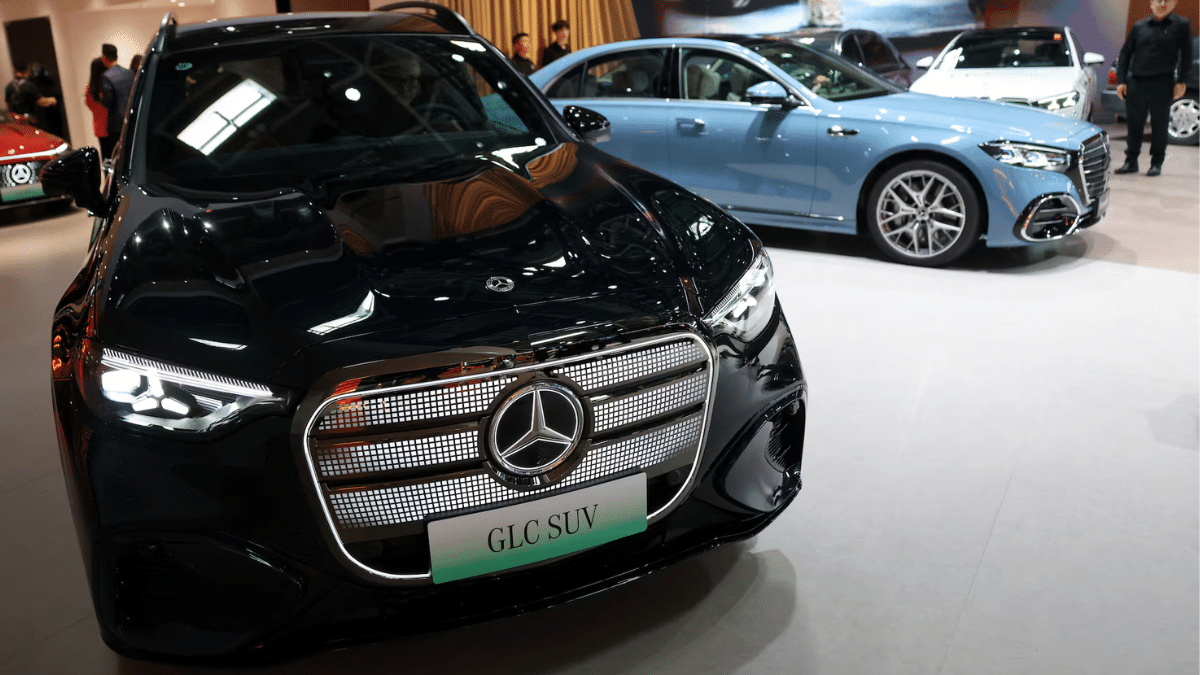

Mercedes-Benz is bracing for a challenging phase in China, describing the country’s automobile market as a “roller coaster” amid intensifying competition and rapidly evolving consumer preferences. The situation reflects growing pressure on global luxury brands in one of the world’s most important auto markets.
The competitive landscape in China has become increasingly aggressive, driven largely by domestic manufacturers offering technologically advanced electric vehicles at competitive prices. Local brands are expanding beyond mass-market segments and are now making strong inroads into the premium space, traditionally dominated by global players like Mercedes-Benz.
The company has already begun to feel the impact, with a decline in its sales in the Chinese market. This shift is linked to both the rise of local competitors and changing buyer expectations, as consumers increasingly prioritize technology, connectivity, and value.
Despite the pressure, Mercedes-Benz has indicated that it will avoid engaging in price wars with domestic rivals. Instead, the company plans to focus on strengthening its brand value, introducing new technologies, and enhancing product appeal to maintain its position in the luxury segment.
🚀 Join Our Tech Community!
Get the latest news, updates, and tech trends delivered straight to your phone. Never miss an update!
A key part of its strategy involves deeper localisation in China. By working closely with local suppliers and technology partners, Mercedes aims to develop products that are better aligned with the needs of Chinese consumers, particularly in areas such as advanced driver assistance and connected features.
The company is also preparing a series of new model launches tailored for the Chinese market, including electric vehicles designed specifically for local preferences. This product strategy is expected to play a crucial role in regaining momentum.
Another major challenge comes from shifting consumer behavior. Younger buyers in China are showing less attachment to traditional luxury brands and are more open to trying domestic alternatives that offer innovative features and competitive pricing.
The Chinese auto market remains highly dynamic, characterized by rapid innovation, intense competition, and evolving customer expectations. For global automakers, staying relevant requires continuous adaptation and investment.
Mercedes-Benz’s approach reflects a long-term strategy focused on innovation, localisation, and premium positioning. As competition continues to intensify, the company’s ability to navigate China’s fast-changing market conditions will be critical to its future growth.