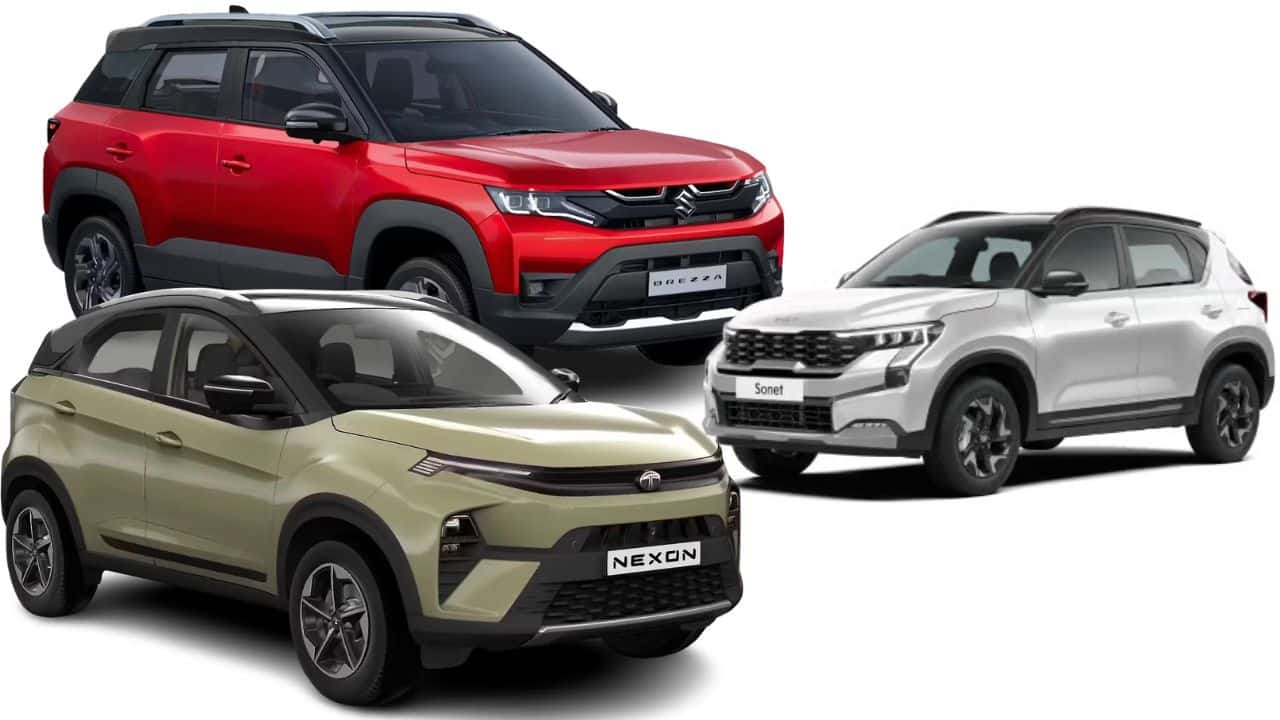

Maruti Suzuki will officially unveil the updated Brezza on July 23, 2026, and only the launch date and the opening of bookings are confirmed so far. Everything about specifications, features, and pricing is based on spy shots and consistent reporting, not an official statement from Maruti. With that caveat in place, it’s worth looking at what the Brezza’s expected changes could mean once it’s back up against the Tata Nexon, Hyundai Venue, Kia Sonet, Mahindra XUV 3XO, Skoda Kylaq, Toyota Taisor, Nissan Magnite, and Renault Kiger.
The engine gap is the one that mattered most
The Brezza has been the odd one out in this segment for a while now: it’s one of the only major players without a turbo-petrol option, at a time when several rivals in this space have already moved toward turbocharged engines to offer stronger outright performance alongside their naturally aspirated variants. Reports point to Maruti closing that gap with a 1.0-litre turbo-petrol unit borrowed from the Fronx, run alongside the existing 1.5-litre naturally aspirated engine rather than replacing it.
If that plays out as expected, it changes the conversation for a specific kind of buyer, the one who’s been cross-shopping the Brezza’s practicality and Maruti’s service network against a rival’s turbo performance and walking away with the rival. Closing an engine gap doesn’t automatically win that buyer back, but it removes the single most common reason they were looking elsewhere in the first place.
🚀 Join Our Tech Community!
Get the latest news, updates, and tech trends delivered straight to your phone. Never miss an update!
Where the Brezza may still be catching up
A few reports tracking the Brezza’s test mules have specifically flagged that Level 2 ADAS may not be part of this update. That’s worth watching closely at launch, because driver-assist features have moved from a segment differentiator to something closer to a baseline expectation over the past couple of years, particularly among newer entrants in this space. If the Brezza does skip ADAS while continuing to compete against rivals that already offer it, that’s a gap the facelift wouldn’t fully close, even with the engine and feature updates elsewhere.
Feature parity is the other half of the story
Beyond the engine, reports point to a larger touchscreen (moving up from the current 9-inch unit), ventilated seats, wireless charging, cruise control, and a head-up display on the top trim. These are the kinds of features that have become standard talking points in comparison videos and spec-sheet shootouts across this segment. None of this leapfrogs the segment on its own, but it brings the Brezza closer to feature parity with cabins that have looked noticeably more modern in recent comparisons.
Practicality changes worth noting
The expected switch to an underbody-mounted CNG tank is a smaller update on paper but a meaningful one for a specific buyer: anyone considering the CNG variant for daily use has had to accept a real hit to boot space with the current setup, since the tank sits inside the luggage area. Moving it underbody, if it happens as reported, removes a practical drawback that’s pushed some buyers toward petrol-only rivals purely for boot space reasons.
Pricing will decide how much of this actually matters
None of these changes matter in isolation, they matter relative to where Maruti prices them. The current Brezza starts at ₹8.26 lakh and tops out at ₹12.86 lakh (ex-showroom), and Maruti hasn’t announced facelift pricing yet. A turbo-petrol variant priced too far above the naturally aspirated version risks undercutting its own appeal, especially given that engines up to 1,200cc qualify for a lower GST slab that the current 1.5-litre unit doesn’t get. How Maruti threads that pricing decision will likely matter more to the Brezza’s competitive standing than any single feature addition.
The bottom line ahead of July 23
The expected changes read like a deliberate attempt to close specific, well-known gaps rather than a ground-up reinvention, a turbo engine, a bigger screen, comfort features, and a practicality fix for CNG buyers. Whether that’s enough depends on two things Maruti hasn’t confirmed yet: whether ADAS makes the cut, and how the turbo variant is priced against both the existing Brezza and its closest rivals. TechyTrends.in will have the full comparison once official specs and pricing land on July 23.