By using this site, you agree to the Privacy Policy and Terms of Use.
Accept
Techy TrendsTechy TrendsTechy Trends
  • Home
  • News
  • Guide
  • Automobiles
  • Electric Vehicles
  • Upcoming Vehicles
  • Stories
Reading: Centre Tells Lok Sabha: EV Policy Goes Beyond Subsidies, Targets Manufacturing Base
Share
Techy TrendsTechy Trends
Search
  • Home
  • News
  • Guide
  • Automobiles
  • Electric Vehicles
  • Upcoming Vehicles
  • Stories
Follow US
  • News
  • Guide
  • Automobiles
  • Electric Vehicles
  • Upcoming Vehicles
© 2026 Techy Trends. All Rights Reserved.
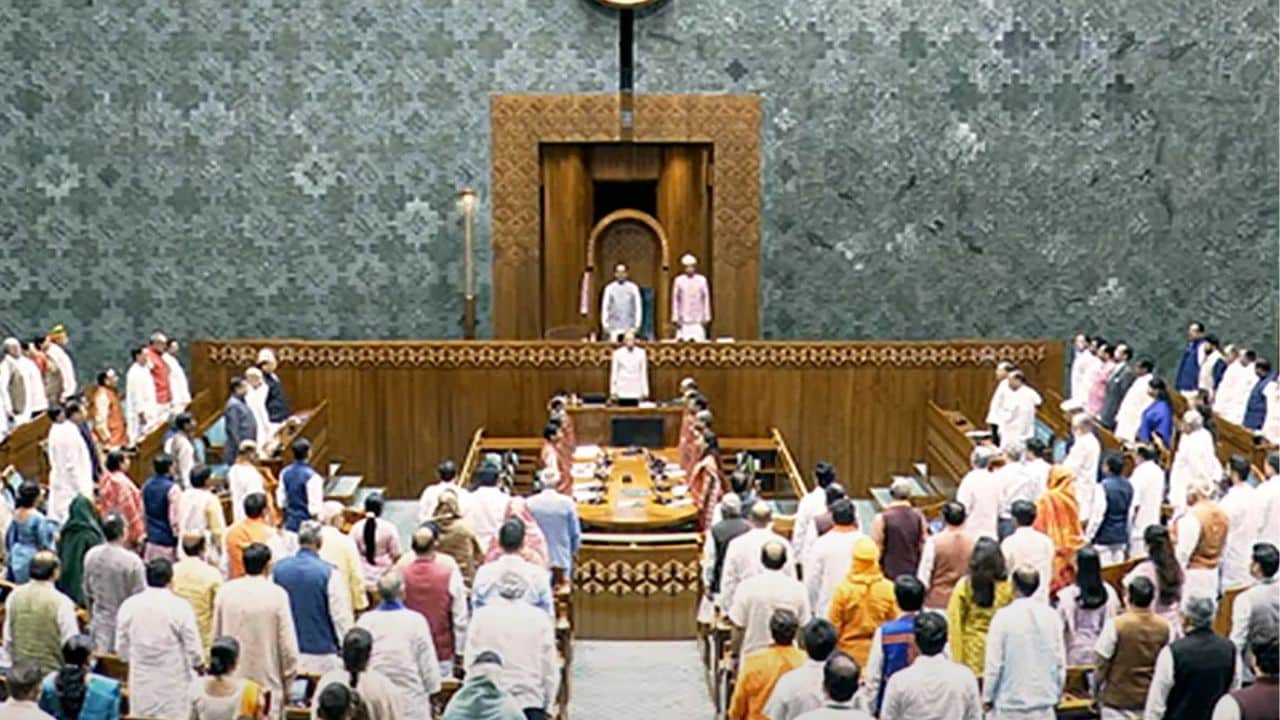
Exterior view of the Indian Parliament building in New Delhi, where the Lok Sabha reply on EV policy was tabled.
News

Centre Tells Lok Sabha: EV Policy Goes Beyond Subsidies, Targets Manufacturing Base

In a written Lok Sabha reply on July 28, the government laid out how FAME-II, PM E-DRIVE, and PLI schemes for autos and batteries fit together, while stopping short of naming a target for EVs on Indian roads by 2047.

Mohammed Adnan Hussain
Last updated: July 29, 2026 2:24 pm
By Mohammed Adnan Hussain 1 day ago
Share
4 Min Read
SHARE

The government has pushed back on the idea that India’s EV policy begins and ends with purchase subsidies.

Contents
What the Minister actually saidThe numbers behind the roadmapNo fixed 2047 target, and no state-wise fund splitWhy this matters

In a written reply to the Lok Sabha on July 28, 2026, Minister of State for Heavy Industries Bhupathiraju Srinivasa Varma said the current framework pairs demand-side schemes with supply-side manufacturing incentives, calling the combination a deliberate structural push rather than just a way to make EVs cheaper at the showroom.

What the Minister actually said

The reply drew a clear line between two kinds of intervention. Demand-side schemes like FAME-II and PM E-DRIVE work by cutting the upfront cost a buyer pays. Supply-side schemes, mainly the Production Linked Incentive (PLI) programs for the automobile and Advanced Chemistry Cell (ACC) battery sectors, push manufacturers toward higher technology adoption and greater Domestic Value Addition (DVA).

Varma also pointed to the Phased Manufacturing Programme (PMP), which he described as the mechanism forcing the domestic manufacturing of critical EV components over time rather than allowing indefinite import dependence.

🚀 Join Our Tech Community!

Get the latest news, updates, and tech trends delivered straight to your phone. Never miss an update!

📱 Join Telegram 💬 Join WhatsApp Channel

The numbers behind the roadmap

For readers tracking where the money actually goes, the reply attached specific figures:

  • FAME-II concluded with a total outlay of Rs 11,500 crore.
  • PM E-DRIVE, its successor, carries an allocation of Rs 10,900 crore.
  • The PLI Scheme for Automobile and Auto Components has a budgetary outlay of Rs 25,938 crore.
  • The PLI Scheme for ACC Battery Storage carries an allocation of Rs 18,100 crore.
  • PM e-Bus Sewa’s Payment Security Mechanism (PSM) has an outlay of Rs 3,435.33 crore.

The Scheme for Promotion of Manufacturing of Electric Passenger Cars in India (SPMEPCI) was also named as part of the broader push, alongside these central schemes.

No fixed 2047 target, and no state-wise fund split

Two clarifications in the reply are worth flagging for anyone tracking policy certainty rather than just spending. First, the government confirmed it has not fixed a specific target for the number of EVs on Indian roads by 2047, a notable gap given how often that year gets used as India’s net-zero marker in other policy conversations.

Second, on state coordination: several states have notified their own dedicated EV policies that sit alongside the central schemes. But because the Ministry of Heavy Industries’ programs are structured as demand-driven rather than allocation-based, there is no state-wise breakup of central funds. States get to layer their own incentives on top, but the central pool isn’t divided by geography.

Why this matters

For dealers and OEMs, the reply is really a confirmation of direction rather than a policy change: FAME-II is closed, PM E-DRIVE is the active demand-side vehicle, and the PLI-ACC combination remains the primary lever for building battery and component manufacturing at home. The absence of a 2047 numeric target, though, means EV sales forecasting in India continues to run on scheme-level signals rather than a stated national adoption goal, something TechyTrends.in will keep tracking as monthly EV sales and state-wise adoption data come in.

Share This Article
Facebook Twitter Whatsapp Whatsapp Copy Link
Share
By Mohammed Adnan Hussain
Follow:
Mohammed Adnan Hussain is digital journalist and editor covering automobiles and technology in India. He is Digital marketer,Blogger and Strong Knowledge of Automation
Previous Article A new rider learning to ride on a lightweight commuter motorcycle in India Best Motorcycles for First-Time Riders in India 2026
Next Article Maruti Suzuki Brezza 2026 undergoing Bharat NCAP crash test evaluation Maruti Brezza 2026 Safety Features & Crash Test Rating
Leave a Comment

Leave a Reply Cancel reply

Your email address will not be published. Required fields are marked *

Stay Connected

235.3kFollowersLike
69.1kFollowersFollow
11.6kFollowersPin
56.4kFollowersFollow
136kSubscribersSubscribe
4.4kFollowersFollow
- Advertisement -
Ad imageAd image

Latest News

2026 Tata Punch EV Facelift Scores 5-Star Bharat NCAP Rating, Again
News 32 seconds ago
Petrol commuter motorcycle parked next to an electric motorcycle representing the fuel choice comparison
Petrol vs Electric Motorcycle: Which Should You Buy in India?
Upcoming Vehicles 3 hours ago
Electric vehicle charging at a public DC fast charging station on an Indian highway
EV Charging Infrastructure & Networks in India: The Complete Guide
Electric Vehicles 5 hours ago
Tata Sierra EV and Mahindra BE 6 electric SUVs shown together for comparison
Tata Sierra EV vs Mahindra BE 6: Which Should You Buy?
Electric Vehicles 6 hours ago
//

India’s leading digital platform for the business, tech, and trends driving the future of mobility.

Quick Link

  • About us
  • Contact US
  • Disclaimer
  • Privacy Policy
  • Terms and Conditions

Top Categories

  • News
  • Guide
  • Automobiles
  • Electric Vehicles
  • Upcoming Vehicles

Sign Up for Our Newsletter

Subscribe to our newsletter to get our newest articles instantly!


Techy TrendsTechy Trends
Follow US
© 2026 Techy Trends . All Rights Reserved.
Welcome Back!

Sign in to your account

Username or Email Address
Password

Lost your password?