
Electric SUVs are where the real EV volume sits in India right now. Over 70 percent of personal EVs registered in the country today are SUVs or SUV-shaped crossovers, and it isn’t hard to see why: a floor-mounted battery pack naturally lifts ride height, which plays neatly into the SUV-shaped preference Indian buyers already had before EVs entered the picture.
The catch is that “electric SUV” now spans an enormous price range, roughly ₹10 lakh for a compact crossover like the Tata Punch EV up to ₹3 crore-plus for something like the Mercedes-Benz EQS SUV. A single “best electric SUV” recommendation is close to meaningless without knowing your budget and how you’ll actually use the car. This guide breaks the segment into four realistic price tiers and picks the strongest option in each, so you can jump straight to the bracket that matches your budget.
If your budget is capped specifically at ₹25 lakh and you want a deeper side-by-side of the mainstream contenders in that exact bracket, TechyTrends has a dedicated best electric cars under ₹25 lakh comparison that goes further into that price band specifically. This guide takes the wider view across every segment.
Quick Comparison Across Segments
| Segment | Top Pick | Ex-Showroom Price (approx.) | Claimed Range |
|---|---|---|---|
| Budget (under ₹12 lakh) | Tata Punch EV | ₹9.69 lakh onward | 300+ km |
| Family / Mid-range (₹12-20 lakh) | Tata Nexon EV | ₹12.49 – 17.69 lakh | 275 – 489 km |
| Long-range / Performance (₹18-32 lakh) | Mahindra BE 6 | ₹18.90 – 24 lakh | Up to 683 km |
| Premium (₹30-70 lakh) | Kia EV6 | Confirm current pricing at dealership | 663 km (ARAI) |
| Luxury (₹50 lakh+) | Volvo EX40 | ₹50.10 lakh | 475 km (WLTP), 340-380 km real-world |
Treat every price figure here as a starting point. Ex-showroom prices shift with variant, running offers, and state, so always confirm the current on-road number with the dealer before booking.
🚀 Join Our Tech Community!
Get the latest news, updates, and tech trends delivered straight to your phone. Never miss an update!
Budget Segment: Tata Punch EV
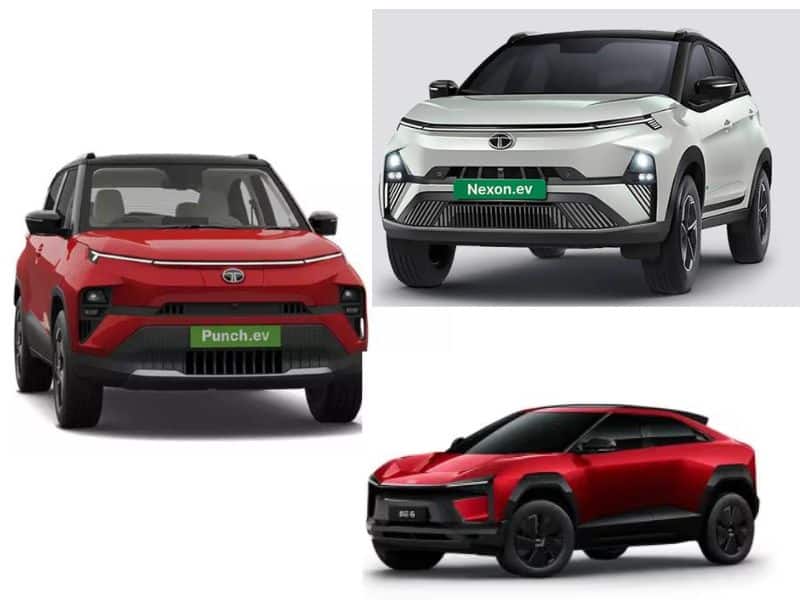
The Punch EV is the easiest entry point into electric SUV ownership in India today, starting under ₹10 lakh ex-showroom. It carries over the standard Punch’s compact, upright stance, which works well in city traffic and tight parking, and Tata’s dealer and service network reach means you’re not gambling on availability outside a major city.
The trade-off is range. This is a genuinely city-focused car, not one built for regular highway runs. If your daily driving is mostly local, under 40-50 km a day, it does the job without asking you to think much about charging.
Best for: first-time EV buyers who mainly drive within the city and want the lowest possible entry price into electric SUV ownership.
Family / Mid-Range Segment: Tata Nexon EV
Above the Punch EV sits the segment’s genuine volume leader, the Tata Nexon EV. It offers a 30 kWh pack for city buyers and a 45 kWh long-range pack claiming up to 489 km on the MIDC cycle, giving you a real choice between a cheaper entry price and more range depending on how you actually drive.
Real-world range on the smaller pack tends to land around 220-260 km once you factor in AC use and city traffic, which is worth knowing going in rather than discovering after delivery. The Nexon EV’s biggest strength beyond the number sheet is simply how proven it is. Tata has had years to fix early software and reliability complaints, and the service network is the widest of any EV-focused brand in India.
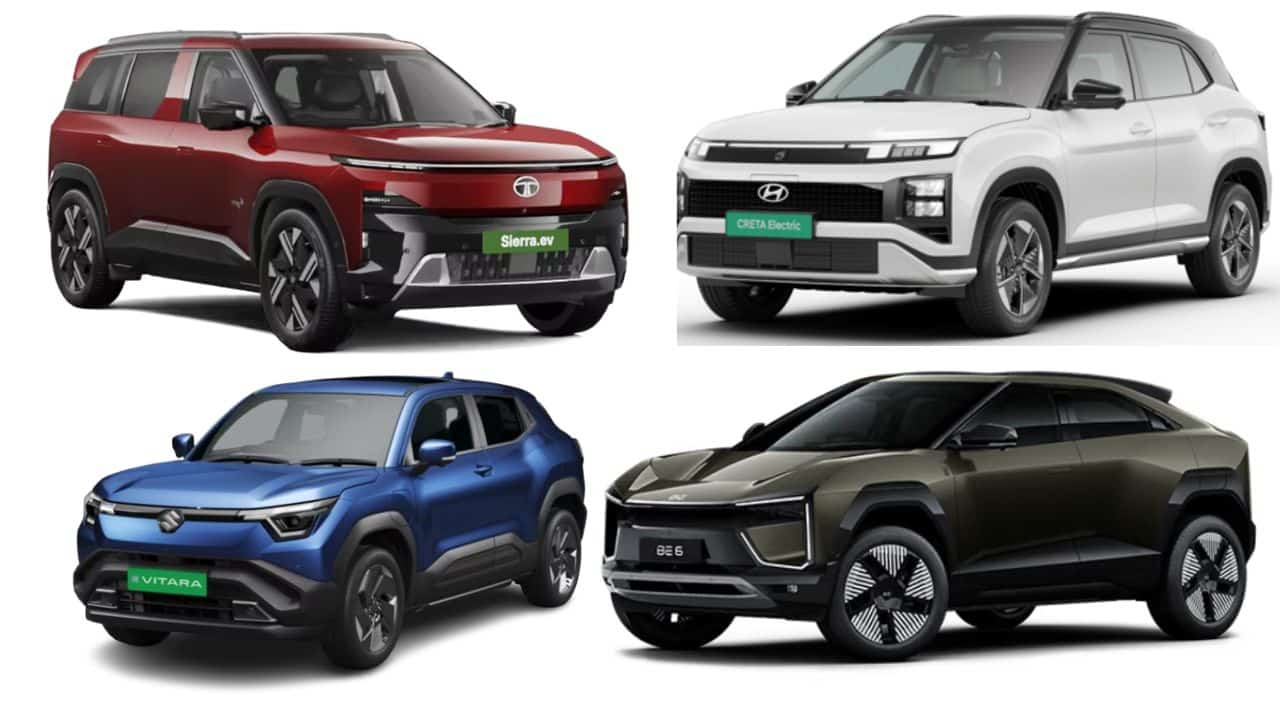
Close competitors in this bracket worth cross-shopping include the Maruti e Vitara, which brings Maruti’s even wider service reach and a Battery-as-a-Service option that can pull the effective starting price down to around ₹10.99 lakh, and the Hyundai Creta Electric, which trades outright range for Hyundai’s cabin polish and brand trust.
Best for: family buyers who want a well-rounded daily driver with occasional longer trips and don’t want to gamble on a newer brand’s after-sales support.
Long-Range / Performance Segment: Mahindra BE 6
Once you move past ₹18-20 lakh, range and performance start climbing sharply. The Mahindra BE 6 is currently the strongest all-rounder in this bracket. Its base Pack One variant starts near ₹18.90 lakh, but the 79 kWh Pack Two option is the real headline, claiming up to 683 km of range and crossing 280 bhp in power output, genuinely quick numbers for anything under ₹25 lakh.
The Tata Sierra EV and Tata Harrier EV are worth cross-shopping here too. The Sierra EV starts closer to ₹18.79-19.87 lakh with a claimed range reported around 665 km on its top variant, while the Harrier EV pushes into a larger, more family-oriented footprint at a higher price. Both lean on Tata’s familiar service backbone, which the newer Mahindra BE sub-brand is still building out, so it’s worth checking local BE service availability if you’re outside a major city.
Best for: buyers who genuinely drive long distances between cities regularly and want the most range and power for the money, and who are comfortable being an early adopter of a newer service network.
Premium Segment: Kia EV6 and Hyundai Ioniq 5
Cross into the ₹45-70 lakh range and the electric SUV conversation changes entirely. The Kia EV6 and Hyundai Ioniq 5 share Hyundai Motor Group’s E-GMP platform and represent what most reviewers consider the current benchmark for mainstream premium EVs in India. The EV6 carries a 2,900mm wheelbase for a sportier stance and an ARAI-certified range of 663 km, while the Ioniq 5 stretches to a 3,000mm wheelbase that prioritises rear-seat space over sportiness.
Both cars bring genuinely fast DC charging, strong build quality, and tech that still feels a generation ahead of the mainstream mid-range segment. What you’re paying for here isn’t just range, it’s the driving refinement, cabin materials, and NVH control that the ₹15-25 lakh segment simply can’t match yet.
Best for: buyers upgrading from a premium petrol SUV who want the EV experience without stepping into full luxury territory, and who value driving refinement as much as range.
Luxury Segment: Volvo EX40 and Beyond
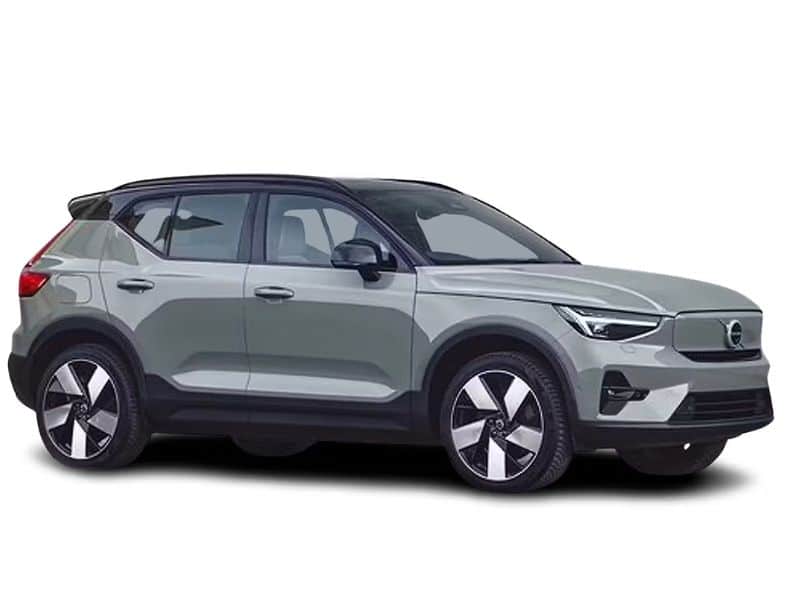
Past ₹50 lakh, the electric SUV market opens up to established luxury names: Volvo, BMW, Mercedes-Benz, and newer premium entrants like BYD. The Volvo EX40 is a reasonable anchor point here, priced around ₹50.10 lakh with a single Ultra variant, a 69 kWh battery, and a claimed WLTP range of 475 km that realistically works out to 340-380 km in Indian conditions with AC running. It comes with a strong 5-star Euro NCAP safety rating and Level 2 ADAS as standard, though it lacks Vehicle-to-Load support and offers no trim flexibility since there’s only one variant.
Above this sit the BMW iX, Mercedes-Benz EQS SUV, and BYD’s premium offerings, each pushing further into ₹70 lakh to well over ₹1 crore territory. At this level, the GST advantage on EVs (5 percent versus 28 percent plus cess on petrol luxury cars) genuinely matters, working out to a saving of roughly ₹8-15 lakh depending on the model, alongside meaningfully lower running and maintenance costs over five years compared to a petrol luxury equivalent.
Best for: buyers who were already shopping in the petrol luxury SUV bracket and want the same badge prestige with a lower running cost and a strong GST advantage baked in.
How to Actually Pick Between These
Range on the spec sheet is the number every buyer fixates on, but it’s rarely the number that should decide your purchase. Two questions matter more in practice: how far do you genuinely drive on a normal day, and do you have reliable access to home or workplace charging? A buyer doing 30 km a day with a home charger gets more real value from a smaller-battery Nexon EV than from an oversized battery they’ll rarely need to fully use.
Service network reach is the second filter, and it matters disproportionately once you’re outside Delhi NCR, Mumbai, or Bengaluru. Tata and Maruti currently have the deepest reach for EV-specific service, while newer sub-brands like Mahindra BE and import-heavy luxury brands need to be checked city by city before you commit.
Frequently Asked Questions
Which is the best electric SUV in India for a family on a budget under ₹15 lakh?
The Tata Nexon EV is currently the strongest all-rounder in this bracket, offering a proven track record, wide service reach, and a choice between a shorter-range city-focused pack and a longer-range variant.
What is the longest-range electric SUV available in India right now?
Among mainstream options under ₹25 lakh, the Mahindra BE 6’s 79 kWh Pack Two claims up to 683 km. In the premium segment, the Kia EV6 claims 663 km ARAI-certified, and several luxury models including the BYD Seal, Mercedes-Benz EQS, and BMW iX xDrive50 exceed 600 km on their respective test cycles.
Is a luxury electric SUV actually cheaper to run than a petrol luxury SUV in India?
Generally yes. Beyond the 5 percent GST rate against 28 percent plus cess on petrol luxury cars, owners typically see 30-40 percent lower maintenance costs over five years, though the upfront purchase price remains significantly higher.