

Somewhere in the last few years, “should I just get an electric one” became a genuine question for Indian two-wheeler buyers instead of a novelty thought. The honest answer isn’t a clean yes or no, it depends heavily on your daily distance, your charging access, and how much risk you’re comfortable taking on a still-maturing category. This guide walks through the real trade-offs rather than picking a side, because the right answer genuinely differs from one rider to the next.
The Core Trade-Off in One Paragraph
Petrol motorcycles offer instant refueling, a mature service network reaching every corner of the country, and decades of proven long-term reliability data. Electric motorcycles offer dramatically lower running costs and simpler mechanicals, but ask you to plan around charging time, and the segment’s service network and long-term ownership data are both still relatively thin compared to petrol’s decades-long track record. Neither side is universally right, the correct choice depends on what your actual riding pattern looks like.
Running Cost: Where Electric Wins Decisively
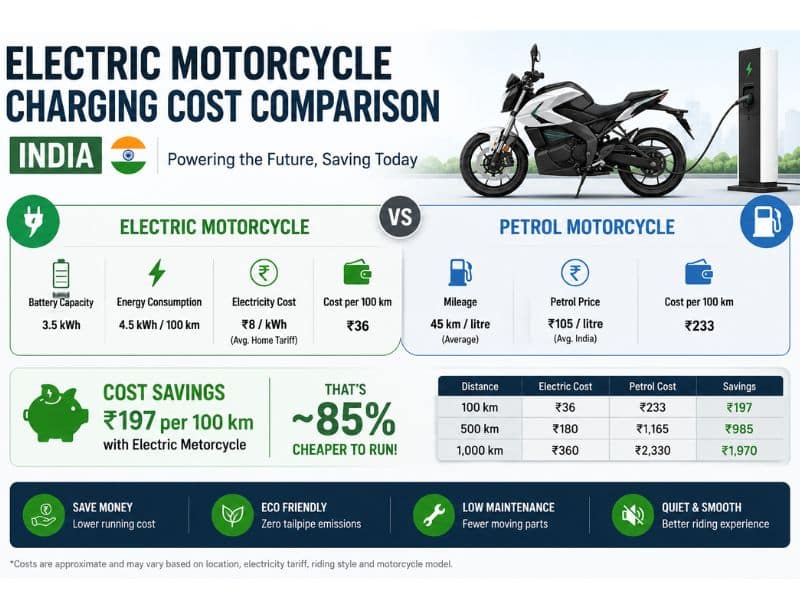
This is the strongest, most consistent argument in favor of going electric. Charging typically works out to roughly ₹0.30 to ₹0.50 per kilometer, against ₹2.50 to ₹4 per kilometer for a comparable petrol motorcycle, depending on current fuel prices and the specific bike’s mileage. Over 20,000 km a year, a typical annual distance for a daily commuter, that gap alone can save well over ₹50,000.
Maintenance costs favor electric too, though less dramatically. Electric motorcycles skip engine oil changes, spark plugs, clutch wear, and exhaust system upkeep entirely, since none of those components exist on an electric drivetrain. What replaces that maintenance category is periodic checks on the battery and motor, generally less frequent and less expensive than a petrol bike’s service schedule, though this varies by manufacturer and how the vehicle is used.
🚀 Join Our Tech Community!
Get the latest news, updates, and tech trends delivered straight to your phone. Never miss an update!
Upfront Price: Petrol Still Wins at the Entry Level
A basic petrol commuter like the Hero Splendor Plus starts around ₹72,900 to ₹77,500 ex-showroom. The cheapest electric motorcycles, like the Oben Rorr Evo, start closer to ₹1.25 lakh, and the well-established Revolt RV400 sits around ₹1.38 to ₹1.40 lakh. That gap of ₹50,000 or more upfront is real money, and for a buyer on a tight initial budget, it can outweigh the long-term running cost savings unless the daily distance is high enough to close that gap through fuel savings within a reasonable ownership period.
The math genuinely does work out in electric’s favor for a high-mileage daily rider over two to three years of ownership. It’s a harder sell for someone riding shorter distances or planning to keep the bike only briefly before upgrading.
Range and Refueling: Petrol’s Biggest Practical Edge
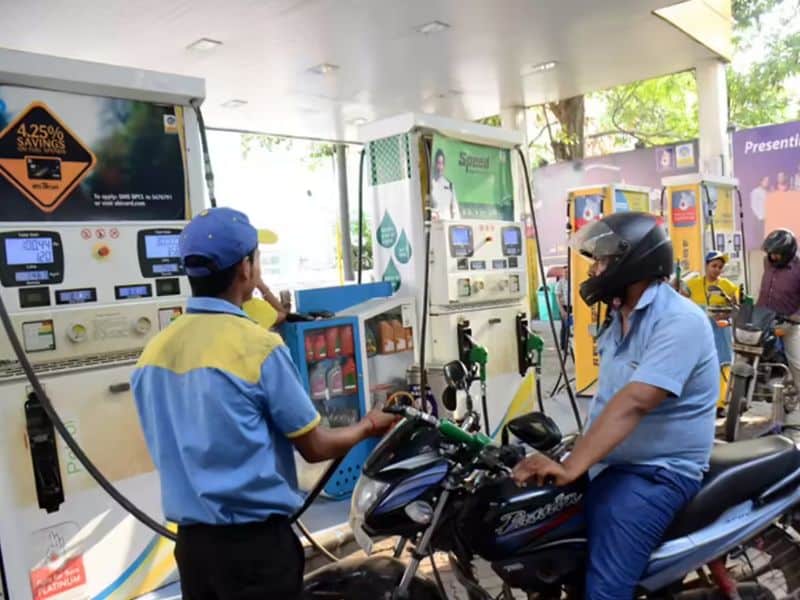
A petrol motorcycle refuels in under five minutes at any of the tens of thousands of fuel stations across India, urban or rural. An electric motorcycle’s typical range sits around 150 to 180 km on the commuter-focused models, and a full home charge commonly takes several hours, usually done overnight. Public fast charging exists but is genuinely less widespread for two-wheelers specifically than the car-focused charging networks getting most of the current infrastructure investment.
This matters enormously if your riding pattern includes unpredictable, longer trips, a sudden need to travel 100 km outside your usual radius doesn’t work the same way on an electric bike as topping up a petrol tank along the way. For a rider with a short, predictable daily commute and reliable home charging, this concern matters far less than it might initially seem.
Service Network: Petrol’s Decades-Long Head Start
Hero, Honda, Bajaj, and TVS have spent decades building dealer and service networks that reach deep into small towns and rural India. Electric motorcycle brands, even established ones like Revolt, are still expanding their footprint, and some newer entrants have a dealer presence concentrated mainly in larger cities. If you live somewhere without an authorized electric motorcycle service center nearby, that’s a genuine practical barrier worth checking before you commit, regardless of how appealing the running cost math looks on paper.
Reliability and Resale Value: Petrol’s Proven Track Record vs Electric’s Unknowns
Petrol motorcycles from established Indian manufacturers have decades of real-world reliability and resale data behind them. You can walk into any market and get a reasonably confident estimate of what a five-year-old Splendor Plus is worth. Electric motorcycles don’t have that same depth of history yet, and long-term battery degradation, resale value, and how well specific models hold up over five or more years of Indian conditions, heat, dust, monsoon exposure, remain genuinely less certain than they are for petrol.
This isn’t a reason to avoid electric outright, it’s a reason to weigh it as a slightly higher-uncertainty choice, at least until the segment builds a longer real-world track record across ordinary owners rather than just early adopters.
Riding Character: A Genuinely Different Experience
Electric motorcycles deliver instant torque from a standstill, no clutch to manage, and a smooth, quiet ride that a lot of riders who’ve tried both describe as a genuinely different feel from a petrol engine’s power delivery. Some riders love this immediately. Others miss the mechanical engagement, gear shifts, engine note, and the specific feel a petrol engine has, especially in the performance segment where bikes like the Royal Enfield Hunter 350 sell partly on character alone.
This is a personal preference more than a rational trade-off, and it’s worth test-riding an electric motorcycle before assuming you’ll either love or dislike the difference based on spec sheets alone.
Side-by-Side Comparison
| Factor | Petrol Motorcycle | Electric Motorcycle |
|---|---|---|
| Running cost per km | ₹2.50–₹4 | ₹0.30–₹0.50 |
| Refueling/charging time | Under 5 minutes | Several hours (home), faster on compatible public chargers |
| Typical entry price | ₹58,000–₹80,000 | ₹1.25–1.40 lakh |
| Service network reach | Deep, including small towns | Growing, concentrated in cities for most brands |
| Long-term resale data | Decades of established data | Limited, category still maturing |
| Maintenance | Regular oil, spark plug, clutch upkeep | Lower, mainly battery and motor checks |
Who Should Actually Buy Electric
A rider with a short-to-moderate daily commute, reliable home or workplace charging access, and a genuine electric motorcycle service center nearby is the clearest fit for going electric right now. The running cost savings compound meaningfully over a few years for exactly this rider, and range anxiety matters far less when the daily distance comfortably fits within the bike’s real-world range with margin to spare.
Who Should Stick With Petrol
A rider without reliable home charging, someone whose daily distance is unpredictable or regularly exceeds 100 to 150 km, or anyone living outside a city with an established electric motorcycle service network, is generally better served by petrol for now. The same applies to buyers who specifically value mechanical engagement and gear shifting as part of the riding experience itself, not just as a means of transport.
If your daily commute is short, predictable, and you have reliable charging access, electric genuinely makes financial sense now, the running cost savings are real and they compound fast. If your riding is unpredictable, distance-heavy, or you live somewhere without a solid electric service network nearby, petrol remains the safer, more practical choice today, and there’s no shame in that decision, the segment is still maturing. This isn’t a permanent either-or choice either, plenty of riders will end up owning both across different vehicles in the same household as charging infrastructure keeps expanding. Decide based on how you actually ride this year, not on which technology feels more exciting on paper.
Frequently Asked Questions
Does an electric motorcycle actually save money over a petrol one in India?
Yes, for most riders with reasonable daily distances, the running cost savings from cheaper “fuel” and lower maintenance typically outweigh the higher upfront price within two to three years of ownership. The savings are largest for high-mileage daily riders and smallest for occasional or low-distance riders.
Is charging an electric motorcycle at home actually practical in Indian apartments?
It depends on your specific building and parking setup. Motorcycles with a removable battery, like the Revolt RV400, are genuinely more practical for apartment dwellers without dedicated charging infrastructure, since the battery can be carried indoors and charged at any standard power outlet.
Are electric motorcycles reliable enough for daily use in India yet?
Established models like the Revolt RV400 have several years of real-world ownership data at this point and are generally considered dependable for daily commuting. Newer entrants and premium performance electric motorcycles have less accumulated track record, so it’s worth researching a specific model’s owner feedback rather than judging the entire category as one.