
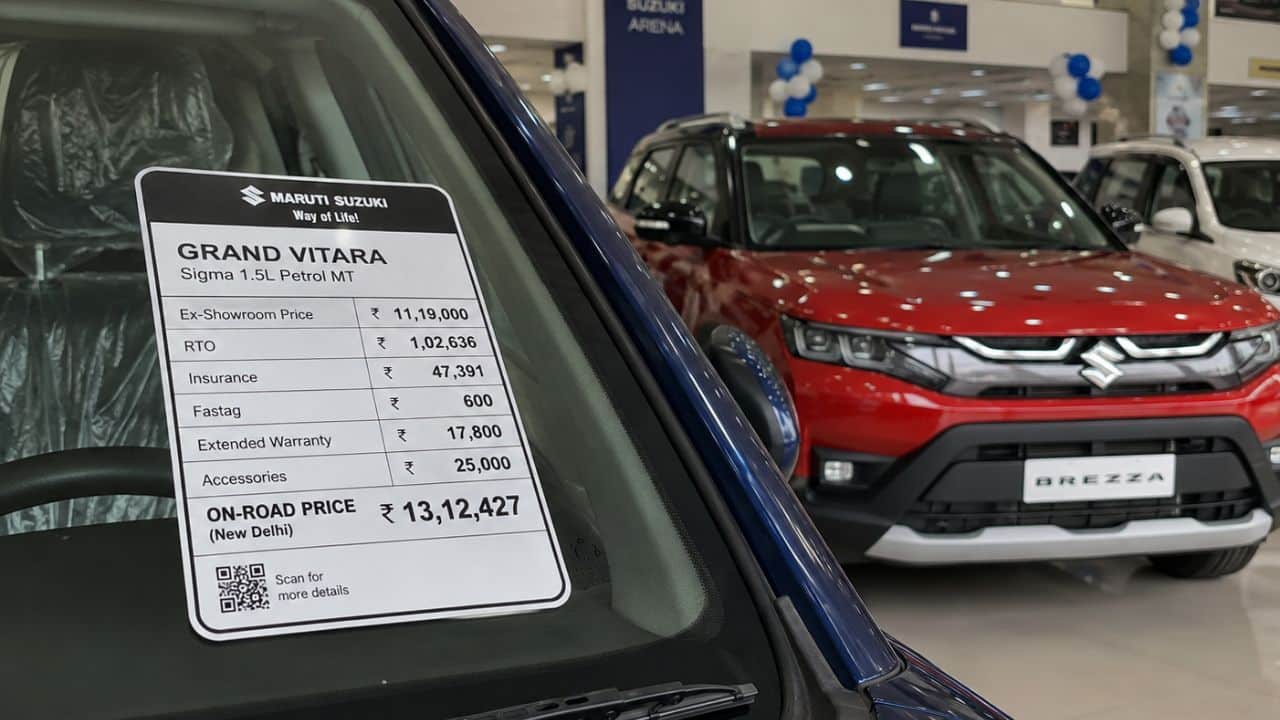

Every Indian car or motorcycle buyer runs into this confusion at some point. You look up a bike or car online, see one number, then walk into a dealership and get quoted something meaningfully higher. That gap isn’t a dealer markup or a mistake, it’s the difference between ex-showroom price and on-road price, two distinct figures that get conflated constantly in casual conversation and even in some ads that should know better.
What Ex-Showroom Price Actually Means
Ex-showroom price is the base cost of the vehicle itself, set by the manufacturer, before any registration, tax, or insurance gets added on top. Think of it as the price of the vehicle sitting inside the showroom, ready to be driven out but not yet legally allowed on public roads. This is the number manufacturers advertise most prominently, since it’s the lowest figure they can legally quote, and it’s also the figure most comparison websites and brochures lead with.
Ex-showroom price does include GST and the manufacturer’s dealer margin, so it’s not purely a factory cost. What it specifically excludes is everything the government and insurers add afterward to make the vehicle road-legal.
What On-Road Price Actually Means
On-road price is what you actually pay to drive the vehicle out of the showroom and onto a public road, legally. It takes the ex-showroom price and adds every mandatory charge required to register and insure the vehicle. This is the real number that matters for budgeting, and it’s almost always the more useful figure to compare across two vehicles, since ex-showroom price alone can make a bike or car look more affordable than it actually is to own.
🚀 Join Our Tech Community!
Get the latest news, updates, and tech trends delivered straight to your phone. Never miss an update!
What Makes Up the Gap Between the Two
Three main components sit between ex-showroom and on-road price.
RTO registration charges. Every vehicle needs to be registered with the Regional Transport Office before it can legally be driven, and this fee varies by state and by vehicle category. Some states charge a flat registration fee, others calculate it as a percentage of the ex-showroom price, which is one reason the exact rupee gap looks so different depending on where you’re buying.
Road tax. This is typically the single largest component of the gap, and it’s charged as a percentage of the ex-showroom price, usually somewhere between 7 and 20 percent depending on the state and the vehicle’s category. Road tax rates for two-wheelers and four-wheelers also differ, and some states apply a separate, often higher, rate for vehicles above a certain price threshold.
Insurance. Comprehensive insurance, or at minimum third-party insurance, is mandatory before a vehicle can be registered. First-year insurance premiums are usually bundled into the on-road price a dealer quotes you, and this figure depends on the vehicle’s declared value, its engine or motor category, and the specific insurer.
A few dealers also fold in optional extras, handling charges, extended warranty, or accessory packages, into what they present as the on-road price. These aren’t mandatory government or insurance charges, and it’s worth asking your dealer to break the quote down line by line so you can see exactly what’s compulsory and what’s an add-on you can decline.
Why the Gap Varies So Much by State
Road tax and registration charges are set at the state level in India, not nationally, which is why the exact same motorcycle or car can have a noticeably different on-road price in Delhi compared to Mumbai or Bengaluru. A vehicle registered in a state with higher road tax will always show a bigger gap between ex-showroom and on-road figures than the same vehicle registered somewhere with lower rates.
This is also why comparing an ex-showroom price you saw online against a friend’s on-road quote from a different city rarely gives you an accurate picture. If you’re budgeting for a purchase, always ask for an on-road quote specific to the state and city where you’ll actually register the vehicle.
A Simple Way to Estimate the Gap
There’s no single fixed percentage that works everywhere, since road tax rates and RTO charges genuinely differ by state and vehicle category. As a rough starting point for budgeting purposes, on-road price commonly lands somewhere between 12 and 25 percent above ex-showroom price for most mass-market motorcycles and cars, with the exact figure depending heavily on your state’s road tax slab and the vehicle’s declared value. Treat this as a ballpark for early planning only, and always get an exact, written on-road quote from your dealer before finalizing a budget.
Why This Distinction Matters When Comparing Vehicles
Comparing two vehicles purely on ex-showroom price can be misleading if they fall into different road tax brackets or insurance categories. A motorcycle with a slightly higher ex-showroom price but a lower engine displacement bracket for road tax purposes could end up cheaper on-road than a rival with a lower sticker price but a steeper tax slab. This is exactly the kind of gap a spec-sheet comparison won’t show you, and it’s why on-road price, not ex-showroom price, should be the number you use when your final decision comes down to budget.
Frequently Asked Questions
Is on-road price always higher than ex-showroom price?
Yes, on-road price is always higher, since it adds mandatory RTO registration and insurance costs on top of the ex-showroom figure. There’s no scenario where on-road price comes in lower.
Does on-road price include accessories or extended warranty?
Not by default. Mandatory on-road charges cover only RTO registration, road tax, and insurance. Any accessories, extended warranty, or dealer-fitted add-ons are separate and optional, though some dealers bundle them into a single quoted number, so always ask for an itemized breakdown.
Why does the same vehicle cost different amounts on-road in different cities?
Because road tax and RTO registration charges are set by each state government individually, not at the national level. A vehicle registered in a state with a higher road tax slab will always show a bigger gap between ex-showroom and on-road price than the same vehicle registered in a state with lower rates.
Can I negotiate the on-road price with a dealer?
Road tax, RTO charges, and mandatory insurance are fixed by regulation and can’t be negotiated. What can sometimes be negotiated is the dealer’s handling charges, any optional accessory bundles, or the specific insurer used for comprehensive coverage, so it’s worth asking about each of these separately rather than treating the full on-road quote as one fixed number.