
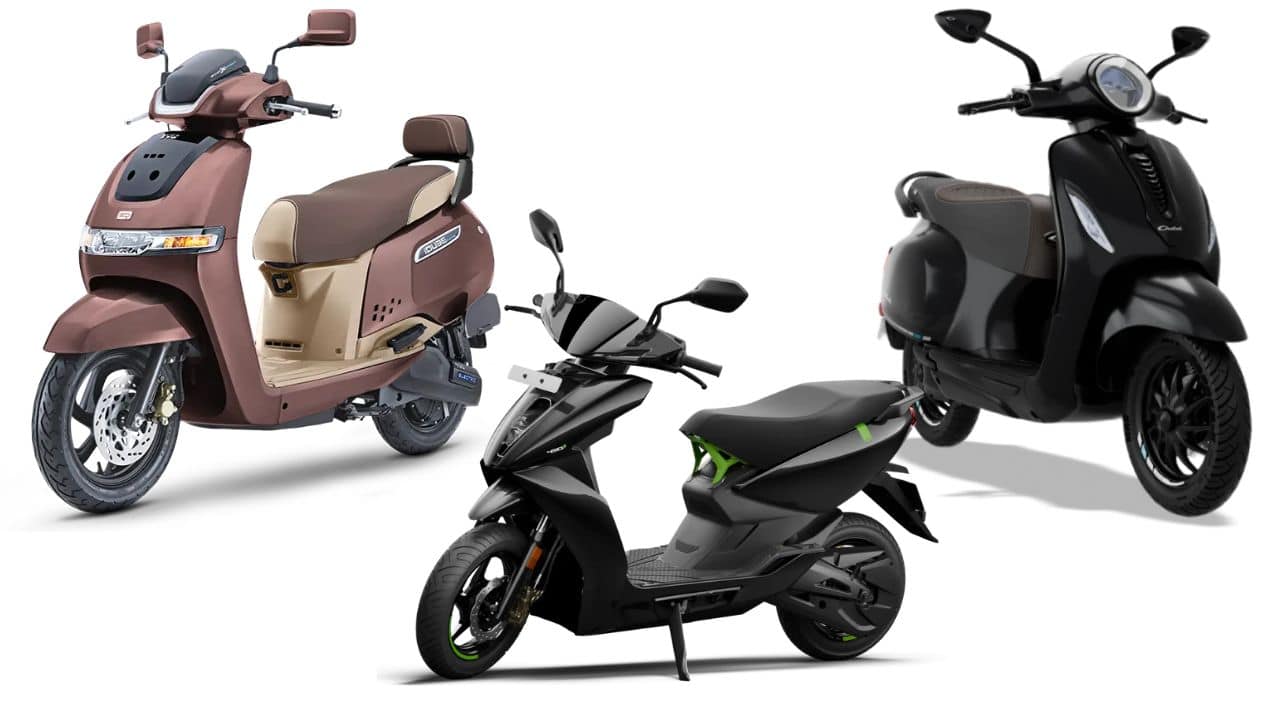

Electric two-wheeler retail registrations crossed 2 lakh units in a single month for the first time in July 2026, according to Vahan portal data, with FADA’s official retail release putting EV penetration of the overall two-wheeler market at a record 11.24%. But the retail number isn’t the whole story this month. Company-reported dispatch figures from TVS Motor, Bajaj Auto, Ather Energy and Hero MotoCorp’s Vida brand all show wholesale volumes running ahead of what actually got registered at RTOs, a gap that has opened up right as OEMs begin building dealer stock for the festive season and just after the PM E-Drive scheme’s central subsidy on electric two-wheelers lapsed on 31 July 2026.
The Retail Number
FADA’s official Vehicle Retail Data for July 2026, collated in collaboration with the Ministry of Road Transport & Highways across 1,465 of 1,468 RTOs, put overall two-wheeler retail at 18,18,289 units, up 28.25% year-on-year but down a marginal 1.26% from June. Within that total, electric two-wheelers accounted for a record 11.24% share, climbing from 10.59% in June and 7.65% a year earlier. That works out to roughly 2.04 lakh EV two-wheeler registrations for the month, a figure Vahan-based trackers put at 2,04,266 units specifically, up 56% year-on-year for the calendar year to date. Either way, July marked the first time India’s EV two-wheeler segment crossed the 2-lakh-unit mark in a single month, beating the previous high of 1,99,411 units set back in March 2026.
TVS Motor Company led the field with 55,477 registrations, a 27% market share and its highest-ever monthly retail figure. Bajaj Auto’s Chetak held second with 43,607 registrations and a 22.53% share. Ather Energy came in third at 28,819 units, and Hero MotoCorp’s Vida brand posted its best month yet at 21,174 registrations. Ola Electric was the one major name moving in the opposite direction, with registrations falling 24% year-on-year to roughly 14,105 units, a market share that has slipped from around 17% a year ago to just 7% today.
Where Wholesale and Retail Start to Diverge
Retail registrations tell you what actually reached a customer’s name at the RTO. Wholesale, or dispatch, tells you what an OEM shipped out to its dealer network, whether or not that unit has sold through yet. When the two move together, dealer stock is roughly stable. When wholesale consistently outpaces retail, stock is building up in showrooms, and July 2026 is the clearest example of that pattern this segment has seen all year.
🚀 Join Our Tech Community!
Get the latest news, updates, and tech trends delivered straight to your phone. Never miss an update!
TVS Motor’s own company-reported dispatch figure for July, released alongside its broader monthly sales data, was 60,934 EV two-wheeler units, up 158% year-on-year and the company’s highest-ever monthly EV dispatch. Set that against the 55,477 units that actually got registered, and TVS dispatched roughly 5,457 more units to dealers than it sold through, a gap of nearly 9.8% on top of the retail figure. That’s a meaningful build in a single month for India’s largest EV two-wheeler maker.
| OEM | July 2026 Wholesale (Company-Reported) | July 2026 Retail (Vahan/FADA) | Gap (Units) | Gap (% of Retail) |
|---|---|---|---|---|
| TVS Motor | 60,934 | 55,477 | +5,457 | +9.8% |
| Bajaj Auto (Chetak) | 45,592 | 43,607 | +1,985 | +4.6% |
| Hero Vida | 22,887 | 21,174 | +1,713 | +8.1% |
| Ather Energy | 30,323 | 28,819 | +1,504 | +5.2% |
Bajaj, Ather and Hero Vida all show the same directional pattern, if at a smaller scale than TVS. Bajaj dispatched 45,592 Chetak units against 43,607 registrations, a gap of roughly 4.6%. Ather delivered 30,323 units to dealers while 28,819 actually got registered, a 5.2% overhang. Hero Vida’s dispatch of 22,887 units ran about 8.1% ahead of its 21,174 registrations, even as the brand posted its best-ever month on both counts.
Ola Electric is the exception worth flagging, though for a different reason. No separate company-reported wholesale figure distinct from its retail number is currently available in the public disclosures reviewed for this report, which is consistent with Ola’s largely direct-to-consumer sales model through its own experience centres rather than a traditional franchise-dealer network. That structural difference means the wholesale-versus-retail lens that applies cleanly to TVS, Bajaj, Ather and Hero doesn’t map onto Ola in quite the same way, and readers should treat Ola’s 14,105-unit figure as closer to a like-for-like sales number than the dispatch-to-dealer figures above.
Why the Gap Opened Up This Month
Two things are happening at once. First, OEMs are beginning festive-season stock builds. FADA’s July release specifically flagged that, with festive stocking beginning across categories and dispatches running ahead of retail industry-wide, OEM billing discipline into dealer networks becomes critical, a caution the federation applied most explicitly to passenger vehicles, where inventory rose to 33-35 days against FADA’s recommended 21-day benchmark, but the underlying dynamic of dispatch-ahead-of-retail is visible in the EV two-wheeler numbers too.
Second, and more specific to this segment, the PM E-Drive scheme’s central subsidy on electric two-wheelers officially ended after 31 July 2026. That kind of subsidy deadline typically pulls retail demand forward into the final eligible month, which is part of why July’s registration numbers look as strong as they do. OEMs dispatching ahead of that demand curve, anticipating a subsidy-driven rush that partly already happened, is a plausible contributor to the wholesale overhang showing up in the same month.
Neither of these is necessarily a warning sign on its own. A modest, single-month build ahead of the festive season is a normal and even expected pattern across Indian retail. What matters going into August and September is whether registrations catch up to the dispatched stock, or whether the gap widens further now that the subsidy tailwind is gone.
What This Means for Dealers and Buyers
For dealers, a wholesale-retail gap in the 5-10% range across TVS, Bajaj, Ather and Hero Vida is not yet the kind of elevated, aged-inventory situation FADA warned about in passenger vehicles this month, but it is worth watching closely through August. If festive retail demand (Independence Day launches, Onam, Raksha Bandhan) converts that stock quickly, the build was simply well-timed preparation. If it doesn’t, dealers carrying EV two-wheeler stock into September without the subsidy support that helped move July’s volumes could face working-capital pressure.
For buyers, a wholesale build ahead of retail is generally good news in the short term. Dealers sitting on slightly more stock than they’re selling through tend to be more open to negotiating on price, accessories, or exchange terms, particularly on the TVS and Hero Vida ranges where the gap is largest in percentage terms.
SIAM’s Industry-Wide Wholesale Figure: Not Yet Out
SIAM’s own industry-wide two-wheeler wholesale data for July 2026, which would give a complete, non-EV-specific picture of dispatch trends across every two-wheeler OEM, had not been released as of this report’s publish date. SIAM typically releases the prior month’s dispatch data around the middle of the following month; its June 2026 figures, for instance, were released on 15 July 2026. This report is therefore built on company-reported EV-specific dispatch disclosures and FADA/Vahan retail data rather than SIAM’s aggregated industry total, and will be updated once SIAM’s July figures are available.
Frequently Asked Questions
What is the difference between EV two-wheeler wholesale and retail sales in India?
Wholesale (or dispatch) refers to units an OEM ships from its factory to its dealer network. Retail refers to units actually registered to end customers at an RTO. In July 2026, wholesale ran ahead of retail for TVS Motor, Bajaj Auto, Ather Energy and Hero Vida, indicating dealer stock build-up ahead of the festive season.
How many electric two-wheelers were sold at retail in India in July 2026?
According to FADA’s official July 2026 retail data, electric two-wheelers reached a record 11.24% share of total two-wheeler retail, which translated to roughly 2.04 lakh units, India’s first month ever crossing 2 lakh EV two-wheeler registrations in a single month.
Which company dispatched the most EV two-wheelers in July 2026?
TVS Motor Company reported the highest EV two-wheeler dispatch figure for July 2026, at 60,934 units, its highest-ever monthly EV dispatch and up 158% year-on-year, ahead of its own retail registration figure of 55,477 units for the same month.
Why is EV two-wheeler wholesale running ahead of retail this festive season?
OEMs typically build dealer stock ahead of the August-October festive period, and July 2026’s numbers were additionally shaped by the PM E-Drive scheme’s central EV two-wheeler subsidy ending on 31 July 2026, which likely pulled some retail demand into July and left dispatch volumes running slightly ahead of what dealers sold through.