
The Hyundai Staria is making waves in the global MPV segment with its bold design, spacious cabin, and cutting-edge features. Originally launched in 2021 as the successor to the Hyundai Starex, the Staria represents a significant leap forward in practicality and style for large multi-purpose vehicles (MPVs).
Futuristic Design and Exterior
From the outside, the Staria stands out from conventional vans with its spaceship-like silhouette and expansive glass areas. The low beltline and panoramic windows enhance visibility and create a light-filled cabin, while its overall dimensions make it a commanding presence on the road.
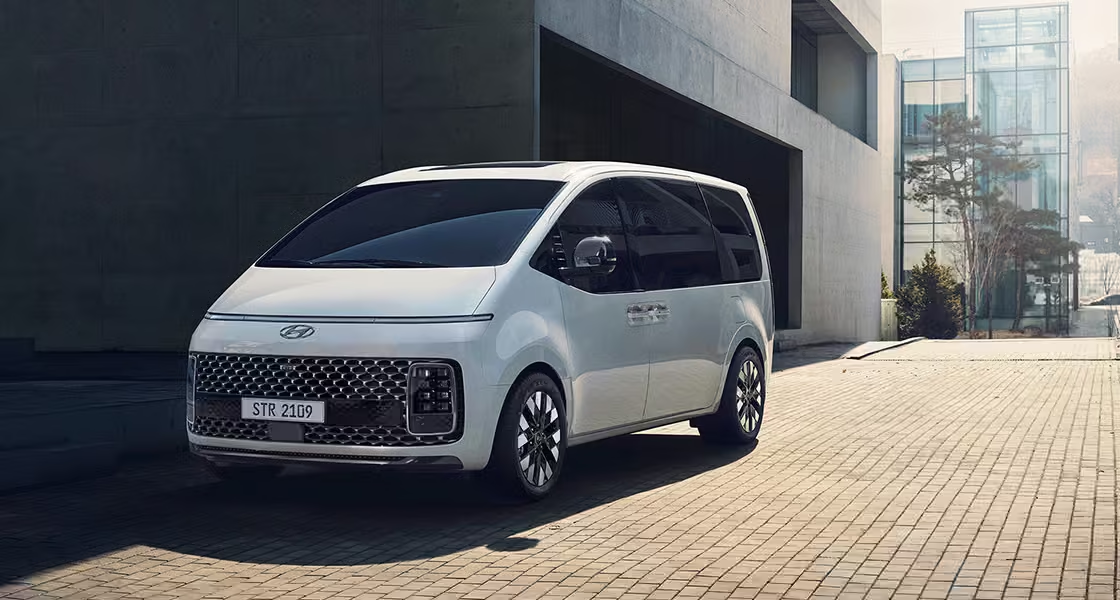
Globally, the Staria measures approximately 5253–5255 mm in length, around 1995–1997 mm in width, and nearly 1990 mm in height, with a long 3273–3275 mm wheelbase that translates into generous interior space.
Interior and Comfort
Inside, the Staria emphasizes comfort and versatility. The cabin layout adopts a horizontal, lounge-like aesthetic with large panoramic windows that flood the interior with light. Depending on the market and variant, the Staria offers seating configurations from 7 to 11 seats, tailored for families, corporate shuttles, or commercial use.
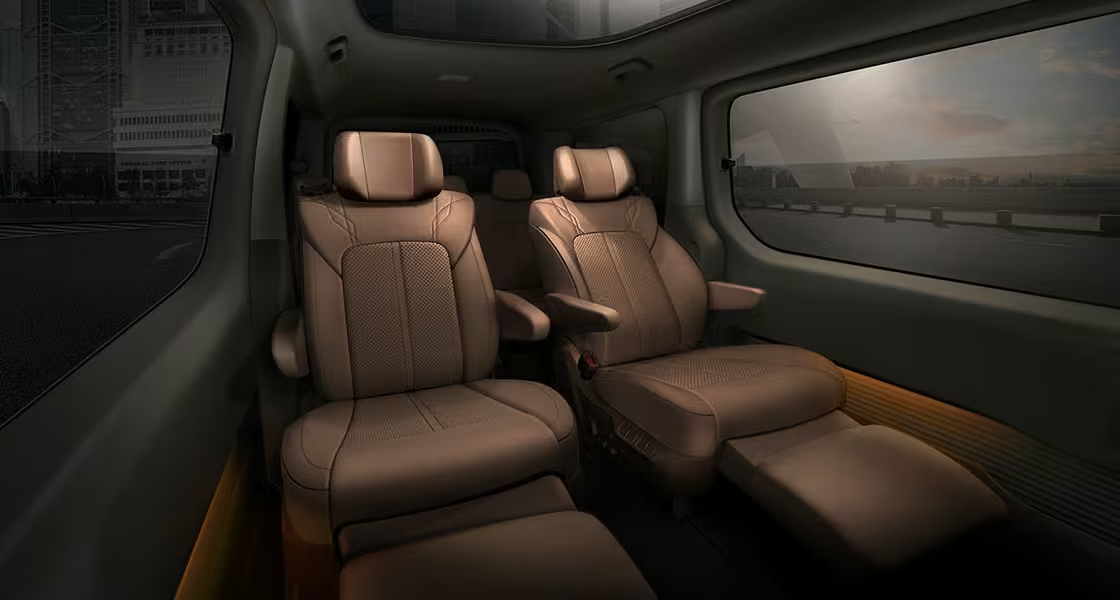
Higher trims often branded Staria Lounge or Premium include features such as premium leather seating, massaging captain’s chairs with ventilation, movable seats, and modular layouts that allow various passenger and cargo combinations.
Powertrains and Performance
The Staria offers a range of powertrain options globally:
- 3.5-litre V6 petrol engine for smooth, powerful performance.
- 2.2-litre diesel engine producing around 177 PS and 431 Nm, available with either a 6-speed manual or an 8-speed automatic transmission.
- Hybrid powertrain variants (in select markets) for better fuel efficiency and reduced emissions.
Ride comfort is aided by McPherson front suspension and a stable multi-link rear setup that balances handling with comfort — ideal for long family trips or daily commuting.
Safety and Tech Features
Hyundai equips the Staria with modern connectivity and safety systems, including:
- Large central touchscreen and digital driver display.
- Advanced safety and driver assistance systems under Hyundai SmartSense in select variants.
- Multiple airbags, ABS, and electronic stability systems in most markets.
High-end trims focus on enhanced comfort, connectivity, and convenience making the Staria one of the more technologically packed MPVs globally.
Electric Version: Staria Electric (Staria Elektro)
In a major evolution, Hyundai has unveiled the Staria Electric (also referenced as Staria Elektro) a fully battery-powered version of the MPV. Highlights include:
- 84 kWh battery with an estimated 400 km range (WLTP).
- 800-volt architecture enabling rapid DC charging from 10% to 80% in about 20 minutes.
- An electric motor producing around 218 PS, with a top speed around 184 km/h.
- Vehicle-to-Load (V2L) capability to power external devices useful for camping or worksite needs.
The Staria Electric positions Hyundai not just as an MPV leader but also in the growing electric mobility market, with production and sales starting in regions like Korea and Europe in 2026.
India Status and Expected Launch
In India, the Staria has been showcased at major auto events such as the Bharat Mobility Global Expo 2025, giving enthusiasts a close look at the premium MPV experience.
Official launch details are still pending, though multiple industry sources suggest a tentative launch in mid-2026, with an expected price range of around ₹55–65 lakh .
If launched locally, the Staria is expected to challenge segment stalwarts like the Kia Carnival and Toyota Vellfire with its combination of space, style, and technology.
