
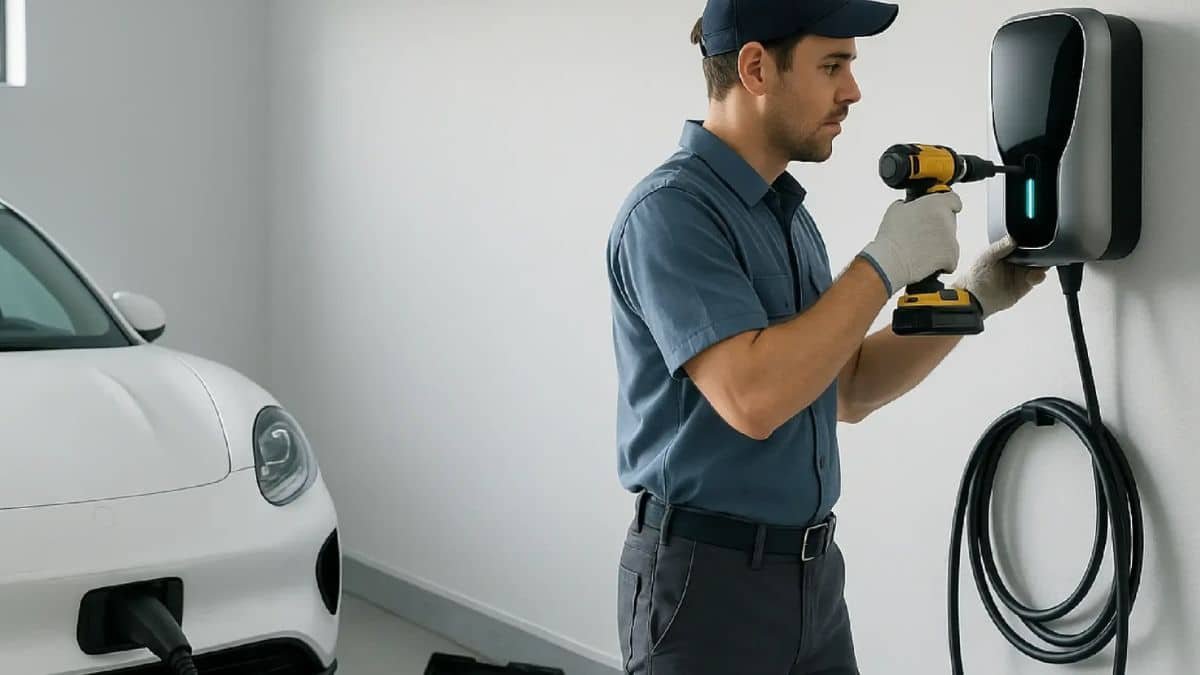

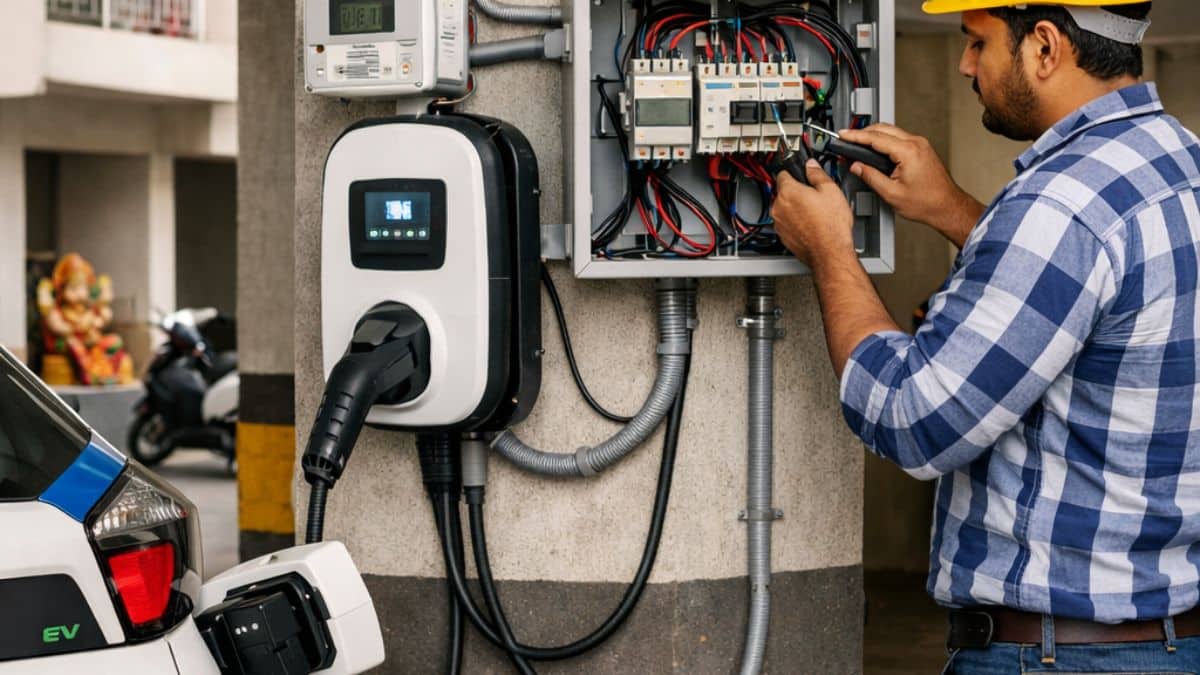
The shift to electric vehicles in India is accelerating, but many buyers still underestimate what it takes to set up charging at home. Buying the EV is the visible expense — installing a reliable home charger is the hidden commitment. Without proper planning, installation costs, electrical upgrades, and regulatory steps can increase your total ownership costs significantly.
Home charging is the most practical solution for daily commuting. It eliminates dependence on public infrastructure, reduces range anxiety, and allows overnight charging at domestic electricity tariffs. However, installing a residential EV charging setup involves more than just mounting a wall box.
Real Cost of Installing a Home EV Charger in India
The overall installation expense depends on your property type, existing electrical capacity, and charger rating. A standard 3.3 kW AC charger costs around ₹25,000–₹35,000, while a 7.2 kW smart charger can go up to ₹55,000 or more depending on features like Wi-Fi connectivity and load management.
Electrical upgrades are often the biggest variable. If your home operates on a single-phase supply, you may need a three-phase connection for faster charging. This electricity load upgrade can cost between ₹8,000 and ₹20,000 depending on your state discom and local infrastructure.
🚀 Join Our Tech Community!
Get the latest news, updates, and tech trends delivered straight to your phone. Never miss an update!
Wiring, MCB installation, earthing, and professional labor add another ₹10,000–₹30,000. In apartments where parking is far from the distribution board, extended cable routing and conduit work may increase the total cost further.
In most real-world scenarios, the total installation cost falls between ₹45,000 and ₹1.2 lakh.
Approval Process and Documentation
The approval process varies slightly across states but follows a similar structure. Your sanctioned load must be evaluated to ensure it can support the additional EV charging demand. If insufficient, a sanctioned load increase application must be filed with the electricity provider.
In apartment complexes, you must secure written permission from your Resident Welfare Association (RWA). Some states require formal discom notification before activating a high-capacity residential EV charging setup. The full approval cycle usually takes 7–21 days.
Skipping approvals can lead to penalties or service disconnection, so compliance is essential.
Hidden Expenses Most Buyers Ignore
While the charger unit price is visible, several indirect costs often go unnoticed. An increase in sanctioned load can raise your fixed monthly electricity charges even if consumption remains moderate. Additionally, higher total usage may push you into a higher tariff slab.
Another overlooked factor is long-term battery health. Charging habits, especially frequent high-capacity charging, can influence EV battery degradation, particularly during Indian summers where ambient temperatures are high.
You should also factor in surge protection devices, proper grounding, and occasional inspection of connectors. These preventive measures are small expenses but critical for safety and durability.
Apartment vs Independent House Installation
Independent houses generally offer easier access to the main distribution board and more flexibility for wiring. Installation tends to be quicker and slightly more affordable.
In apartment complexes, long cable runs, society permissions, and shared electrical infrastructure make the process more complex. Installation costs in apartments can be 20–40% higher compared to independent homes.
Before purchasing your EV, it is wise to confirm whether your parking slot supports fixed charger installation.
AC Charger vs Fast Charger at Home
For most Indian urban users, a 7.2 kW AC home charger is more than sufficient. Fast DC chargers are rarely practical for residential use due to very high installation costs and heavy load requirements.
Slower overnight charging is typically safer for battery health and aligns better with residential electricity systems. It also reduces stress on internal battery management systems and supports long-term efficiency.
Is It Worth Installing Immediately?
Installing a home charger makes sense if you plan to use your EV daily and rely on it as your primary vehicle. Public charging stations are expanding but may not always be available during peak hours.
However, if you live in a rented property or face uncertain society approvals, it may be better to assess infrastructure feasibility before committing to installation expenses.