
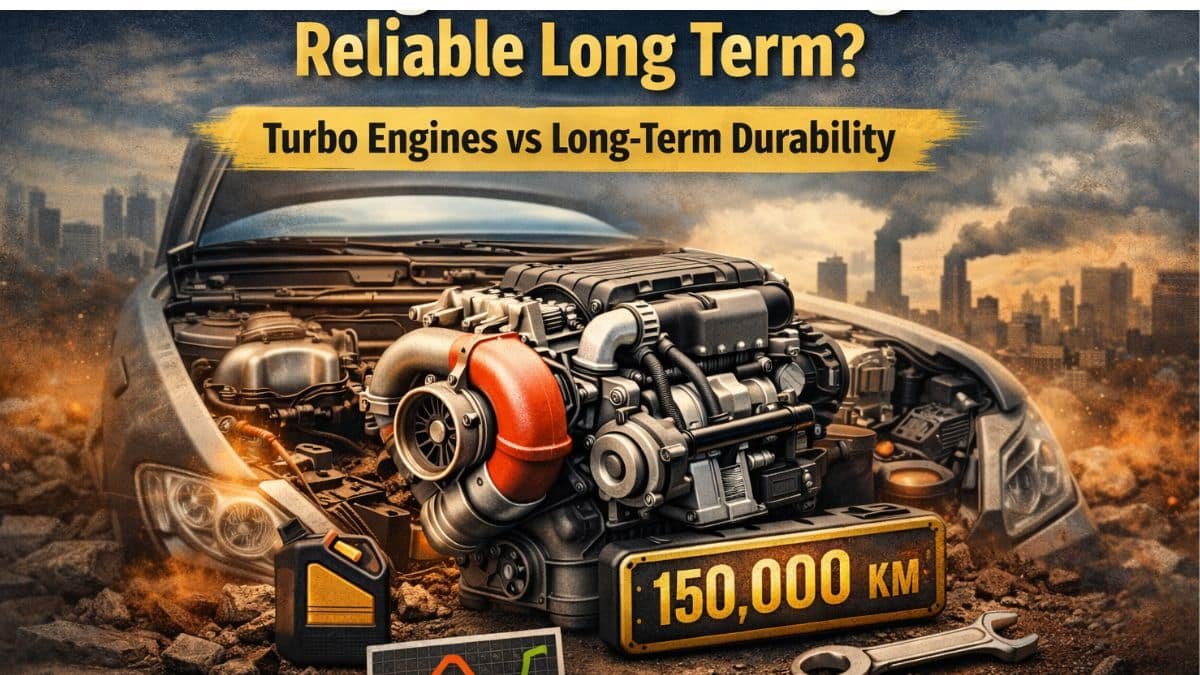

Engine downsizing has quietly reshaped the Indian automobile market over the past decade. Larger naturally aspirated engines have gradually been replaced by smaller turbocharged petrol units promising better fuel efficiency and lower emissions. But the real question buyers are asking in 2026 is simple — are smaller engines truly reliable for long-term ownership in Indian driving conditions?
As emission norms tighten and fuel prices remain unpredictable, carmakers are increasingly offering 1.0L and 1.2L turbo petrol engines even in compact SUVs. While performance numbers look impressive on paper, long-term durability depends on how these engines are used and maintained.
Why Downsized Engines Became Popular in India
The shift toward smaller engines did not happen overnight. Stricter BS6 Phase 2 emission norms and the need to improve fuel economy pushed manufacturers to reduce engine displacement while adding turbochargers to compensate for power loss.
This transition also coincided with the decline of Entry-Level Petrol Hatchbacks, where manufacturers began focusing more on turbo petrol technology for better mileage claims and taxation advantages.
🚀 Join Our Tech Community!
Get the latest news, updates, and tech trends delivered straight to your phone. Never miss an update!
Downsized engines offer:
- Higher power-to-weight ratio
- Improved fuel efficiency in city driving
- Lower carbon emissions
- Better torque at lower RPM
However, reliability is not determined by specifications alone.
How Turbocharging Impacts Long-Term Durability
A smaller engine working with a turbocharger experiences higher stress compared to a larger naturally aspirated engine. Turbo units operate at high temperatures and pressure levels, which means:
- Regular oil changes are critical
- Engine oil quality directly affects turbo lifespan
- Aggressive driving can accelerate wear
In Indian conditions — heavy traffic, frequent idling, inconsistent fuel quality — these stress factors increase.
LSI keywords naturally relevant here include turbo petrol reliability, long-term engine durability, maintenance cost comparison, and real-world mileage.
If serviced properly and driven responsibly, modern downsized engines can easily cross 1.5 lakh kilometres without major internal failure. But neglect amplifies risk.
Real-World Indian Driving Conditions Matter
Urban traffic congestion leads to:
- Frequent stop-go driving
- Higher engine heat buildup
- Increased clutch wear
- Reduced airflow for cooling
Unlike highway cruising, city usage keeps turbo engines under repeated load cycles. This is where ownership discipline plays a major role.
Interestingly, as the market shifts toward electrification under the Small EV Revolution 2026, some buyers are questioning whether investing in a highly stressed small turbo engine today is the safest long-term bet.
That comparison makes engine reliability an even more important purchase factor.
Common Concerns Around Downsized Engines
- Turbo failure after warranty
- Higher repair cost compared to naturally aspirated engines
- Slightly lower resale confidence
- Sensitivity to delayed servicing
However, modern engineering improvements such as improved cooling systems, stronger internal components, and better ECU mapping have reduced early-generation turbo issues.
The key difference lies in maintenance behaviour.
Maintenance Discipline Determines Longevity
Downsized engines demand:
- Timely oil changes (no delay beyond schedule)
- Proper warm-up before hard acceleration
- Avoiding sudden engine shut-off after aggressive driving
- Quality fuel usage
When these practices are followed, long-term reliability improves significantly.
Neglecting these practices increases turbocharger wear and carbon buildup.
Are Naturally Aspirated Engines Safer Long Term?
Naturally aspirated petrol engines remain mechanically simpler. They:
- Run cooler
- Have fewer pressurised components
- Typically have lower repair complexity
For buyers prioritising ultra-low maintenance stress, NA engines still hold appeal.
However, downsized turbo engines provide better torque delivery and fuel economy — advantages that many urban buyers value more than mechanical simplicity.