
By using this site, you agree to the Privacy Policy and Terms of Use.
Accept
Techy TrendsTechy TrendsTechy Trends
  • Home
  • News
  • Guide
  • Automobiles
  • Electric Vehicles
  • Upcoming Vehicles
  • Stories
Reading: ADAS in Cars Explained: Why This Safety Tech Is Suddenly Everywhere
Share
Techy TrendsTechy Trends
Search
  • Home
  • News
  • Guide
  • Automobiles
  • Electric Vehicles
  • Upcoming Vehicles
  • Stories
Follow US
  • News
  • Guide
  • Automobiles
  • Electric Vehicles
  • Upcoming Vehicles
© 2026 Techy Trends. All Rights Reserved.
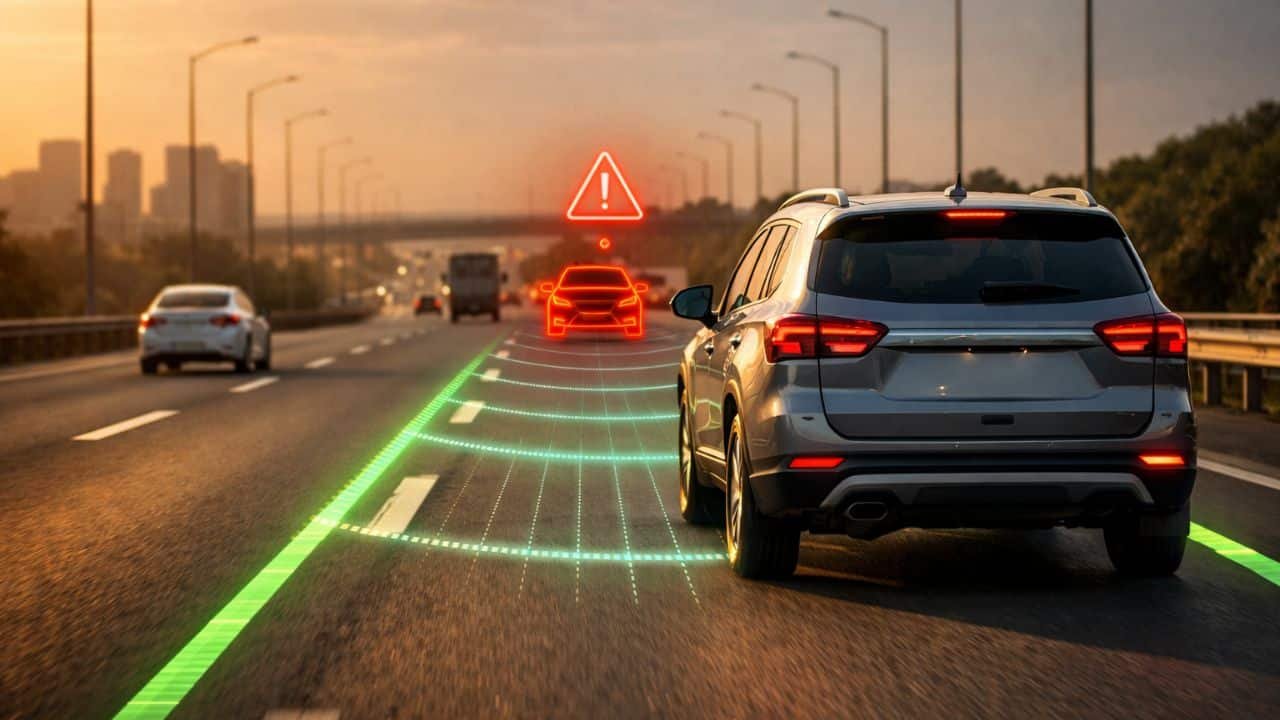
Modern SUV driving on an Indian highway with ADAS features like lane assist and adaptive cruise control active
Guide

ADAS in Cars Explained: Why This Safety Tech Is Suddenly Everywhere

Mohammed Adnan Hussain
Last updated: February 10, 2026 12:09 pm
By Mohammed Adnan Hussain 5 months ago
Share
5 Min Read
SHARE

Advanced Driver Assistance Systems, commonly known as ADAS, are no longer limited to luxury cars or experimental technology showcases. Over the past few years, ADAS has steadily moved into mainstream vehicles, reshaping expectations around safety and driver support. Instead of reacting only after an accident occurs, these systems are designed to constantly monitor the road and intervene before a situation turns dangerous. This shift from passive to preventive safety is why ADAS has become one of the most talked-about developments in the automobile industry.

Contents
What ADAS Really Means for Everyday DriversNot Automation, but Intelligent AssistanceHow ADAS Works Behind the ScenesSensors, Cameras and Software Working TogetherKey ADAS Features That Matter MostSafety That Acts Before You ReactADAS on Indian Roads: Helpful but Not PerfectReal-World Conditions Make a DifferenceWhy ADAS Is Becoming More Common in New CarsSafety Expectations Are EvolvingIs Paying Extra for ADAS Actually Worth It?Value Depends on Driving HabitsThe Bigger Picture: Where ADAS Is Headed NextA Stepping Stone Toward Smarter Cars

What ADAS Really Means for Everyday Drivers
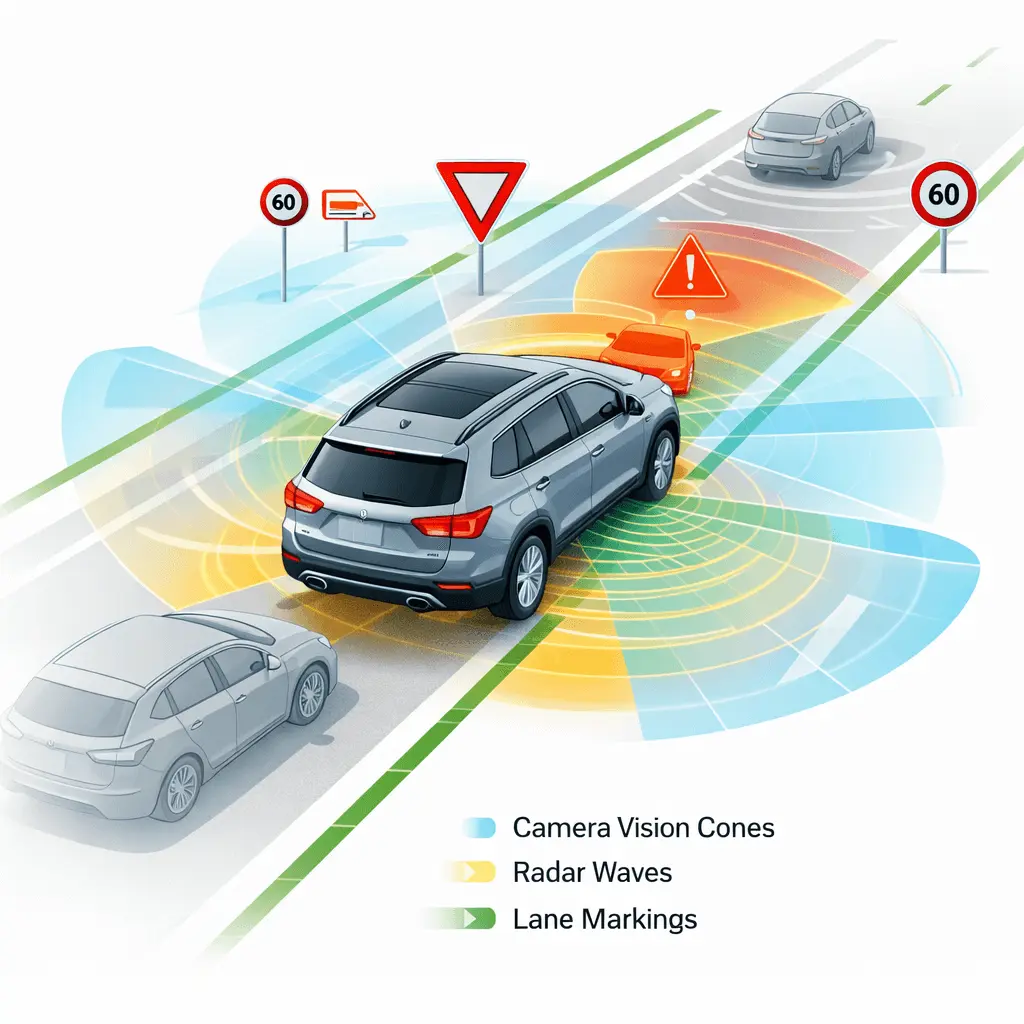
Overview illustration showing how advanced driver assistance systems monitor lanes, vehicles and traffic signs

Not Automation, but Intelligent Assistance

ADAS does not turn a car into a self-driving machine. Its real purpose is to assist drivers by reducing human error, which remains the leading cause of road accidents. By using cameras, radar sensors and onboard software, ADAS observes traffic movement, lane positioning and potential hazards in real time. When it senses risk, it either alerts the driver or steps in briefly to correct the situation. The driver remains fully responsible at all times, with ADAS acting as a safety net rather than a replacement.

How ADAS Works Behind the Scenes
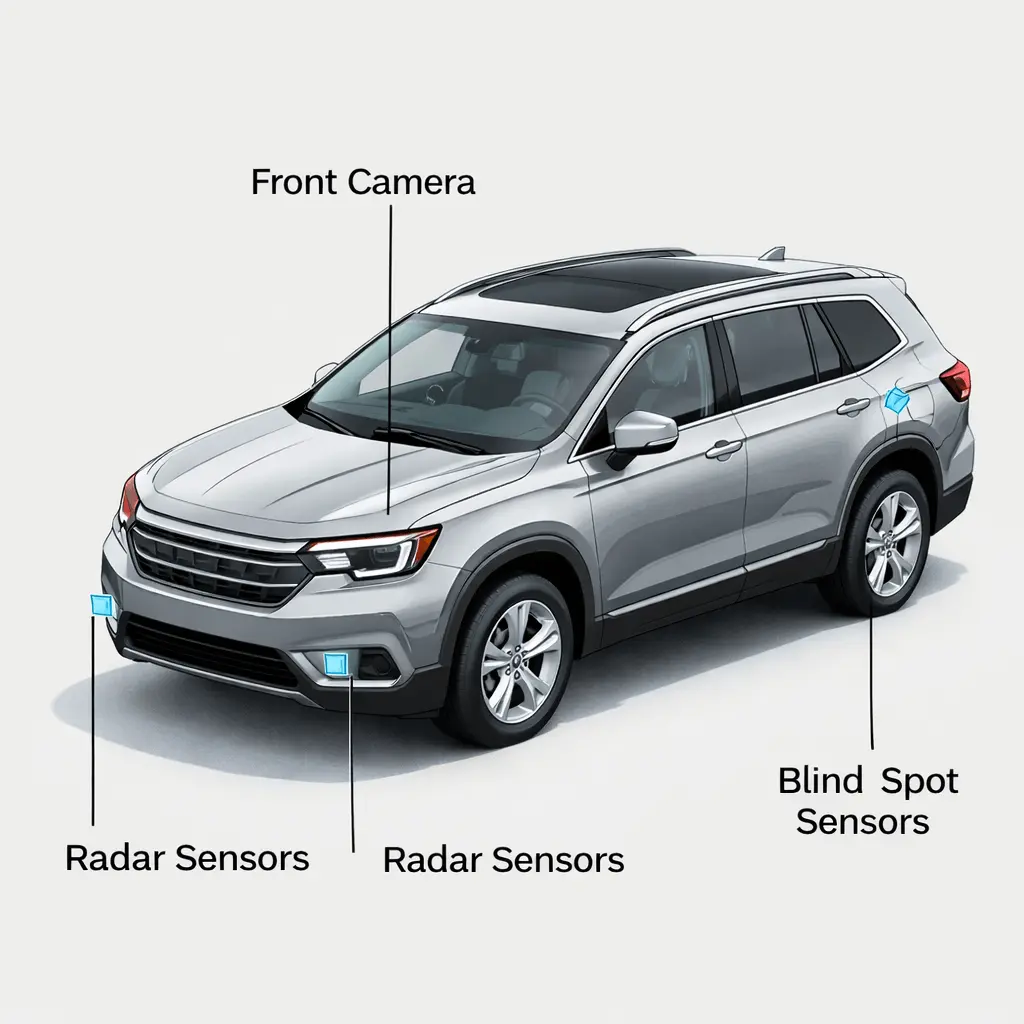
Car diagram highlighting ADAS sensors, front camera, radar and blind spot monitoring technology

Sensors, Cameras and Software Working Together

At the core of every ADAS-equipped vehicle is a network of sensors and cameras positioned around the car. Front-mounted cameras track lane markings and traffic signs, radar units measure the distance and speed of vehicles ahead, and short-range sensors monitor blind spots. This information is processed instantly by the car’s control unit, allowing it to predict possible collisions or unsafe movements. The system’s effectiveness depends heavily on sensor accuracy and road conditions, which is why performance can vary across driving environments.

Key ADAS Features That Matter Most
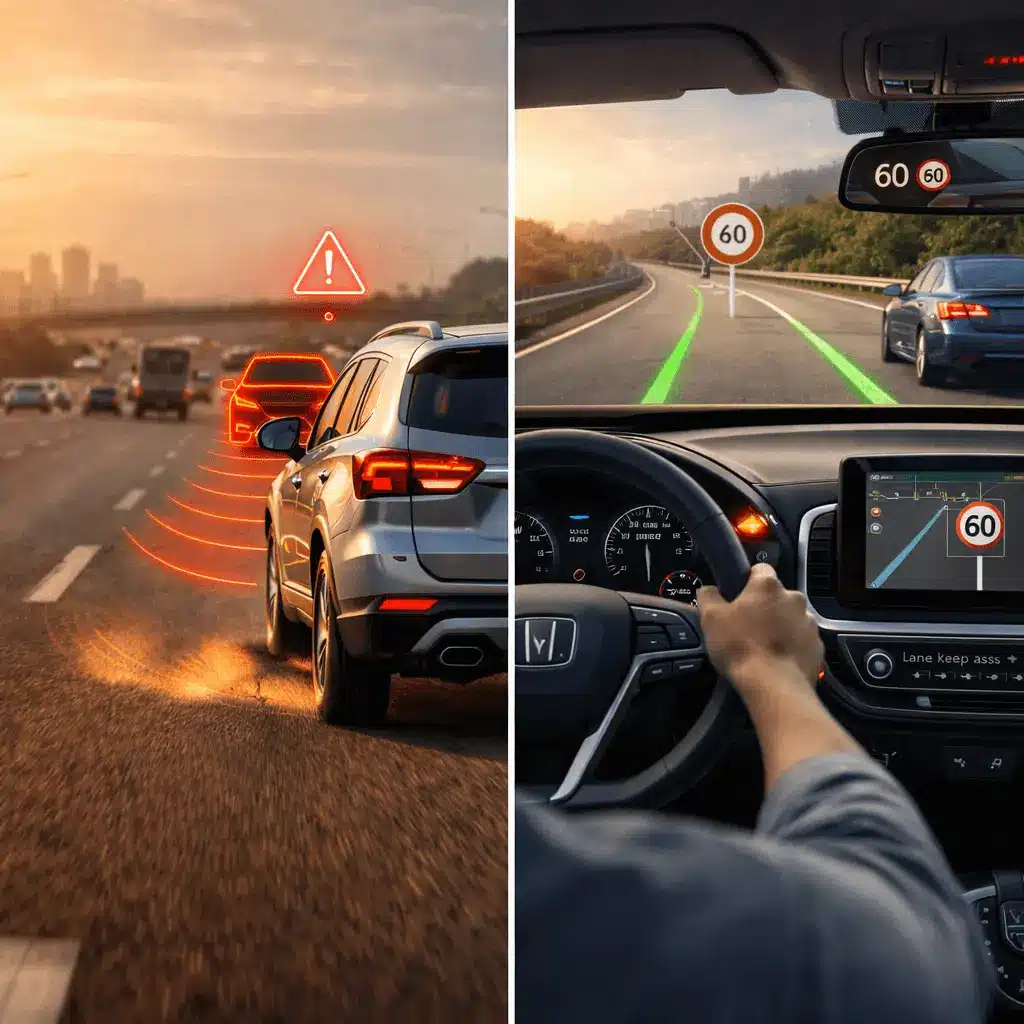
ADAS safety features in action including automatic emergency braking, lane keep assist and blind spot warning

Safety That Acts Before You React

Some of the most impactful ADAS features focus on preventing frontal collisions and unintended lane departures. Forward collision warnings alert drivers when they approach another vehicle too quickly, while automatic emergency braking can apply brakes if the driver does not respond in time. Lane departure warnings and lane-keeping assistance help prevent drift caused by fatigue or distraction. Together, these features address common accident scenarios that occur during both highway cruising and daily commuting.

🚀 Join Our Tech Community!

Get the latest news, updates, and tech trends delivered straight to your phone. Never miss an update!

📱 Join Telegram 💬 Join WhatsApp Channel

ADAS on Indian Roads: Helpful but Not Perfect

ADAS system detecting vehicles and pedestrians in busy Indian city traffic conditions

Real-World Conditions Make a Difference

Indian driving conditions present a unique challenge for ADAS systems. While these features perform well on highways, expressways and well-marked roads, their reliability can drop in congested urban traffic. Inconsistent lane markings, sudden pedestrian crossings and mixed vehicle types can confuse cameras and sensors. As a result, ADAS should be viewed as a supportive tool rather than a system to rely on blindly. Drivers who understand its limits benefit the most from its presence.

Why ADAS Is Becoming More Common in New Cars
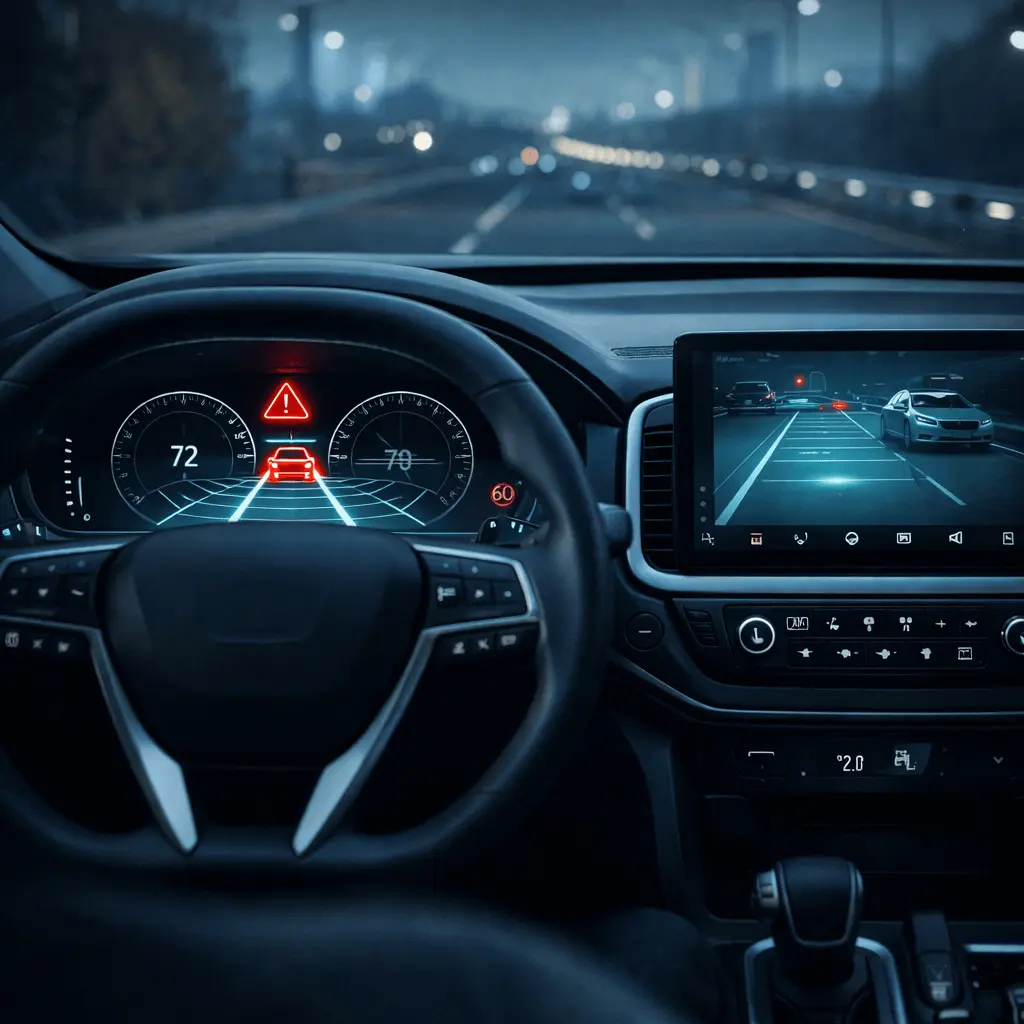
Future car interior showing advanced driver assistance system displays and digital driving assistance visuals

Safety Expectations Are Evolving

The growing availability of ADAS is driven by rising safety awareness among buyers and stricter global safety standards. Manufacturers are also finding ways to reduce costs by sharing technology across models and platforms. What was once considered premium equipment is gradually becoming a differentiating factor even in mid-range vehicles. For many buyers today, the presence of ADAS signals a modern, safety-focused car rather than a luxury indulgence.

Is Paying Extra for ADAS Actually Worth It?

Value Depends on Driving Habits

Whether ADAS justifies its additional cost depends largely on how a car is used. Drivers who spend significant time on highways or frequently travel long distances are more likely to notice its benefits. The system reduces fatigue, improves situational awareness and can prevent costly accidents. For buyers who drive mainly in slow, crowded city conditions, the advantages may feel less dramatic, though the added safety layer still holds long-term value.

The Bigger Picture: Where ADAS Is Headed Next

A Stepping Stone Toward Smarter Cars

ADAS represents an important transition phase in automotive technology. It bridges the gap between traditional driving and future autonomous systems by familiarising drivers with intelligent intervention. As infrastructure improves and technology matures, these systems are expected to become more accurate and less intrusive. For now, ADAS stands as one of the most meaningful safety upgrades available in modern cars, offering protection without taking control away from the driver.

Share This Article
Facebook Twitter Whatsapp Whatsapp Copy Link
Share
By Mohammed Adnan Hussain
Follow:
Mohammed Adnan Hussain is digital journalist and editor covering automobiles and technology in India. He is Digital marketer,Blogger and Strong Knowledge of Automation
Previous Article Land Rover Defender driving on rugged terrain highlighting its off-road capability and upright design A Different Way to Look at the Land Rover Defender
Next Article EV battery performance after prolonged exposure to Indian summer heat Real-World EV Battery Degradation After Three Indian Summers
7 Comments
  • Pingback: MG Majestor Revealed in India: Top 5 Things You Need to Know - Techy Trends
  • Pingback: MG Majestor vs Toyota Fortuner: Which Premium SUV Is Better for Indian Buyers - Techy Trends
  • Pingback: Skoda Slavia Facelift Spied in India New Design, Bigger Screens & ADAS Coming Soon? - Techy Trends
  • Pingback: BMW Launches X3 30 xDrive at ₹74.5 Lakh Luxury SUV Competition Intensifies - Techy Trends
  • Pingback: BYD Sealion 7 Review 2026 : 500km Range Premium Electric SUV That Could Disrupt India - Techy Trends
  • Pingback: Planning a Family Car Under 15 Lakhs? These 5 Sedan Options Are Worth a Serious Look - Techy Trends
  • Pingback: Why ADAS Safety Features Are Becoming Standard in Cars - Techy Trends

Leave a Reply Cancel reply

Your email address will not be published. Required fields are marked *

Stay Connected

235.3kFollowersLike
69.1kFollowersFollow
11.6kFollowersPin
56.4kFollowersFollow
136kSubscribersSubscribe
4.4kFollowersFollow
- Advertisement -
Ad imageAd image

Latest News

Nissan Tekton, Kia Seltos, and Hyundai Creta midsize SUVs, three models expected to get hybrid powertrains in India.
3 Upcoming Hybrid SUVs That Could Reshape India’s Midsize Segment: Tekton, Seltos, Creta
Upcoming Vehicles 2 hours ago
Tata Sierra EV parked showing full profile, representing family SUV buying decision
Is the Tata Sierra EV Worth Buying?
Electric Vehicles 6 hours ago
Row of motorcycles parked outside an Indian showroom representing different budget segments
Motorcycle Buying Guide by Budget: What ₹1 Lakh, ₹1.5 Lakh, and ₹2 Lakh Actually Buys You
Guide 7 hours ago
An electric motorcycle connected to a home charging setup in India
Electric Motorcycle Buying Guide: What to Check Before You Buy in India
Guide 22 hours ago
//

India’s leading digital platform for the business, tech, and trends driving the future of mobility.

Quick Link

  • About us
  • Contact US
  • Disclaimer
  • Privacy Policy
  • Terms and Conditions

Top Categories

  • News
  • Guide
  • Automobiles
  • Electric Vehicles
  • Upcoming Vehicles

Sign Up for Our Newsletter

Subscribe to our newsletter to get our newest articles instantly!


Techy TrendsTechy Trends
Follow US
© 2026 Techy Trends . All Rights Reserved.
Welcome Back!

Sign in to your account

Username or Email Address
Password

Lost your password?