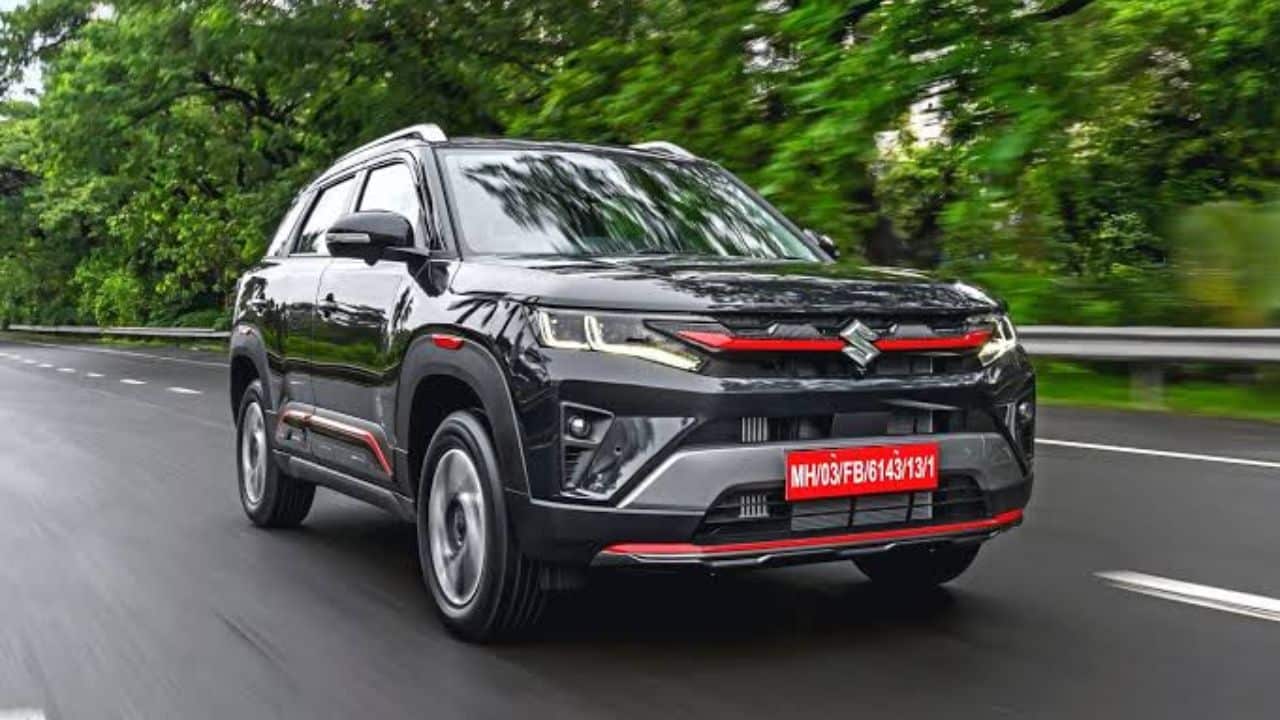

The Brezza has always been sold as a do-it-all compact SUV, but “do-it-all” and “does everything equally well” aren’t the same claim. Whether the 2026 facelift genuinely fits your life depends a lot on whether your daily 20 km is mostly bumper-to-bumper city traffic or whether you’re regularly clocking 300 km highway runs on weekends. This piece looks at both scenarios honestly, including where the Brezza actually struggles.
City Driving: This Is Where the Brezza Feels Most at Home
At 198 mm of ground clearance, the Brezza clears most speed breakers and moderate potholes without you flinching every time you approach one, which matters more in city driving than on a well-surfaced highway. The 1,685 mm height gives a commanding-enough seating position for good visibility through congested intersections, and the 198 mm clearance combined with a well-tuned suspension keeps the ride composed over the kind of broken patches you’ll hit on any given city commute.
Automatic climate control, keyless entry, and the height-adjustable driver seat all pull their weight here too, small conveniences that matter far more when you’re spending 45 minutes crawling through peak-hour traffic than they do on an open highway. If you’ve got the 6-speed automatic, city driving is genuinely where a torque converter box earns its keep, no clutch fatigue, and smoother low-speed modulation than you’d get hunting for the right gear in a manual during stop-start crawl.
Fuel efficiency in the city is a mixed picture depending on which engine you pick. The 1.5-litre petrol claims up to 19.8 kmpl officially, and the CNG variant meaningfully undercuts petrol running costs if you’ve got a CNG station within reasonable range, particularly relevant in cities like Delhi, Mumbai, and Ahmedabad where infrastructure is solid.
🚀 Join Our Tech Community!
Get the latest news, updates, and tech trends delivered straight to your phone. Never miss an update!
Where City Use Exposes a Genuine Weak Spot
The 328-litre boot isn’t the biggest in the segment, and while it’s well-shaped and easy to load for a weekly grocery run, it starts feeling tight if you’re doing regular city errands that involve more than a couple of bags. It’s a reasonable size, just not a standout one.
Cabin plastics are another honest weak point. Build quality itself is solid and consistent, no rattly panels or uneven gaps, but the plastics used lean harder and less soft-touch than what you’d find in a Sonet or Nexon at a similar price. It’s not a dealbreaker for daily city use, but it’s the kind of thing you notice more the longer you own the car.
Highway Driving: Stable, But Don’t Expect Urgency
Autocar India’s own test drivers, after putting the Brezza through comparative testing against the Kylaq and XUV 3XO, noted good highway stability and a comfortable ride as genuine strengths, exactly what you want for long-distance use. The 2,500 mm wheelbase contributes directly to that composed, balanced feel at speed, particularly through sweeping highway curves where a shorter wheelbase car might feel more nervous.
Where the Brezza loses some ground is outright pickup once you’re past city speeds. The same Autocar review flagged pick-up and acceleration above 70 km/h as somewhat underwhelming on the naturally aspirated petrol, which matters if you’re the kind of driver who wants confident overtaking punch on a two-lane highway rather than planning your overtakes three vehicles ahead of time.
This is exactly where the new 1.0-litre turbo-petrol changes the calculation. With 170 Nm of torque against the NA petrol’s 139 Nm, the turbo genuinely feels more relaxed at highway cruising speeds and has more in reserve for a quick overtake. The catch, and it’s a real one if highway performance matters to you, is that the turbo is manual-only. If you specifically want an automatic gearbox for highway comfort, you’re locked into the naturally aspirated engine and its more modest pickup.
NVH: Quieter Than the Outgoing Model, Not Silent
Maruti specifically highlights lower NVH levels on the refined K15C engine in this facelift, and it’s a genuine improvement over the outgoing Brezza rather than just a marketing line. At sustained highway speeds, cabin noise is better controlled than before, though it’s not going to match the hushed, isolated feel of something a segment above. For a two-to-three-hour highway stretch, it’s comfortable enough that road noise fatigue shouldn’t be a major complaint by the time you arrive.
Safety on the Highway: Solid Basics, No Active Assistance
The Brezza comes with 6 airbags and cruise control as standard equipment worth knowing about if highway trips are a regular part of your driving, cruise control alone takes real fatigue out of long, monotonous stretches. What it doesn’t offer, at any trim level, is ADAS. Features like adaptive cruise control, lane-keep assist, or forward collision warning, increasingly available on rivals like the Nexon, Venue, and XUV 3XO, simply aren’t on the table here. If you do frequent long-distance highway driving and specifically want that layer of active safety assistance, this is a genuine gap against segment rivals, not a minor omission.
Putting It Together by Use Case
If your driving is genuinely mostly city, short trips, daily office commute, weekend errands, the Brezza’s ground clearance, city-friendly dimensions, and (if you pick the automatic) smooth low-speed drivability make it a comfortable, low-stress daily companion. The boot size and plastic quality are worth test-driving against rivals like the Sonet or Nexon before you commit, but neither is a dealbreaker for pure city use.
If you’re doing regular highway runs, two or three long trips a year or more, the naturally aspirated automatic gives you comfort and stability but modest overtaking punch, while the turbo manual gives you genuinely better highway performance at the cost of losing the automatic gearbox entirely. Neither combination gives you ADAS, so if active safety assistance on long highway stretches is a priority, it’s worth cross-shopping the XUV 3XO or Nexon specifically for that feature before deciding.
Frequently Asked Questions
Is the Brezza automatic or manual better suited for highway driving?
The manual, specifically with the new 1.0-litre turbo-petrol engine, offers noticeably better highway pickup and overtaking response thanks to its 170 Nm torque figure. The automatic is only available with the naturally aspirated 1.5-litre petrol, which Autocar’s test drivers found underwhelming above 70 km/h.
Does the 2026 Brezza have ADAS for highway safety?
No. The Brezza doesn’t offer ADAS features like adaptive cruise control or lane-keep assist on any variant, unlike some rivals such as the Tata Nexon and Mahindra XUV 3XO.
Is the Brezza’s boot space enough for regular city use?
At 328 litres, it’s adequate for weekly grocery runs and daily errands but isn’t the largest in its segment. If boot space is a priority for your city routine, it’s worth comparing against rivals before deciding.
Does the CNG variant work well for both city and highway driving?
The CNG variant is particularly strong for city driving where running costs matter most and CNG stations are accessible. For highway use, petrol tends to be the more convenient choice unless you’re confident about CNG refuelling availability along your specific route.