

If you’ve been Brezza-shopping this month, you’ve probably noticed something odd. The showroom is pushing discounts on the old car at the exact same time the new one just launched. That’s not a coincidence, it’s Maruti clearing pre-facelift stock, and it puts genuine money on the table for buyers willing to take the older car. So which one actually makes sense for you?
Short answer: it depends far more on what you’ll use the car for than on which one is “better” in the abstract. Here’s the actual breakdown.
What You’re Choosing Between
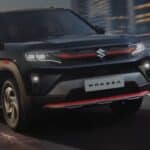
The 2026 Brezza facelift, launched July 24, 2026, brings a new 1.0-litre Boosterjet turbo-petrol engine (110 PS, 170 Nm), a 5-star Bharat NCAP rating, 6 airbags as standard across every trim, an underbody CNG tank that no longer eats into boot space, and a longer features list including a bigger 10.1-inch touchscreen on the top trim. Ex-showroom prices span roughly ₹7.40 lakh to ₹13.01 lakh.
The outgoing pre-facelift Brezza is the same familiar 1.5-litre K15C platform Maruti has sold since 2022, now being cleared out with real discounts. As of July 2026, Maruti Suzuki is offering benefits of up to ₹55,000 on the outgoing Brezza, made up of a ₹25,000 cash discount, either a ₹15,000 exchange bonus or ₹25,000 scrappage bonus, plus a further ₹5,000 corporate benefit for eligible buyers.
🚀 Join Our Tech Community!
Get the latest news, updates, and tech trends delivered straight to your phone. Never miss an update!
The Case for Buying the New 2026 Brezza
If you can stretch the budget, the new car is the more defensible long-term buy, and it’s not close on a few specific points.
Safety is a genuine, measurable step up. The outgoing Vitara Brezza was never independently crash-tested by Bharat NCAP. The 2026 facelift has been, and it scored 5 stars for both adult occupant protection (30.41/32) and child occupant protection (43/49), with 6 airbags standard on every single variant instead of being reserved for higher trims. If safety features are a genuine priority rather than a checkbox, this alone is hard to argue past.
The Boosterjet turbo is a meaningfully better engine for mixed driving. The outgoing car’s naturally aspirated 1.5-litre has always felt adequate rather than eager, especially with a full car of passengers on an incline. The new 110 PS turbo, borrowed from the Fronx, brings noticeably more usable torque for overtaking and highway merging, something buyers cross-shopping the Sonet or Nexon turbo variants will appreciate.
CNG buyers get their boot back. The old Brezza’s boot-mounted CNG cylinder was a genuine practicality complaint, it visibly ate into luggage space. The 2026 car switches to an underbody tank borrowed from the Victoris, which resolves that specific pain point without you needing to compromise on cargo room.
You’re not buying into a soon-to-be-superseded design. Buy the outgoing car today and you’re driving a model that’s visibly one generation behind from day one, resale value on a car sold right as its replacement launches tends to soften faster than usual.
The Case for the Discounted Outgoing Model
The discounted old car isn’t just a fallback option, for a specific kind of buyer, it’s genuinely the smarter money decision.
The price gap is real, and it compounds with the discount. Even before discounts, the base 2026 Brezza starts around ₹7.40 lakh, and getting into a turbo or a well-equipped ZXi trim pushes well past ₹10 lakh. Stack the ₹55,000 in benefits onto an already-lower outgoing price, and the total gap between old and new can run into the range that matters for a genuinely budget-constrained buyer, particularly on loan EMIs stretched over five years.
The mechanical package isn’t obsolete, it’s proven. The 1.5-litre K15C engine has years of real-world ownership data behind it in the Indian market. If your priority is a known quantity with predictable service costs and no first-year-of-production surprises, that maturity has genuine value, especially for buyers who plan to hold the car for eight-plus years.
You don’t actually need the turbo or the bigger screen. If your driving is mostly flat city commuting with the occasional highway trip, the outgoing 1.5-litre petrol was never underpowered enough to be a dealbreaker for that use case. Buyers who won’t meaningfully use cruise control, blind-spot warning, or the larger touchscreen are paying for features that don’t change their actual ownership experience.
A Straight Comparison
| Factor | 2026 Facelift | Outgoing Model (Discounted) |
|---|---|---|
| Starting ex-showroom price | ~₹7.40 lakh | Lower, plus up to ₹55,000 in benefits |
| Bharat NCAP rating | 5-star (AOP and COP) | Not independently tested |
| Airbags | 6, standard on all variants | Varies by variant |
| Turbo-petrol option | Yes (110 PS Boosterjet) | No |
| CNG boot space | Preserved (underbody tank) | Reduced (boot-mounted cylinder) |
| Resale value trajectory | Stronger, current generation | Softer, one generation behind |
| Waiting period | Likely minimal, dealers want to clear stock |
Who Should Buy the New 2026 Brezza
Buy the new one if safety ratings genuinely factor into your decision, if you regularly drive with a full car on highways where the turbo’s extra torque will actually get used, or if you plan to keep the car long enough that resale value five to seven years from now matters to your total cost of ownership. It’s also the more sensible choice if you’re specifically cross-shopping feature-loaded rivals like the Venue or Sonet, since the older Brezza would have looked outdated next to them.
Who Should Buy the Discounted Outgoing Model
Buy the discounted outgoing car if your budget is genuinely tight and every ₹50,000 matters, if your driving is predominantly city-based where the naturally aspirated engine was never a real limitation, or if you specifically want CNG at the lowest possible price and are comfortable with the older boot-mounted tank layout. It also makes sense if you want to drive away this week rather than risk an early-production waiting period on the new model.
If money is genuinely tight, the discounted outgoing Brezza remains a rational, low-risk buy, it’s not a bad car, it’s simply a step behind on safety testing and engine choice. But for most buyers who can stretch to the new model, the 2026 facelift is the better long-term decision. A 5-star safety rating that didn’t exist before, 6 airbags as standard, a genuinely more capable turbo engine, and a CNG setup that no longer costs you boot space aren’t marginal upgrades, they’re the kind of changes that show up in daily driving and in resale value years down the line. Test-drive both before deciding, but go in expecting the new car to win that comparison unless the price gap is the deciding factor for you.
Is it worth buying the outgoing Maruti Brezza instead of the 2026 facelift?
It’s worth considering only if budget is the primary constraint. The outgoing model lacks a Bharat NCAP rating and the new turbo-petrol engine, but current discounts of up to ₹55,000 make it a reasonable choice for strictly city-focused, cost-conscious buyers.
How much discount is available on the outgoing Brezza in July 2026?
Maruti Suzuki is offering total benefits of up to ₹55,000 on the outgoing Brezza, including a ₹25,000 cash discount, an exchange or scrappage bonus of ₹15,000-25,000, and a ₹5,000 corporate benefit for eligible buyers.
Does the outgoing Brezza have a Bharat NCAP safety rating?
No. The outgoing pre-facelift Brezza was never independently crash-tested by Bharat NCAP. Only the 2026 facelift has been tested, scoring 5 stars for both adult and child occupant protection.