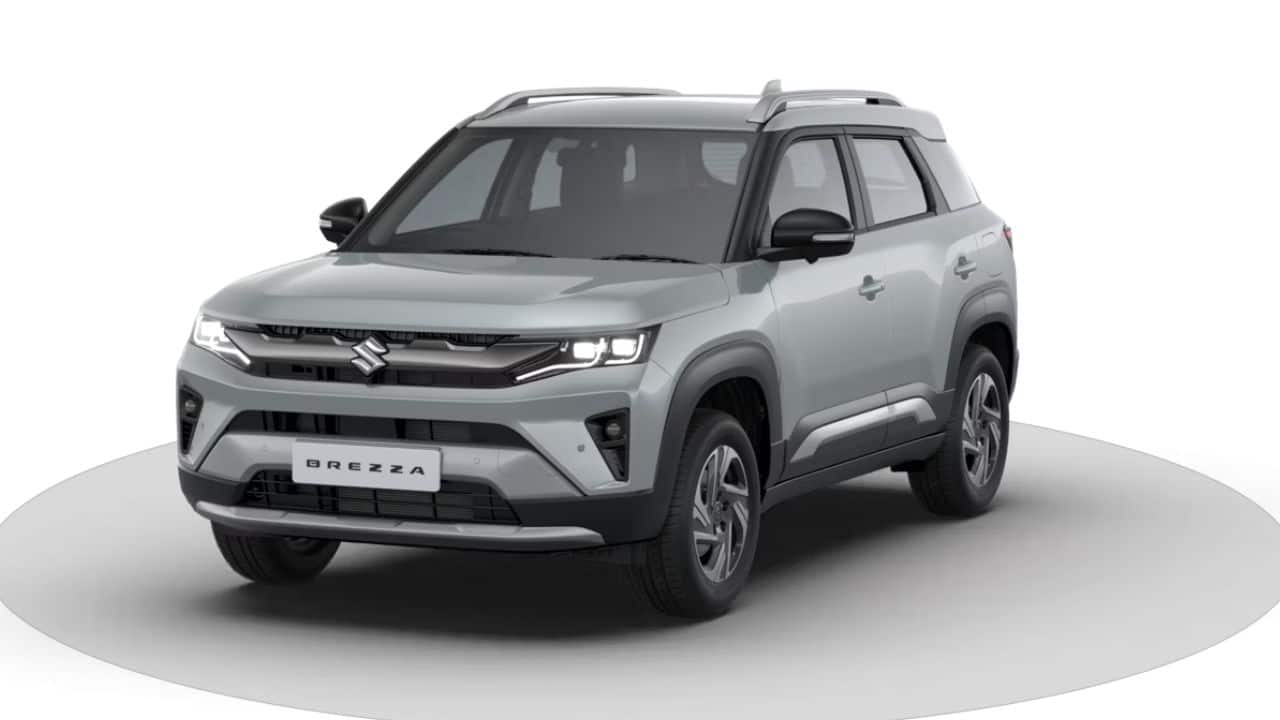

The Maruti Suzuki Brezza just got its most significant update since the nameplate dropped Vitara in 2022. Launched on July 24, 2026, the facelifted Brezza brings a new turbo-petrol engine, a longer feature list, and a 5-star Bharat NCAP rating to a segment where Maruti had genuinely started falling behind on equipment. Ex-showroom prices for the 2026 Brezza start at ₹7.40 lakh and go up to roughly ₹13.01 lakh, depending on variant and powertrain.
This guide covers what actually changed, what each variant gets, real mileage numbers for every engine option, and which trim makes sense for different kinds of Indian buyers.
Maruti Brezza 2026: What’s New
The big story is under the bonnet. The Brezza finally gets a proper turbo-petrol option, something rivals like the Kia Sonet and Hyundai Venue have offered for years. Maruti has borrowed the 1.0-litre, 3-cylinder Boosterjet turbo-petrol from the Fronx, tuned here for 110 PS and 170 Nm. It’s paired exclusively with a 6-speed manual gearbox, at least for now.
The familiar 1.5-litre K15C naturally aspirated petrol carries over largely unchanged, making 103 PS and 139 Nm, with a 6-speed manual or 6-speed torque converter automatic. CNG buyers get the same 1.5-litre engine, but the setup itself has changed: the Brezza now uses an underbody-mounted CNG tank borrowed from the Victoris, rather than the boot-mounted cylinder that used to eat into luggage space on the outgoing car.
🚀 Join Our Tech Community!
Get the latest news, updates, and tech trends delivered straight to your phone. Never miss an update!
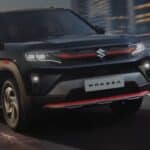
On the outside, changes are evolutionary rather than dramatic. There’s a new grille design linking the headlamps, a reworked front bumper with dark chrome elements, redesigned fog lamp housings, fresh 16-inch alloy wheel designs, and new dual-tone cladding on the lower doors. Two new colours, Vivacious Orange and Lustrous Beige, join the palette, and the turbo variants get “Turbo Boosterjet” badging on the rear quarter glass so nobody mistakes it for the base engine.
Price and Variants
The Brezza facelift is sold in four trims: LXi, VXi, ZXi, and ZXi+, across three powertrains. Ex-showroom prices span ₹7.40 lakh to approximately ₹13.01 lakh, though the exact figure depends on city, powertrain, and any ongoing dealer offers. [INSERT CURRENT ON-ROAD PRICE FOR YOUR CITY] before finalizing a purchase, since RTO tax, insurance, and registration charges vary by state and can add ₹1-1.5 lakh over the ex-showroom figure.
| Variant | Powertrain Options | Notes |
|---|---|---|
| LXi | 1.0 Boosterjet 6MT, 1.5 Petrol 6MT, 1.5 CNG 6MT | Entry trim, no automatic |
| VXi | 1.0 Boosterjet 6MT, 1.5 Petrol 6MT/6AT, 1.5 CNG 6MT | First trim with touchscreen and AT |
| ZXi | 1.0 Boosterjet 6MT, 1.5 Petrol 6MT/6AT, 1.5 CNG 6MT | Sunroof, all three powertrains available |
| ZXi+ | 1.0 Boosterjet 6MT, 1.5 Petrol 6AT | Range-topper, no CNG, no manual on 1.5 |
Note the gaps here matter for buying decisions. If you specifically want a CNG automatic, that combination doesn’t exist on the Brezza at all, CNG is manual-only across the range. And if you want the range-topping ZXi+, you can’t get it with the naturally aspirated petrol manual or with CNG; it’s Boosterjet manual or 1.5 automatic only.
Engine and Mileage: The Real Numbers
Fuel efficiency figures below are ARAI-certified test figures, not real-world numbers. Expect city mileage, especially in heavy traffic with the AC running, to come in noticeably lower than these figures, particularly on the turbo-petrol, which is more sensitive to driving style than the naturally aspirated unit.
| Engine | Power/Torque | Transmission | ARAI Mileage |
|---|---|---|---|
| 1.0L Boosterjet Turbo | 110 PS / 170 Nm | 6-speed MT | 19.96-20.47 kmpl (varies by trim) |
| 1.5L K15C Petrol | 103 PS / 139 Nm | 6-speed MT | Up to 21.09 kmpl |
| 1.5L K15C Petrol | 103 PS / 139 Nm | 6-speed AT | 20.17 kmpl |
| 1.5L K15C CNG | Reduced output on CNG | 6-speed MT | 26.90 km/kg |
The Boosterjet’s real advantage isn’t outright mileage, it’s actually lower on paper than the naturally aspirated engine’s manual figure. What it offers is more usable low-end torque, which matters more than the spec sheet suggests once you’re overtaking on a two-lane highway or crawling up a flyover in bumper-to-bumper traffic. The 1.5-litre NA engine has always felt adequate rather than eager, so buyers cross-shopping the Sonet or Nexon turbo variants will likely find the Boosterjet the more honest comparison.
CNG remains the pick for anyone doing high monthly running, especially fleet or ride-hailing use, where the running-cost gap over petrol compounds fast. The underbody tank is the genuinely useful change here: on the outgoing Brezza, the CNG cylinder ate a big chunk of boot space, and that complaint should now be resolved with this design borrowed from the Victoris.
Dimensions and Practicality
The Brezza measures 3,995 mm in length, 1,790 mm in width, and 1,685 mm in height, sitting on a 2,500 mm wheelbase. That keeps it within the sub-4-metre tax bracket that most compact SUV buyers in India are shopping within. Ground clearance is rated at 198 mm, which is comfortable for speed breakers and moderately broken city roads, if not class-leading.
Boot space stands at 328 litres on the petrol variants, competitive for the segment and enough for a family’s weekend luggage without needing to fold the rear seats. Kerb weight ranges from roughly 1,110 kg to 1,220 kg depending on variant and powertrain, with the heavier automatic and turbo variants sitting at the upper end.
Safety: 5-Star Bharat NCAP Rating
This is arguably the most important change for cautious Indian buyers. The 2026 Brezza facelift scored a 5-star Bharat NCAP rating for both adult occupant protection (30.41 out of 32 points) and child occupant protection (43 out of 49 points), tested on the range-topping ZXi+ 1.5L automatic variant. Bharat NCAP has stated the results apply across the entire Brezza facelift range, not just the tested trim.
For context, the outgoing pre-facelift Vitara Brezza was never tested by Bharat NCAP, and its predecessor scored a 4-star Global NCAP rating for adult occupant protection back in 2018 with only 2 airbags. The jump to 6 airbags as standard across the entire 2026 range, along with electronic stability control, hill-hold assist, ISOFIX mounts, and three-point seatbelts for all occupants, is a genuine and meaningful upgrade, not a marketing footnote.
Standard safety kit on even the base LXi includes 6 airbags, ESC, hill-hold assist, rear parking sensors, ISOFIX mounts, and a tyre repair kit. Higher trims add front parking sensors, a 360-degree camera, blind-spot warning, rear cross-traffic alert, and tyre-pressure monitoring, though several of these are tied specifically to the Boosterjet turbo variant rather than being universally available.
Variant-Wise Features: What You Actually Get
LXi (base): 6 airbags, ESP, hill-hold assist, rear parking sensors, ISOFIX mounts, keyless entry, halogen projector headlamps, LED tail-lamps, 16-inch steel wheels, and fabric upholstery. The Boosterjet version of the LXi additionally gets auto climate control, a height-adjustable driver seat, and a rear defogger, features the naturally aspirated LXi misses out on.
VXi: Adds the 7-inch touchscreen with wireless Android Auto and Apple CarPlay, an Arkamys sound system, automatic climate control across all engines, a height-adjustable driver seat, and a rear defogger. This is the first trim where the automatic gearbox becomes available on the 1.5-litre petrol.
ZXi: The genuinely well-rounded trim. It adds an electric sunroof, push-button start, LED projector headlamps, a 60:40 split-folding rear seat, roof rails, a wireless charger, and ambient lighting. Pick the Boosterjet ZXi specifically and you also get cruise control, front parking sensors, blind-spot warning, rear cross-traffic alert, and tyre-pressure monitoring, none of which are available on the naturally aspirated ZXi.
ZXi+ (top): Gets the larger 10.1-inch touchscreen, Suzuki Connect connected-car tech, a 360-degree camera, ventilated front seats, leatherette upholstery, cooled glove box, PM2.5 cabin air filter with AQI display, and 16-inch diamond-cut alloys. This trim skips the manual 1.5-litre and CNG entirely, it’s Boosterjet manual or 1.5 automatic only.
Which Variant Should You Buy?
For most buyers, the ZXi is the sweet spot. It’s the only trim available with all three mainstream powertrain choices, the 1.5-litre manual, 1.5-litre automatic, and CNG, while still packing in the sunroof, LED headlamps, wireless charger, and push-button start that buyers in this segment actively look for. If you’re specifically leaning toward the Boosterjet turbo, the ZXi is again the better-balanced pick since it unlocks cruise control, blind-spot warning, and TPMS that the lower trims miss.
The ZXi+ makes sense only if you specifically want the bigger screen, Suzuki Connect, ventilated seats, and the 360-degree camera, and don’t mind losing the CNG option or the manual gearbox on the naturally aspirated engine. For buyers chasing outright value, that jump in price over the ZXi may not translate into proportional real-world benefit.
Skip the base LXi unless budget is the only deciding factor. It’s safety-compliant and reasonably equipped, but the absence of a touchscreen and sunroof will likely feel like a compromise within a year of ownership, especially against feature-loaded rivals like the Venue and Sonet.
Petrol, Turbo-Petrol, or CNG: Which Should You Choose?
Choose the 1.5-litre naturally aspirated petrol if you want the most familiar, lowest-maintenance option with a proven track record, and don’t need outright pulling power. It’s the safer bet for buyers who primarily drive in the city and want a simple ownership experience.
Choose the Boosterjet turbo-petrol if you do a genuine mix of city and highway driving, or regularly carry a full car of passengers and luggage. The extra torque at lower RPMs makes overtaking and incline driving noticeably less stressful, even though its ARAI mileage number is technically lower than the standard petrol manual’s best figure.
Choose CNG if your monthly running comfortably crosses 1,500-2,000 km, where the fuel-cost savings meaningfully outweigh the reduced power output and the manual-only, no-ZXi+ limitation. The move to an underbody tank also means you’re no longer sacrificing boot space the way older Maruti CNG cars did.
Frequently Asked Questions
Is the 2026 Maruti Brezza facelift safe?
Yes. It has been rated 5 stars by Bharat NCAP for both adult and child occupant protection, with 6 airbags, ESC, and ISOFIX mounts standard across every variant.
What is the mileage of the new Brezza turbo-petrol?
The 1.0-litre Boosterjet turbo returns an ARAI-certified 19.96 kmpl on the ZXi and ZXi+ trims, and 20.47 kmpl on the LXi and VXi trims, all figures for the 6-speed manual gearbox.
Does the 2026 Brezza come with an automatic CNG option?
No. CNG is available only with the 1.5-litre engine and a 6-speed manual gearbox; there is no automatic CNG variant on the Brezza.
Which Brezza variant should a first-time SUV buyer pick?
The ZXi trim is the recommended starting point for most buyers, since it balances essential features like the sunroof and touchscreen with availability across all three powertrains.
Is CNG boot space still compromised on the new Brezza?
No. The 2026 facelift switches to an underbody-mounted CNG tank borrowed from the Victoris, resolving the boot-space complaint that affected the outgoing Brezza’s boot-mounted cylinder.