
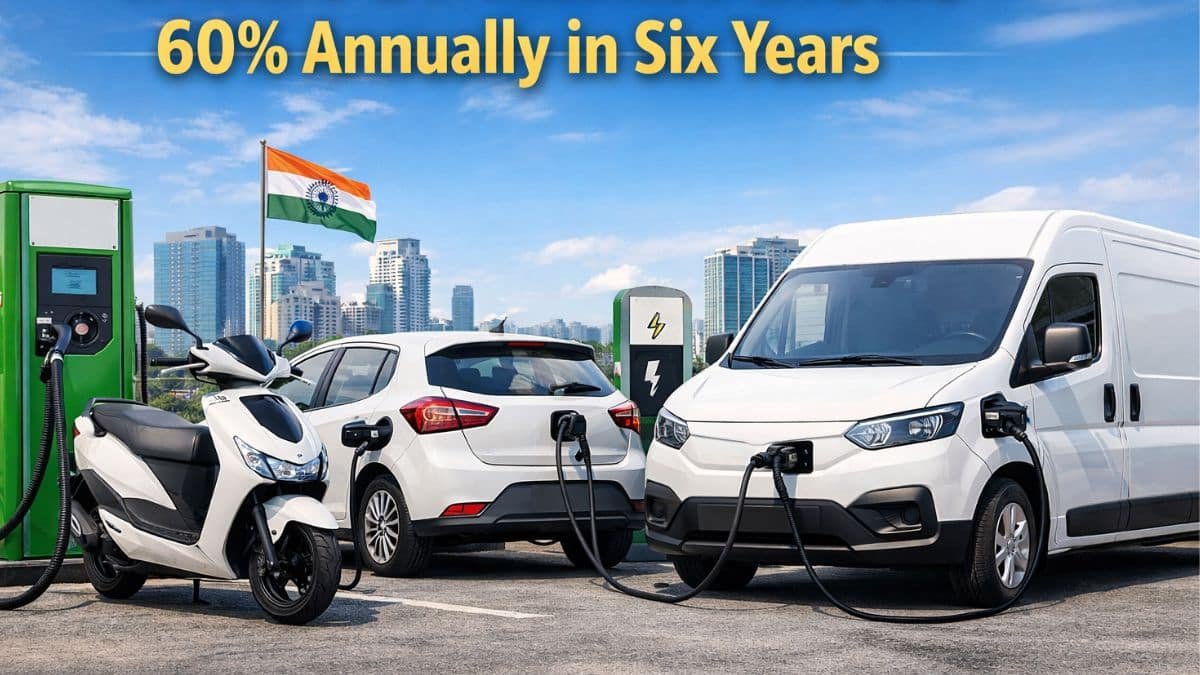

India’s electric vehicle market has recorded an average annual growth of over 60 percent during the past six years, according to Union Minister H. D. Kumaraswamy. The statement highlights the rapid pace at which electric mobility has expanded across vehicle segments in the country and reflects the structural shift underway in India’s automotive sector.
The minister noted that electric vehicle registrations have steadily increased, with volumes approaching nearly two million units in the most recent financial year. This growth is significant for India as it demonstrates sustained consumer adoption rather than short-term spikes driven by incentives alone.
Two-wheelers continue to account for the largest share of EV sales in India, forming the backbone of the transition. At the same time, electric passenger vehicles, commercial vehicles and buses are contributing to overall market expansion. The broadening of adoption across categories indicates that electrification is no longer confined to early adopters or niche segments.
Policy support has played a central role in driving this growth. Government-backed incentive programmes such as FAME II have supported large-scale EV adoption and charging infrastructure deployment across the country. These measures have helped reduce upfront costs for consumers while encouraging manufacturers to invest in electric product portfolios.
🚀 Join Our Tech Community!
Get the latest news, updates, and tech trends delivered straight to your phone. Never miss an update!
The minister also linked the EV sector’s progress to broader national initiatives such as Make in India and Atmanirbhar Bharat. These programmes aim to strengthen domestic manufacturing capabilities, including battery production, components, and advanced automotive technologies. Localisation remains critical for long-term cost stability and supply chain resilience.
India’s electric mobility push is also aligned with the country’s long-term climate commitments, including its Net Zero target for 2070. Transport electrification is seen as a key lever in reducing emissions, particularly in urban areas where vehicular pollution contributes significantly to air quality concerns.
The minister pointed to the potential for technology-driven regions to lead EV innovation. States with established automotive and technology ecosystems are increasingly positioning themselves as hubs for electric vehicle research, development and manufacturing.
Charging infrastructure expansion remains another important factor in sustaining growth. Public and private investment in charging stations has accelerated in recent years, improving accessibility for consumers and fleet operators. As infrastructure coverage expands, range anxiety concerns are gradually diminishing, further supporting adoption.
While the market has grown rapidly, industry observers note that continued momentum will depend on stable policy direction, affordable product offerings and supply chain efficiency. The next phase of growth is expected to involve deeper penetration into Tier II and Tier III cities, along with increased electrification of commercial fleets.
The reported 60 percent annual growth over six years underscores the scale of transformation taking place in India’s automotive landscape. With rising volumes across multiple segments and ongoing policy backing, the EV sector is emerging as a central pillar of the country’s mobility future.