
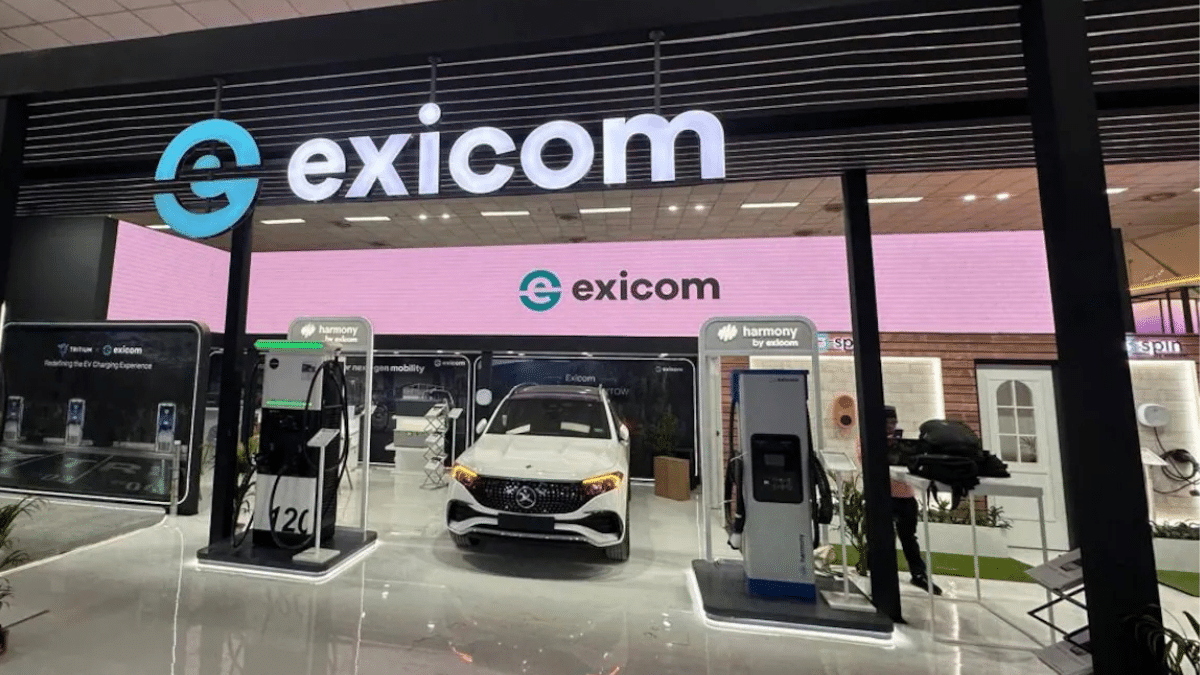

India’s electric vehicle charging ecosystem is expanding quickly, and companies with experience in power electronics are emerging as key players in this sector. According to Exicom Managing Director and CEO Anant Nahata, the company’s background in telecom power systems gave it an early advantage when entering the EV charging industry.
Nahata explained that the technology used in telecom power infrastructure shares many similarities with the systems required for electric vehicle chargers. This overlap allowed Exicom to build on its existing engineering capabilities and manufacturing experience while developing EV charging solutions.
Telecom networks rely on sophisticated power systems to convert and manage electricity for communication equipment. These systems typically convert alternating current into direct current to power network infrastructure. EV charging systems also depend on advanced power conversion technologies to deliver electricity safely and efficiently to vehicle batteries.
Because of these similarities, companies that already have experience in telecom power equipment can adapt their knowledge and technologies to the EV charging sector. The core engineering principles, including power electronics design, thermal management and energy efficiency, remain largely similar.
🚀 Join Our Tech Community!
Get the latest news, updates, and tech trends delivered straight to your phone. Never miss an update!
Nahata also highlighted that a large portion of the vendor ecosystem used in telecom power systems overlaps with the suppliers used in EV charger manufacturing. Many of the components and materials required for these products come from the same supply chain, making it easier for companies to scale production.
This shared vendor base helps reduce development time and manufacturing complexity when entering the EV charging market. It also allows companies to leverage established supplier relationships and maintain quality standards.
To support its growth in the EV charging segment, Exicom has invested in a new integrated manufacturing facility in Hyderabad. The facility has been designed to produce both EV charging systems and telecom power equipment under the same manufacturing ecosystem.
The new plant significantly increases the company’s production capacity and enables more efficient manufacturing processes. It also supports job creation and strengthens the domestic supply chain for EV charging equipment.
Localisation is another important focus area for the company. Many of the components used in AC chargers are already sourced domestically, which helps reduce dependence on imports. However, certain semiconductor components still rely on international suppliers due to the limited availability of domestic manufacturing in that area.
For DC fast chargers, localisation levels are gradually improving as the company works with suppliers to expand local production capabilities. Increasing domestic manufacturing is considered essential for building a robust EV charging ecosystem in India.
Exicom also focuses on developing its core technologies internally. The company designs and manufactures key electronic systems and circuit boards used in its charging equipment. Developing these technologies in-house allows the company to maintain greater control over product performance and innovation.
India’s electric vehicle market is still in the early stages but is growing steadily as automakers introduce new EV models and charging infrastructure continues to expand. As adoption increases, the demand for reliable and efficient charging systems is expected to rise significantly.
Companies with expertise in power electronics and energy management are likely to play a crucial role in building the infrastructure needed to support this transition. Exicom believes its experience in telecom power technology positions it well to contribute to the development of India’s EV charging network.
Overall, the company’s journey from telecom power systems to EV charging highlights how existing technological expertise can be leveraged to accelerate innovation in emerging industries such as electric mobility.