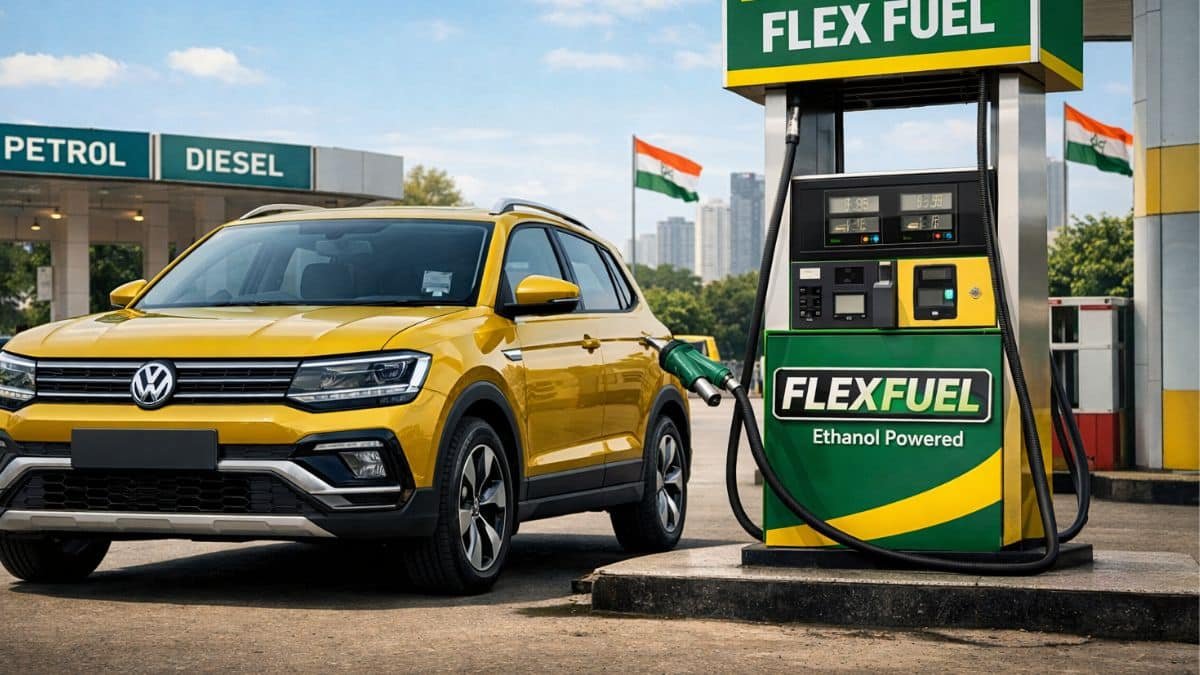

Volkswagen India is preparing a multi-technology strategy as the country moves toward tighter emission regulations. The company has indicated plans to roll out flex-fuel vehicles along with other alternative fuel options, positioning itself to meet future compliance requirements while expanding customer choice.
The development is significant now because automakers must align their product pipelines with upcoming emission standards well in advance. Stricter norms will demand lower fleet-wide emissions and improved fuel efficiency, pushing manufacturers to explore multiple technology pathways rather than relying on a single powertrain strategy.
Flex-fuel vehicles are designed to operate on petrol blended with higher proportions of ethanol. These engines are calibrated to handle varying ethanol concentrations without mechanical modification. With India steadily increasing ethanol blending in petrol under its national biofuel programme, flex-fuel capability offers manufacturers an additional compliance route while supporting domestic renewable fuel targets.
Volkswagen’s approach reflects a broader industry transition toward diversified propulsion systems. Instead of committing exclusively to electric vehicles, the company is evaluating a combination of internal combustion engines, ethanol-compatible engines, CNG variants and electrified technologies. This multi-tech strategy allows flexibility in responding to regulatory shifts and evolving consumer demand.
🚀 Join Our Tech Community!
Get the latest news, updates, and tech trends delivered straight to your phone. Never miss an update!
Compressed natural gas (CNG) remains a strong option in the Indian market due to its lower running costs and relatively cleaner combustion compared to traditional petrol and diesel engines. By expanding into flex-fuel and potentially strengthening its CNG offerings, Volkswagen can address cost-sensitive segments while maintaining compliance with emission benchmarks.
The move also comes at a time when India’s passenger vehicle mix is dominated by SUVs. Heavier vehicles typically require additional engineering measures to meet stricter carbon and efficiency targets. Alternative fuel solutions such as ethanol blends can help offset part of the compliance burden by reducing overall emissions intensity.
From a consumer standpoint, the introduction of flex-fuel variants may not immediately change driving habits, but it signals readiness for higher ethanol blends becoming mainstream. If fuel infrastructure supports consistent availability, flex-fuel cars could offer similar convenience to conventional petrol vehicles while contributing to emission reduction goals.
For Volkswagen, adopting multiple technologies reduces regulatory risk. If one pathway faces policy delays or infrastructure challenges, alternative solutions remain available. This flexibility is increasingly important as emission rules tighten and policy incentives evolve.
The company has not yet detailed specific launch timelines or models for its flex-fuel rollout. However, the strategic direction indicates that Volkswagen intends to remain competitive in India’s regulatory landscape by balancing compliance, affordability and innovation.
As emission standards continue to advance, the success of such multi-technology strategies will depend on cost control, fuel ecosystem development and customer acceptance across segments.