


Motorcycle technology is evolving rapidly, and safety innovations that were once limited to cars are now entering the two-wheeler segment. One of the biggest advancements is ADAS technology in motorcycles, also known as Advanced Rider Assistance Systems (ARAS).
What Is ADAS in Bikes?
ADAS in bikes refers to a group of intelligent electronic rider aids designed to improve safety and reduce accident risks. Unlike traditional braking systems, these technologies actively monitor road conditions, vehicle movement, and surrounding traffic.
In simple terms, ARAS in motorcycles uses sensors, radar units, and advanced software to assist the rider in real time. These systems do not replace the rider but provide additional safety support, especially during emergency situations.
This technology is currently available mainly in premium bikes with ADAS, but it is expected to gradually expand into mid-range segments as costs decrease.
🚀 Join Our Tech Community!
Get the latest news, updates, and tech trends delivered straight to your phone. Never miss an update!
How ADAS Technology in Motorcycles Works

Modern motorcycles equipped with ADAS rely on a combination of radar sensors, wheel speed sensors, and an IMU sensor in motorcycle (Inertial Measurement Unit). The IMU measures lean angle, acceleration, braking force, and pitch movement.
A motorcycle radar safety system constantly scans the road ahead and sometimes behind the bike. When the system detects sudden obstacles, rapid deceleration of vehicles ahead, or potential instability, it intervenes automatically.
For example, a radar-based cruise control bike can adjust speed automatically to maintain safe distance from the vehicle in front. If the rider brakes hard while cornering, the cornering ABS in bikes ensures stable braking performance without losing balance.
Key ADAS Features in Bikes
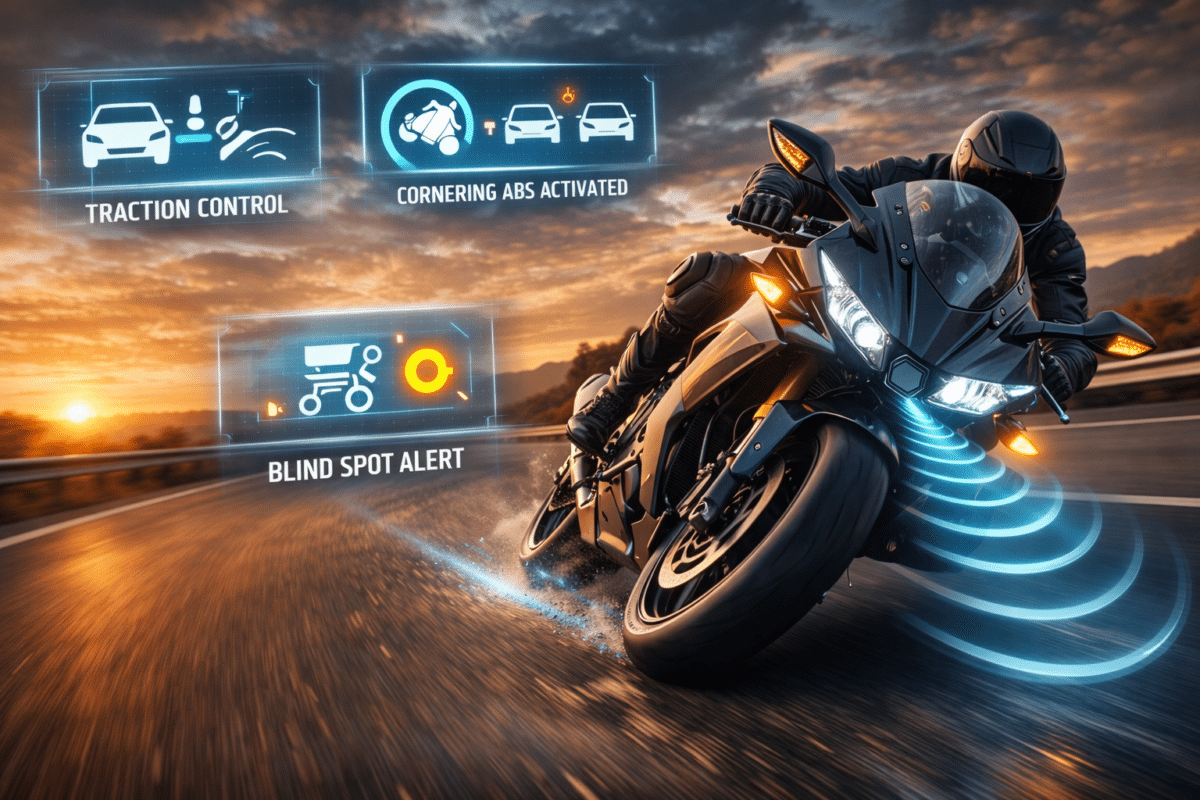
Advanced Rider Assistance Systems include multiple smart technologies designed to protect riders in different situations.
One of the most important features is adaptive cruise control in bikes, which maintains a preset speed while automatically adjusting based on traffic movement. This reduces fatigue during long highway rides.
Another critical system is the motorcycle traction control system, which prevents wheel spin during acceleration, especially on wet or uneven roads. This improves grip and stability.
Cornering ABS in bikes allows safe braking even when the motorcycle is leaned into a turn, reducing the chances of skidding. Similarly, blind spot detection motorcycle systems use rear radar to warn riders about vehicles approaching from behind.
Some advanced models also feature a motorcycle collision warning system, which alerts the rider if a potential frontal crash risk is detected.
Together, these technologies represent the future of smart safety features in bikes.
Motorcycles Offering Advanced Rider Assistance Systems

Globally, several high-end manufacturers have introduced bikes equipped with ARAS technology.
Brands like Ducati, BMW Motorrad, KTM and Kawasaki have already integrated radar-based systems in their flagship touring motorcycles.
These premium bikes with ADAS primarily target long-distance riders who prioritize comfort and advanced safety. Features such as adaptive cruise control, blind spot alerts, and radar-assisted braking are increasingly becoming standard in top-tier adventure motorcycles.
Benefits of ADAS in Motorcycles
First, it reduces accident risks by providing early warnings and automatic intervention in critical situations. Second, it improves riding confidence, especially on highways and during bad weather. Third, systems like traction control and cornering ABS enhance control during aggressive riding.
However, it is important to remember that ADAS is an assistance system, not autonomous riding. Riders must remain attentive at all times.
The Future of Motorcycle Safety Technology
The demand for future motorcycle safety technology is increasing globally. As governments focus more on road safety regulations, manufacturers are investing heavily in advanced electronic systems.
Although currently limited to high-end bikes, simplified versions of ADAS technology in motorcycles could soon appear in mid-range commuter models. Features like improved traction control, lean-sensitive ABS, and collision alerts may gradually become common in everyday motorcycles.
The evolution of motorcycle safety technology indicates that intelligent assistance systems will play a major role in reducing road accidents worldwide.
It is the next step in motorcycle evolution a combination of radar, sensors, and intelligent software working together to assist riders.
With the rise of Advanced Rider Assistance Systems in bikes, motorcycles are becoming safer, smarter, and more technologically advanced than ever before. While currently found in premium segments, this innovation represents the future direction of two-wheeler safety.