
For many working professionals in India, driving around 50 km every day has become normal. Whether it is city travel, highway office runs, or mixed usage, this kind of daily driving adds up quickly. In a year, it can cross 18,000 km easily. That is why choosing the best petrol car for 50 km daily commute in India 2026 requires careful thought.
Fuel cost, comfort, reliability, and long term maintenance play a bigger role than features or design. A wrong decision can increase your monthly expenses significantly.
Why 50 Km Daily Driving Changes Your Buying Decision
Driving 50 km per day means nearly 1,500 km every month. If your car gives around 20 km per litre, you will use about 75 litres of petrol monthly. With petrol prices around 100 rupees per litre in many Indian cities, the monthly fuel expense alone can reach around 7,500 rupees.
Over one year, this becomes a major expense. Therefore, even a small difference in mileage can save thousands of rupees annually. Apart from fuel cost, long daily travel also demands comfortable seats, smooth suspension, and a reliable engine.
🚀 Join Our Tech Community!
Get the latest news, updates, and tech trends delivered straight to your phone. Never miss an update!
Maruti Suzuki Baleno for Daily High Mileage Users
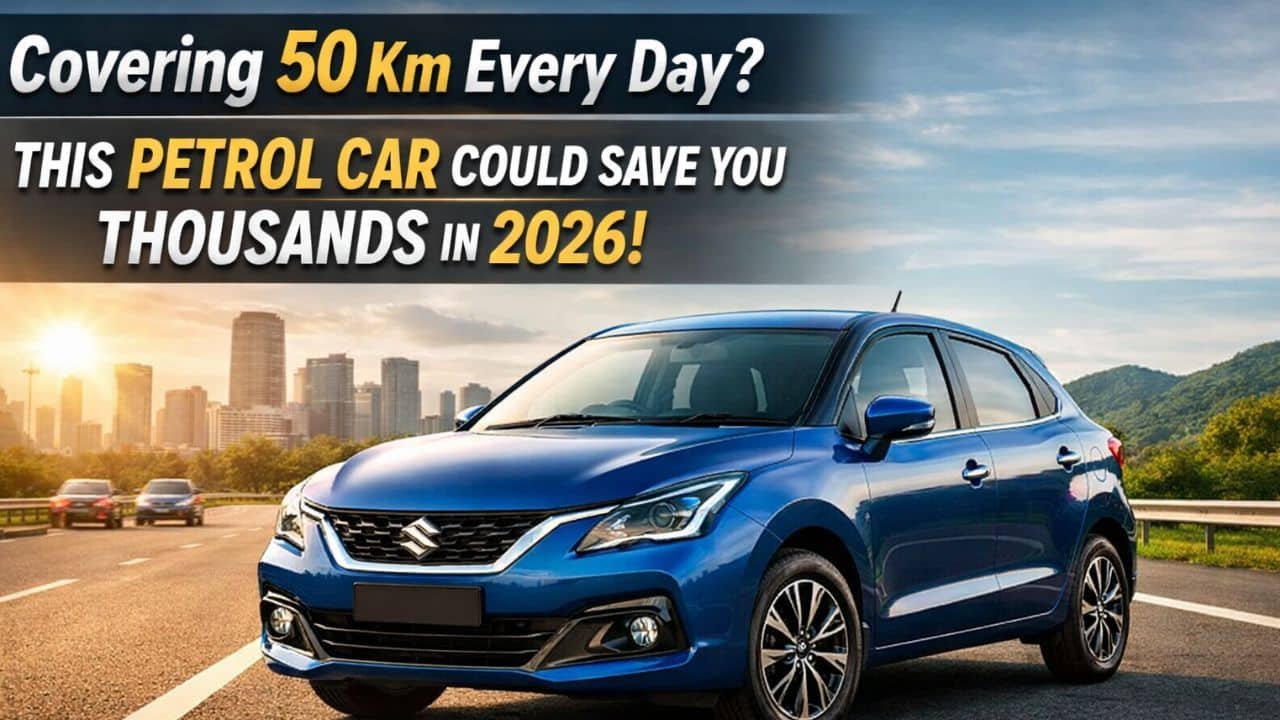
The Maruti Suzuki Baleno remains one of the most practical choices for high mileage petrol users in 2026. It is known for its fuel efficiency and affordable maintenance.
The 1.2 litre petrol engine delivers strong real world mileage, usually close to 19 to 21 km per litre depending on driving conditions. The car feels light to drive in traffic and stable enough for highway runs. Service centers are widely available across India, and spare parts are reasonably priced.
For someone covering 50 km daily, low service cost and better mileage can make a big financial difference over five years of ownership.
Hyundai i20 for Comfort Focused Commuters
If comfort and cabin quality matter more to you, the Hyundai i20 is worth considering. It offers a refined driving experience and good ride comfort for daily use.
The interior feels premium, and highway stability is impressive for a hatchback. Mileage may be slightly lower compared to some competitors, but the difference is manageable for buyers who prioritize comfort and driving smoothness.
For long daily drives, seat comfort and driving ease can reduce fatigue significantly, making the i20 a strong alternative.
Tata Altroz for Stability and Solid Feel
The Tata Altroz is known for its strong build quality and stable driving dynamics. For drivers who spend part of their commute on highways, this stability becomes important.
The suspension setup handles uneven roads well, and the car feels planted at higher speeds. Maintenance cost remains reasonable, and the petrol engine is suitable for regular daily use.
For buyers who value safety and solid road presence along with practical mileage, the Altroz can be a sensible option.
Petrol Versus Hybrid or Electric for 50 Km Daily Use
Many buyers in 2026 are confused between petrol, hybrid, and electric vehicles. While hybrid cars offer better fuel efficiency, their initial purchase cost is significantly higher. Electric vehicles are economical to run but depend heavily on charging infrastructure availability and charging time.
For a 50 km daily commute, petrol cars still provide simplicity. Refueling takes only a few minutes, initial investment is lower, and ownership costs are predictable. Until hybrid and electric prices reduce further, petrol remains practical for many Indian commuters.
For daily long distance usage, large SUVs with lower mileage may increase fuel expenses unnecessarily. Turbo petrol engines can also consume more fuel in city traffic conditions.
A simple, naturally aspirated petrol engine with proven reliability is often a safer and more economical choice for high daily running.