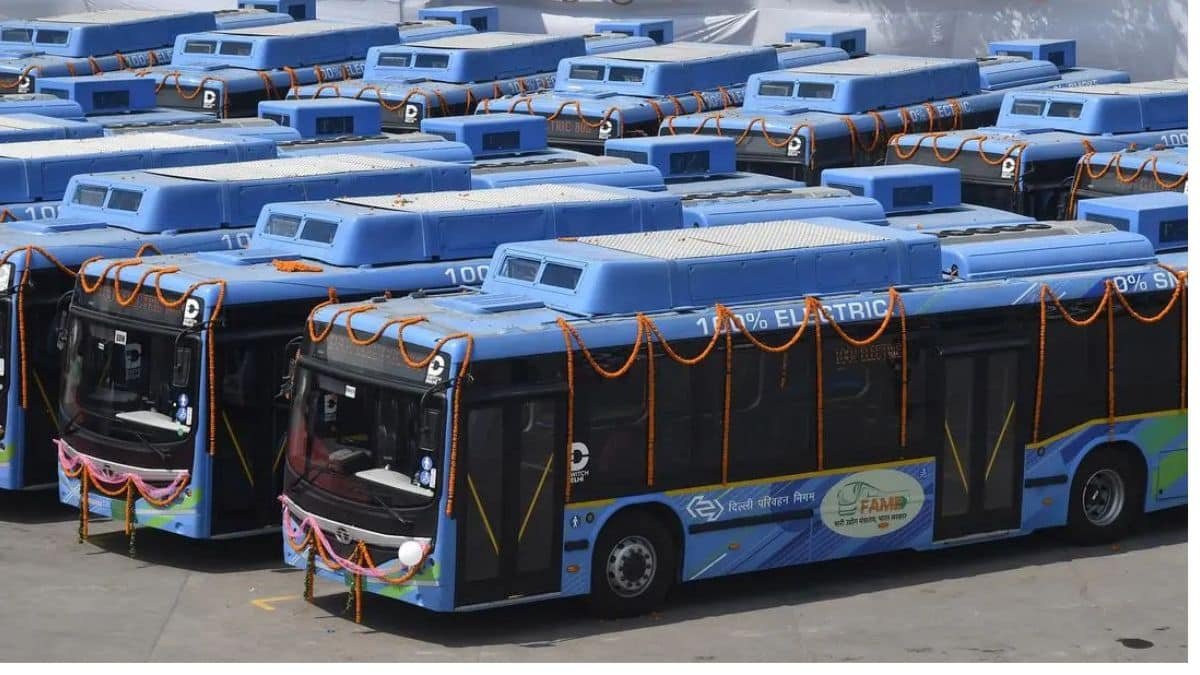

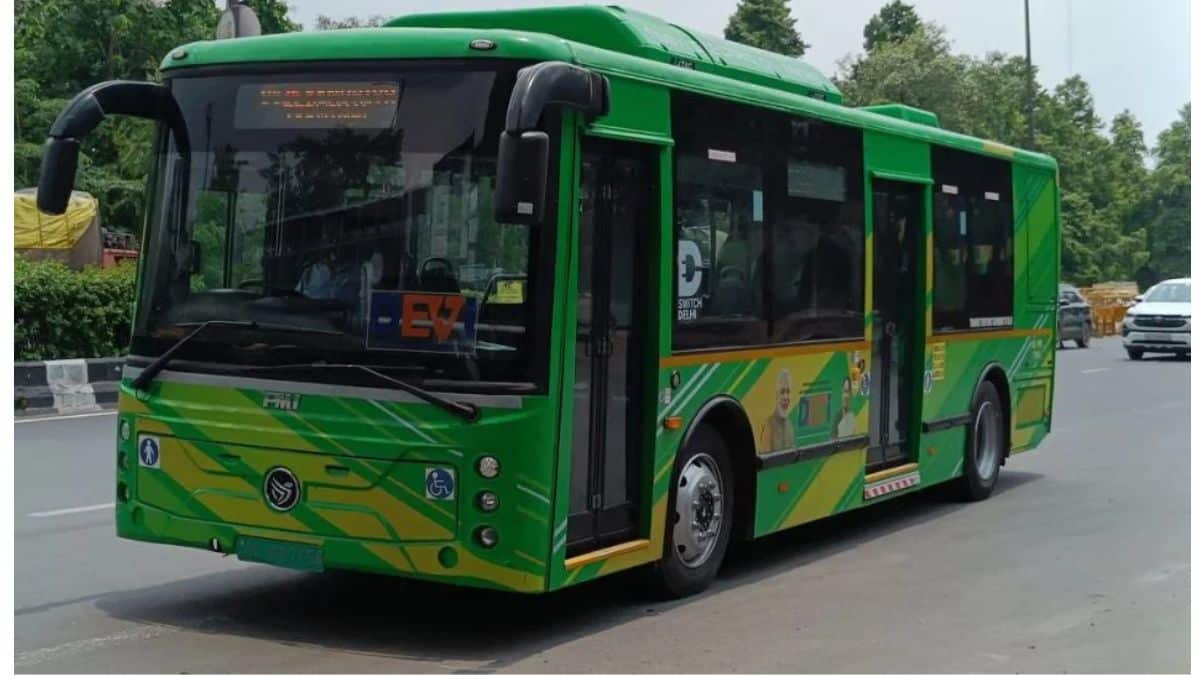
Electric buses have moved from being a supplementary service to a central pillar of Delhi Transport Corporation’s operations, now carrying around 40 percent of the utility’s daily passenger ridership. The shift underlines how rapidly electric buses have been integrated into Delhi’s public transport network and why they now matter for both commuters and city-level mobility planning.
The change is driven by a steady expansion of DTC’s electric bus fleet over recent years. What began as limited deployment has scaled into widespread usage across major routes, allowing electric buses to handle close to ten lakh passenger journeys every day. This is out of an overall daily ridership of roughly 25 to 26 lakh passengers across the DTC network.
As electric buses have taken on a larger role, the share of ridership carried by compressed natural gas buses has declined. While CNG buses continue to operate in significant numbers, passenger movement data shows that electric buses are increasingly being assigned to high-demand corridors. This indicates an operational shift rather than a short-term experiment.
All electric buses in the DTC fleet are low-floor and air-conditioned, which has contributed to higher acceptance among commuters. Improved accessibility and comfort have helped electric buses perform strongly on busy routes, supporting higher utilisation rates. In terms of distance covered each day, electric buses are now approaching the levels achieved by CNG buses, reflecting growing confidence in their reliability.
🚀 Join Our Tech Community!
Get the latest news, updates, and tech trends delivered straight to your phone. Never miss an update!
Policy support has been a key factor behind this transition. Central and state-level electric mobility programmes have enabled large-scale procurement through structured contracts, reducing the financial burden on transport undertakings. These frameworks have made it possible to introduce electric buses without disrupting daily operations.
Beyond ridership figures, the impact is significant for urban air quality. Electric buses produce zero tailpipe emissions, an important consideration for Delhi, where transport emissions contribute substantially to pollution levels. Replacing older diesel and CNG buses on high-traffic routes helps reduce local emission exposure in dense areas.
From an operational perspective, electric buses also offer long-term cost advantages. Lower energy costs and reduced maintenance requirements are beginning to influence fleet planning decisions as the number of electric buses increases. While upfront costs remain higher, system-level efficiencies become more visible as utilisation rises.
For passengers, the growing dominance of electric buses signals a more modern public transport experience. Quieter operation, consistent air-conditioning, and newer vehicles have improved perceptions of bus travel, which is critical for retaining ridership in a city with multiple transport alternatives.
The DTC experience is being closely observed by other state transport undertakings across India. With electric buses now carrying a substantial share of daily passengers, Delhi provides a working example of how large urban bus systems can transition beyond pilot stages into full-scale adoption.
At this stage, electric buses are no longer an add-on within DTC’s fleet strategy. Their ability to handle a significant portion of daily ridership suggests that electrification has become structural to Delhi’s public transport system, shaping how future fleet additions and route planning will be approached.