By using this site, you agree to the Privacy Policy and Terms of Use.
Accept
Techy TrendsTechy TrendsTechy Trends
  • Home
  • News
  • Guide
  • Automobiles
  • Electric Vehicles
  • Upcoming Vehicles
  • Stories
Reading: India’s Cars Will Soon “Talk” to Each Other Govt Rolls Out V2V Tech to Slash Road Crashes by 2026
Share
Techy TrendsTechy Trends
Search
  • Home
  • News
  • Guide
  • Automobiles
  • Electric Vehicles
  • Upcoming Vehicles
  • Stories
Follow US
  • News
  • Guide
  • Automobiles
  • Electric Vehicles
  • Upcoming Vehicles
© 2026 Techy Trends. All Rights Reserved.
Automobiles

India’s Cars Will Soon “Talk” to Each Other Govt Rolls Out V2V Tech to Slash Road Crashes by 2026

Mohammed Adnan Hussain
Last updated: January 11, 2026 8:15 am
By Mohammed Adnan Hussain 5 months ago
Share
3 Min Read
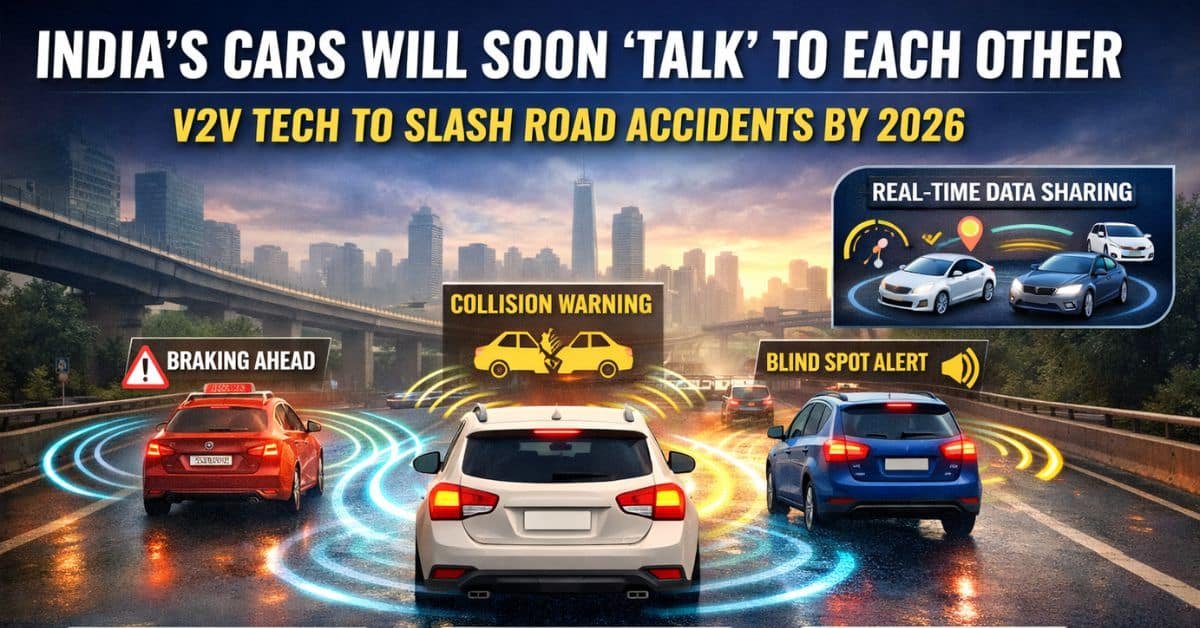
Car-to-Car Communication V2V Technology Enhancing Road Safety in India
SHARE

India is gearing up to transform road safety with innovative Vehicle-to-Vehicle (V2V) communication technology that will allow cars to “talk” to each other and alert drivers to danger a move aimed at dramatically cutting traffic accidents across the country by the end of 2026.

Contents
How the Tech WorksPotential to Cut Accidents SignificantlyWhat This Means for Drivers

Announced by Union Minister for Road Transport and Highways Nitin Gadkari, the V2V system uses short-range wireless communication that lets vehicles instantly exchange information such as speed, direction, braking status, location and movement patterns even in areas with poor mobile network coverage. Unlike many current connected car features, this technology does not depend on the internet or cellular networks.

How the Tech Works

Under the plan, new vehicles will be equipped with dedicated V2V communication modules. When two or more equipped vehicles come within communication range, they share real-time data that can identify potential crash-risk situations before human reaction time kicks in. For example:

  • A car braking suddenly ahead can instantly alert nearby vehicles to slow down.
  • Vehicles approaching an intersection can share movement data to prevent right-angle collisions.
  • In conditions like fog or heavy rain, the system can compensate for poor visibility by providing early danger warnings.

By avoiding reliance on mobile or internet networks, this system ensures safety even along highways and remote routes where signal strength is weak.

🚀 Join Our Tech Community!

Get the latest news, updates, and tech trends delivered straight to your phone. Never miss an update!

📱 Join Telegram 💬 Join WhatsApp Channel

Potential to Cut Accidents Significantly

Industry observers and government officials suggest that widespread deployment of V2V technology could significantly reduce road accidents which India unfortunately records among the highest globally. While exact figures from the Indian government are pending formal rules, independent estimates show that vehicle communications systems can cut crash rates drastically by enabling proactive driver warnings.

Additionally, the Department of Telecommunications has earmarked dedicated spectrum for V2V communications to support this rollout, and the Ministry of Road Transport and Highways is preparing standards and regulatory frameworks with input from automobile manufacturers.

What This Means for Drivers

If the plan unfolds as scheduled:

  • New cars in India could be V2V-ready by late 2026.
  • Drivers will get automated alerts for imminent danger even before they physically see it.
  • The system could become part of a broader intelligent road network, complementing other advanced safety systems.

Experts say this marks a major step toward smart and safer mobility in India, potentially saving thousands of lives each year and reducing traffic injuries through faster, automated responses between vehicles.

Share This Article
Facebook Twitter Whatsapp Whatsapp Copy Link
Share
By Mohammed Adnan Hussain
Mohammed Adnan Hussain is digital journalist and editor covering automobiles and technology in India. He is Digital marketer,Blogger and Strong Knowledge of Automation
Previous Article Indian electric car highlighting battery safety and real-world ownership reliability Are Electric Cars Risky to Own in India? Myths vs Reality
Next Article Leapmotor T03 electric hatchback expected India launch January 15, 2026 Leapmotor T03 Expected to Launch in India on January 15, 2026 at Rs. 8 Lakh
Leave a Comment

Leave a Reply Cancel reply

Your email address will not be published. Required fields are marked *

Stay Connected

235.3kFollowersLike
69.1kFollowersFollow
11.6kFollowersPin
56.4kFollowersFollow
136kSubscribersSubscribe
4.4kFollowersFollow
- Advertisement -
Ad imageAd image

Latest News

2026 Kawasaki Versys 650 Launched in India at ₹8.63 Lakh
Upcoming Vehicles 2 weeks ago
How to Choose the Right Bike for Indian Roads
Guide 4 weeks ago
EV Battery Replacement Anxiety: What Indian Owners Should Realistically Expect
Upcoming Vehicles 4 weeks ago
Kia Seltos SUV driving on Indian road showcasing modern design, LED headlights, premium interior and compact SUV styling
Not EV, Not Petrol: Why Plug-in Hybrid SUVs Could Be India’s Next Big Trend
Upcoming Vehicles 1 month ago
//

India’s leading digital platform for the business, tech, and trends driving the future of mobility.

Quick Link

  • About us
  • Contact US
  • Disclaimer
  • Privacy Policy
  • Terms and Conditions

Top Categories

  • News
  • Guide
  • Automobiles
  • Electric Vehicles
  • Upcoming Vehicles

Sign Up for Our Newsletter

Subscribe to our newsletter to get our newest articles instantly!


Techy TrendsTechy Trends
Follow US
© 2026 Techy Trends . All Rights Reserved.
Welcome Back!

Sign in to your account

Username or Email Address
Password

Lost your password?