
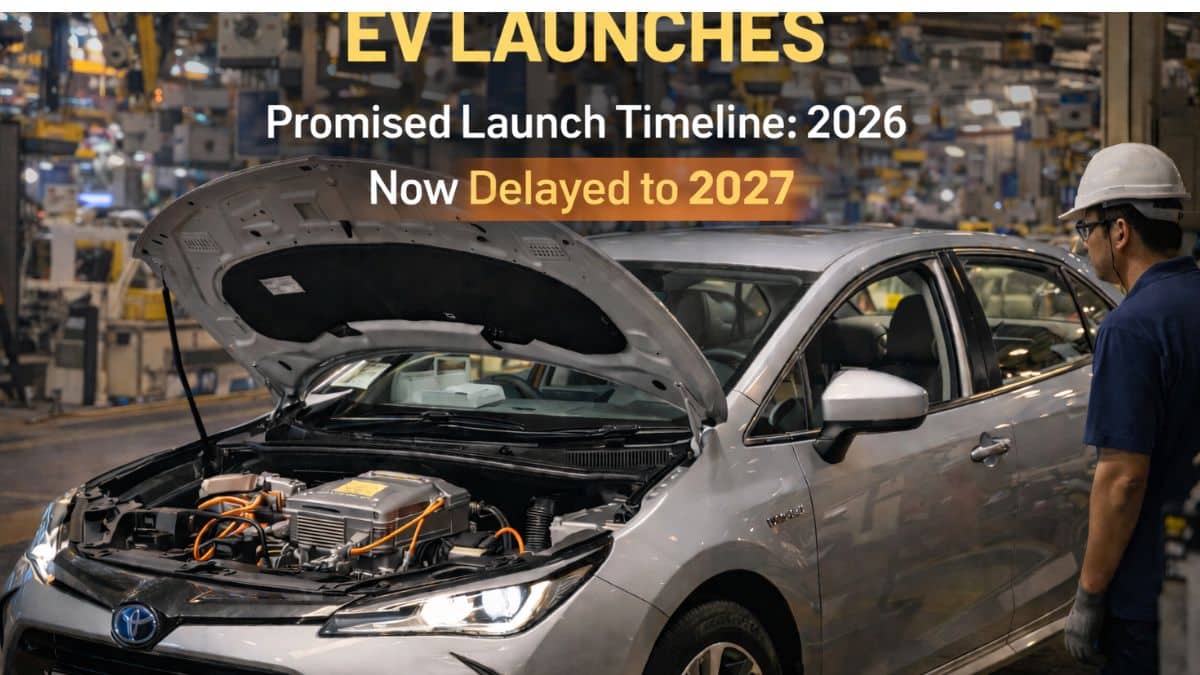
India’s electric vehicle story was supposed to move fast. Affordable EVs were expected to bridge the gap between early adopters and mass buyers by now. Instead, repeated delays have quietly reshaped buyer behaviour—and not in favour of pure electric cars.
As timelines slip, hybrids are emerging as the fallback choice for buyers who want progress without uncertainty.
The Promise of Affordable EVs Keeps Moving Forward
For the average Indian buyer, the real wait is not for premium EVs but for dependable, mass-market electric cars priced sensibly with predictable ownership costs. Those launches keep getting postponed due to battery sourcing issues, localisation challenges, and cost pressures.
Every delay creates a pause in decision-making. Buyers who planned to “wait for the EV” are now reassessing whether waiting still makes sense.
Why Hybrids Feel Like the Practical Middle Ground
Hybrids offer something EVs currently struggle to guarantee—usage flexibility. They eliminate range anxiety, don’t rely on charging infrastructure, and still deliver meaningful fuel savings in city traffic.
For buyers upgrading from petrol or diesel, hybrids feel less like a leap and more like a step. This mindset mirrors patterns seen in premium SUV ownership costs, where buyers increasingly value predictability over headline innovation.
Charging Reality Still Limits EV Confidence
Outside major metros, public charging remains inconsistent. Apartment charging approvals are slow, and fast chargers are not always reliable. For mass buyers, this uncertainty matters more than technology optimism.
Hybrids bypass this problem entirely. They use existing fuel infrastructure while reducing fuel consumption—an advantage that becomes more appealing each time an EV launch gets pushed back.
Battery Longevity Questions Still Influence Decisions
Even among buyers open to EVs, long-term battery performance remains a concern. Indian climate conditions, especially prolonged heat exposure, continue to raise questions around durability and resale confidence.
This concern is closely tied to discussions around Indian summer battery ageing , which influence cautious buyers to choose proven technology over evolving platforms.
Hybrids Fit the Current Ownership Psychology
The Indian buyer today is not anti-EV—they are risk-aware. With fuel prices unpredictable and vehicle ownership costs under scrutiny, hybrids offer:
- Immediate usability
- No charging dependency
- Lower behavioural change
Until mass-market EVs arrive with clarity on pricing, charging access, and long-term support, hybrids naturally absorb this demand.
What This Shift Signals for the Market
The rise of hybrids is not a rejection of electric mobility. It’s a holding pattern. Buyers are choosing the best available compromise while waiting for EVs that truly match Indian conditions.
Once affordable EVs arrive without caveats, the shift will resume. Until then, hybrids will continue to capture buyers who refuse to gamble on timelines.
