
Advanced Driver Assistance Systems, commonly known as ADAS, are no longer limited to luxury cars or experimental technology showcases. Over the past few years, ADAS has steadily moved into mainstream vehicles, reshaping expectations around safety and driver support. Instead of reacting only after an accident occurs, these systems are designed to constantly monitor the road and intervene before a situation turns dangerous. This shift from passive to preventive safety is why ADAS has become one of the most talked-about developments in the automobile industry.
What ADAS Really Means for Everyday Drivers
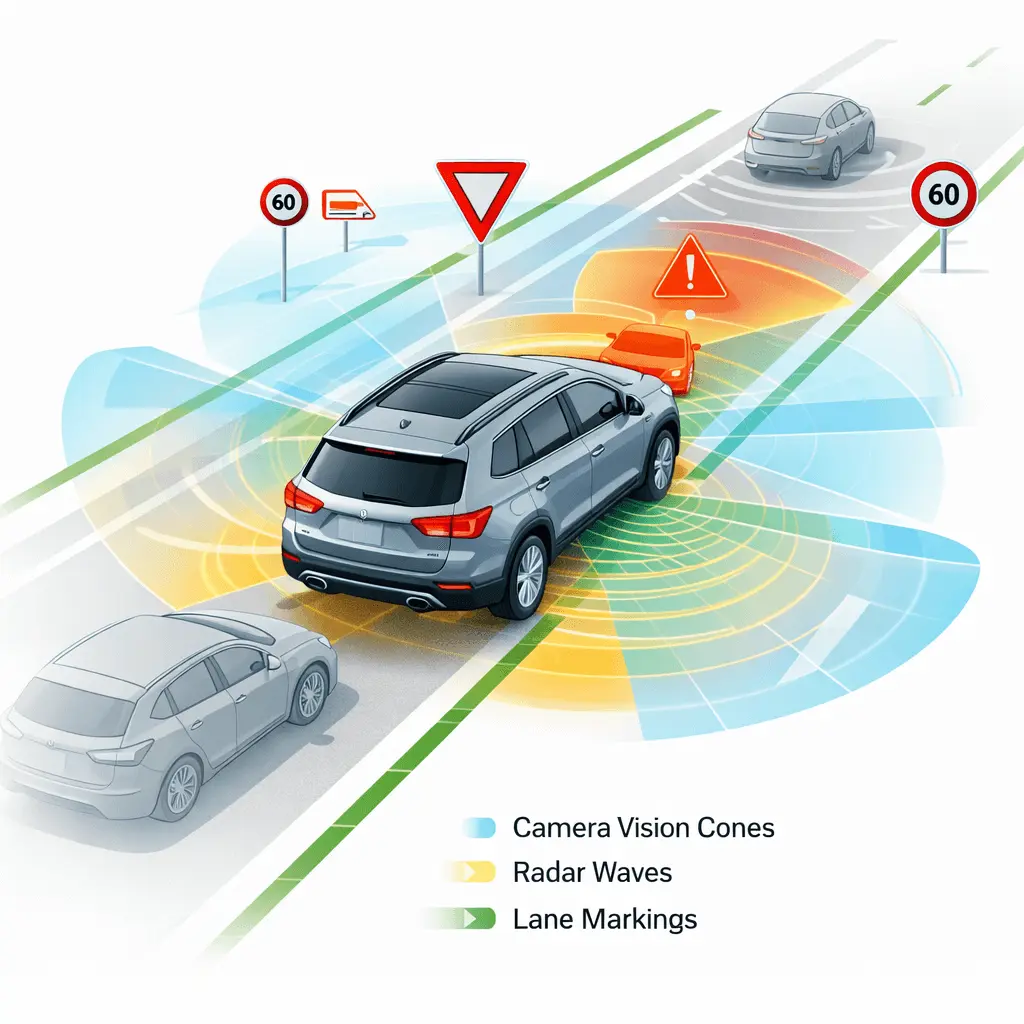
Not Automation, but Intelligent Assistance
ADAS does not turn a car into a self-driving machine. Its real purpose is to assist drivers by reducing human error, which remains the leading cause of road accidents. By using cameras, radar sensors and onboard software, ADAS observes traffic movement, lane positioning and potential hazards in real time. When it senses risk, it either alerts the driver or steps in briefly to correct the situation. The driver remains fully responsible at all times, with ADAS acting as a safety net rather than a replacement.
How ADAS Works Behind the Scenes
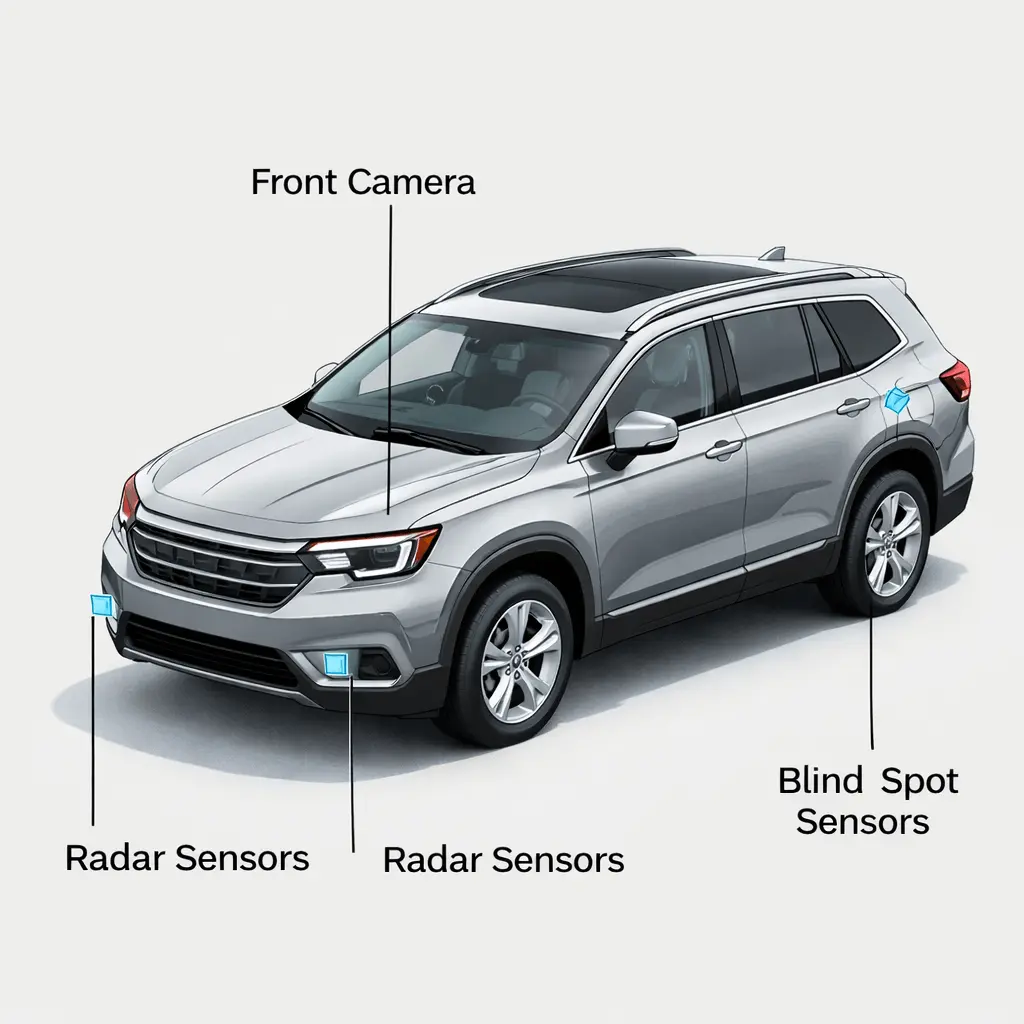
Sensors, Cameras and Software Working Together
At the core of every ADAS-equipped vehicle is a network of sensors and cameras positioned around the car. Front-mounted cameras track lane markings and traffic signs, radar units measure the distance and speed of vehicles ahead, and short-range sensors monitor blind spots. This information is processed instantly by the car’s control unit, allowing it to predict possible collisions or unsafe movements. The system’s effectiveness depends heavily on sensor accuracy and road conditions, which is why performance can vary across driving environments.
Key ADAS Features That Matter Most
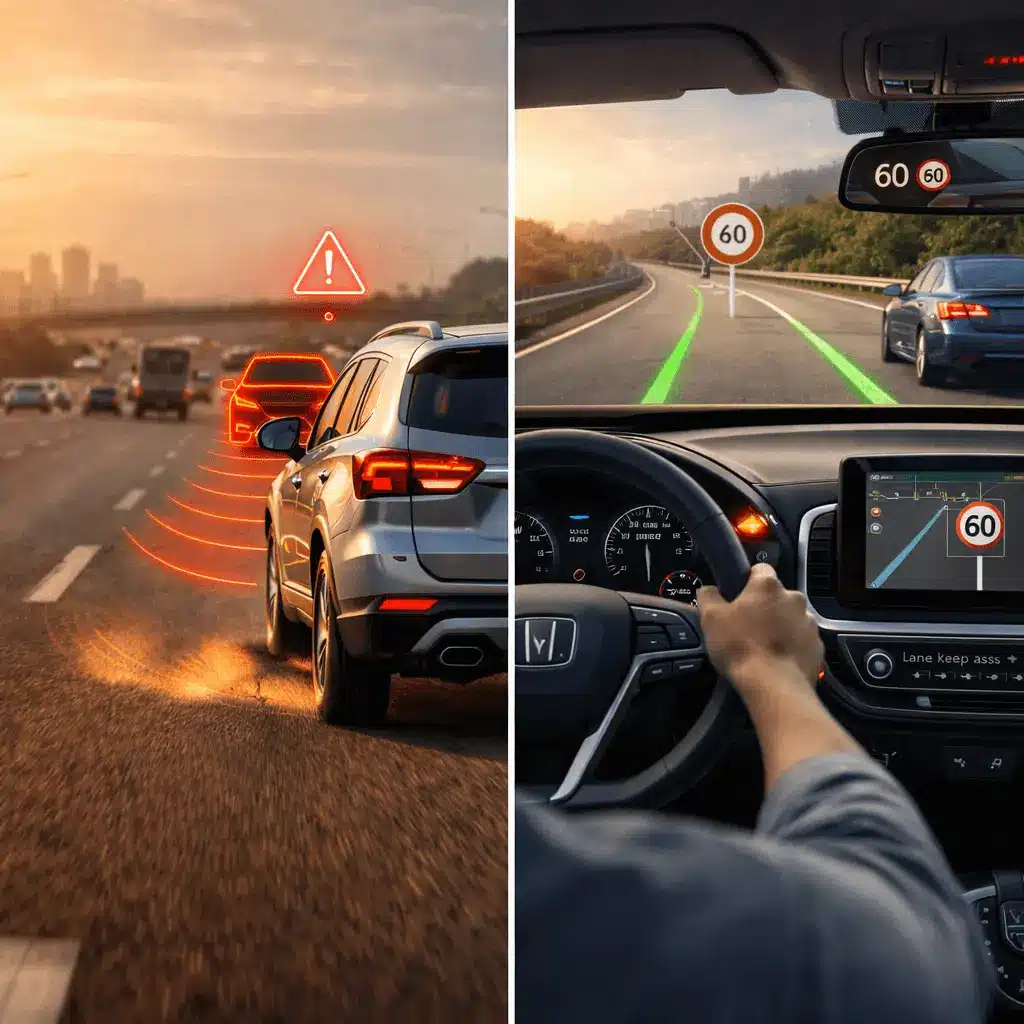
Safety That Acts Before You React
Some of the most impactful ADAS features focus on preventing frontal collisions and unintended lane departures. Forward collision warnings alert drivers when they approach another vehicle too quickly, while automatic emergency braking can apply brakes if the driver does not respond in time. Lane departure warnings and lane-keeping assistance help prevent drift caused by fatigue or distraction. Together, these features address common accident scenarios that occur during both highway cruising and daily commuting.
ADAS on Indian Roads: Helpful but Not Perfect

Real-World Conditions Make a Difference
Indian driving conditions present a unique challenge for ADAS systems. While these features perform well on highways, expressways and well-marked roads, their reliability can drop in congested urban traffic. Inconsistent lane markings, sudden pedestrian crossings and mixed vehicle types can confuse cameras and sensors. As a result, ADAS should be viewed as a supportive tool rather than a system to rely on blindly. Drivers who understand its limits benefit the most from its presence.
Why ADAS Is Becoming More Common in New Cars
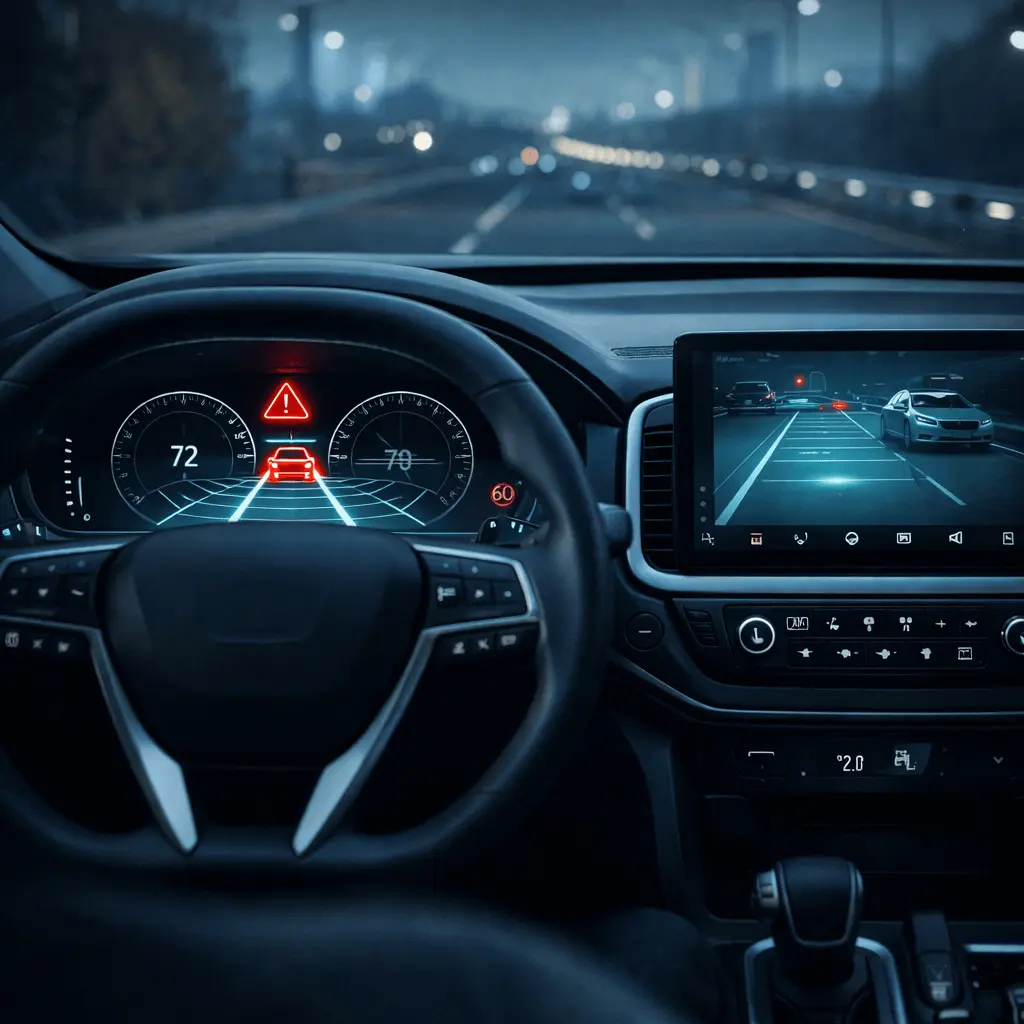
Safety Expectations Are Evolving
The growing availability of ADAS is driven by rising safety awareness among buyers and stricter global safety standards. Manufacturers are also finding ways to reduce costs by sharing technology across models and platforms. What was once considered premium equipment is gradually becoming a differentiating factor even in mid-range vehicles. For many buyers today, the presence of ADAS signals a modern, safety-focused car rather than a luxury indulgence.
Is Paying Extra for ADAS Actually Worth It?
Value Depends on Driving Habits
Whether ADAS justifies its additional cost depends largely on how a car is used. Drivers who spend significant time on highways or frequently travel long distances are more likely to notice its benefits. The system reduces fatigue, improves situational awareness and can prevent costly accidents. For buyers who drive mainly in slow, crowded city conditions, the advantages may feel less dramatic, though the added safety layer still holds long-term value.
The Bigger Picture: Where ADAS Is Headed Next
A Stepping Stone Toward Smarter Cars
ADAS represents an important transition phase in automotive technology. It bridges the gap between traditional driving and future autonomous systems by familiarising drivers with intelligent intervention. As infrastructure improves and technology matures, these systems are expected to become more accurate and less intrusive. For now, ADAS stands as one of the most meaningful safety upgrades available in modern cars, offering protection without taking control away from the driver.
