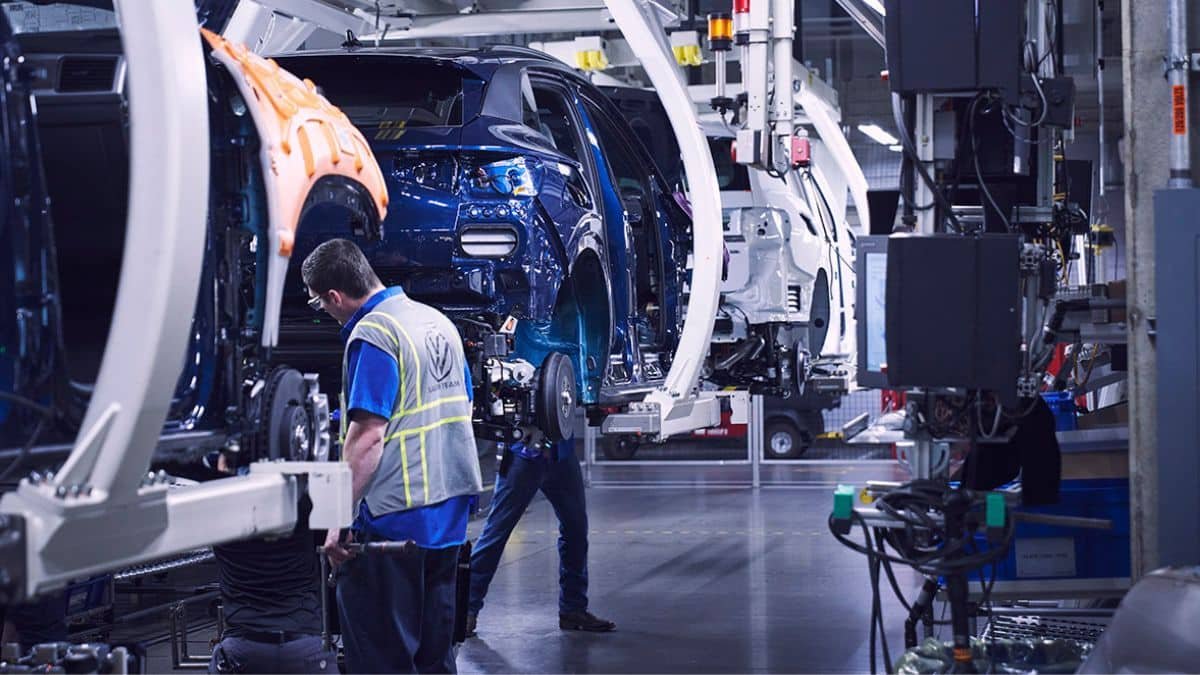

Global automotive markets are witnessing a shift in electric vehicle strategies, and Volkswagen is at the center of this transition. The company is expected to take a significant financial hit in the first quarter after halting electric vehicle production at its Tennessee plant in the United States.
The move involves stopping production of the ID.4 electric SUV at the Chattanooga facility. Analysts estimate that the company could record a substantial charge linked to its earlier investment in retooling the plant for EV manufacturing. This one-time financial impact is likely to affect quarterly earnings.
The decision comes amid a challenging environment for electric vehicles in the U.S. market. Demand has slowed, and changes in policy support have made EV adoption less aggressive than previously expected. As a result, automakers are reassessing their production strategies.
For Volkswagen, the halt in production reflects a broader shift toward aligning manufacturing with real market demand. Instead of continuing with an underperforming EV model, the company is choosing to focus on products that currently have stronger sales potential.
🚀 Join Our Tech Community!
Get the latest news, updates, and tech trends delivered straight to your phone. Never miss an update!
The Tennessee plant is now expected to prioritize internal combustion engine vehicles, particularly SUVs, which continue to see steady demand in the U.S. market. This shift is aimed at improving operational efficiency and maintaining profitability in the near term.
While the financial charge may appear negative initially, analysts suggest that it could benefit the company in the long run. By cutting losses from low-demand EV production, Volkswagen can better allocate resources and stabilize its financial performance.
The situation also highlights a larger trend across the global automotive industry. Many manufacturers are slowing down or recalibrating their EV plans due to uncertain demand, high costs, and evolving government policies.
Despite this setback, Volkswagen continues to remain committed to electrification. However, the company is adopting a more cautious and flexible approach, focusing on market readiness and profitability rather than aggressive expansion.
For emerging markets like India, this development offers an important perspective. The transition to electric mobility is not just about technology but also depends on infrastructure, affordability, and consumer acceptance. Automakers are increasingly tailoring their strategies to suit regional conditions.
In summary, Volkswagen is set to take a notable Q1 financial hit after halting EV production in Tennessee. The move reflects changing dynamics in the EV market and underscores the importance of balancing long-term vision with short-term realities.