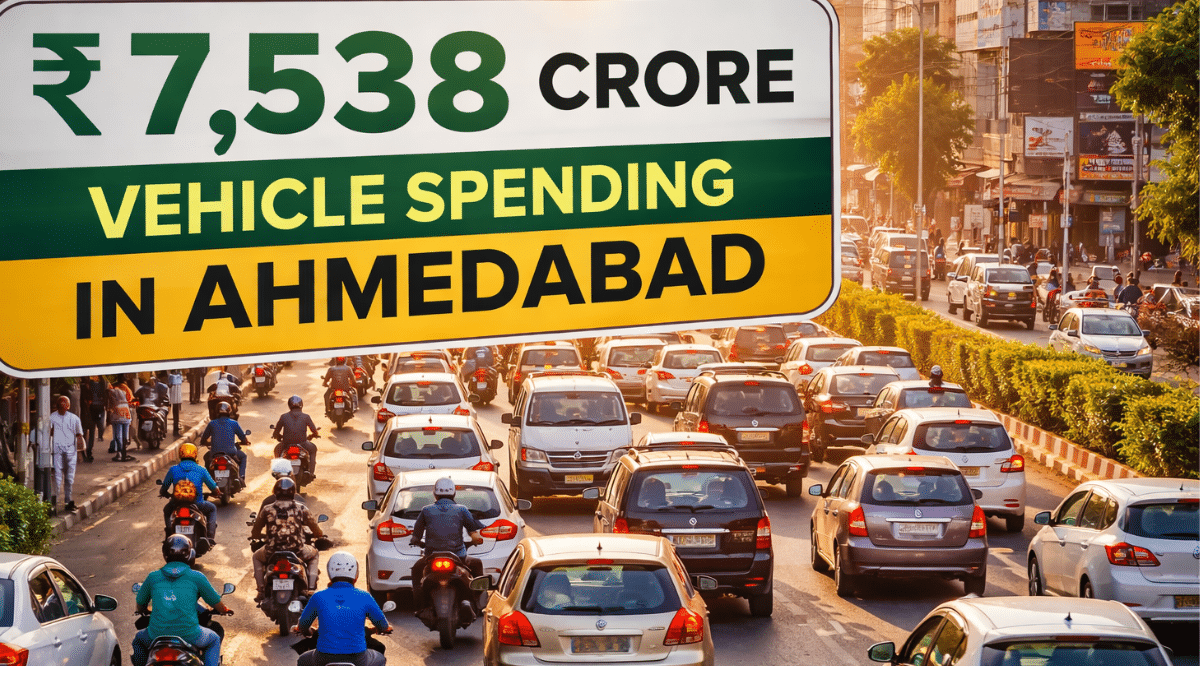

Residents of Ahmedabad have spent a massive ₹7,538 crore on purchasing vehicles in FY2025–26, surpassing the state’s transport department budget. This trend highlights a growing shift toward private mobility in one of India’s fastest-growing urban centers.
The spending significantly exceeds the transport budget of the state, which stands at around ₹4,300 crore. This gap shows how consumer demand for personal vehicles is rising faster than government investment in public transport infrastructure.
The total spending has also increased compared to the previous financial year, indicating strong growth in automobile purchases. A large portion of this demand is driven by passenger cars and two-wheelers, which continue to dominate the market.
During the year, close to three lakh new vehicles were registered in Ahmedabad. This surge reflects both rising income levels and changing lifestyle preferences, with more people opting for the convenience of owning personal vehicles.
🚀 Join Our Tech Community!
Get the latest news, updates, and tech trends delivered straight to your phone. Never miss an update!
Another noticeable trend is the increase in premium and higher-value vehicle purchases. Buyers are increasingly choosing vehicles with better features, improved comfort, and advanced technology. Easier financing options and growing aspirations are also contributing to this shift.
At the same time, some buyers are registering vehicles outside the city to avoid higher taxes, pointing to gaps in the existing tax structure and enforcement mechanisms.
Electric vehicles are gradually gaining traction, supported by tax benefits and policy incentives. This aligns with broader efforts to promote cleaner and more sustainable mobility solutions.
However, the rapid rise in private vehicle ownership also highlights challenges for urban infrastructure. Increased traffic congestion, higher pollution levels, and pressure on road networks are becoming more visible concerns.
The trend in Ahmedabad reflects a larger pattern seen across Indian cities, where economic growth and urban expansion are driving higher vehicle ownership.
Going forward, balancing private mobility with strong public transport systems will be crucial. Investments in mass transit, better urban planning, and sustainable mobility solutions will play a key role in managing this growth.