
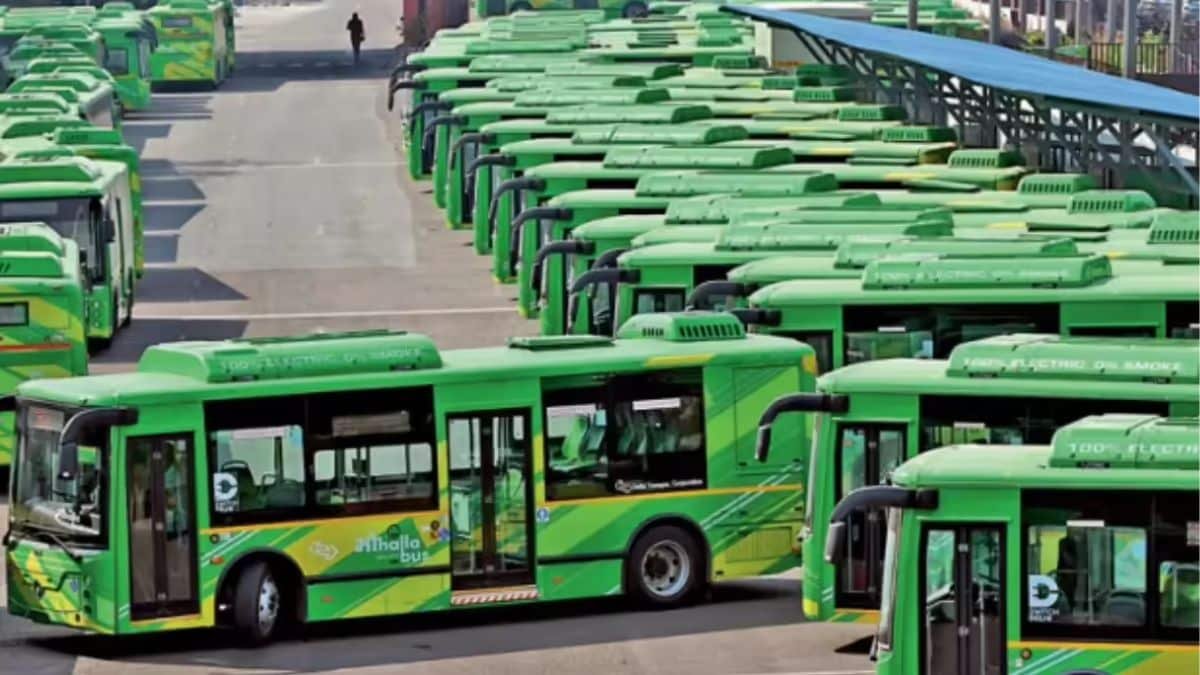

Delhi Bus Ridership Decline has become a key concern as new data shows a sharp fall in passenger numbers despite a significant increase in the number of buses. The latest Economic Survey points to a situation where more buses are available, yet fewer people are choosing to use them.
This trend raises important questions about how public transport is evolving in one of India’s busiest cities.
Delhi’s bus ridership has dropped by nearly 20 percent compared to pre-pandemic levels. Daily passenger numbers have fallen from around 51 lakh to approximately 40.8 lakh, highlighting a clear shift in commuter behaviour.
What makes this decline notable is that it comes despite a major expansion of the bus fleet. The city has added a large number of buses, including electric buses, as part of its push toward cleaner and more sustainable transport.
🚀 Join Our Tech Community!
Get the latest news, updates, and tech trends delivered straight to your phone. Never miss an update!
However, increased fleet size has not translated into higher ridership. This suggests that factors beyond availability are influencing commuter choices.
One major reason could be the growing preference for personal vehicles. With rising incomes and easier access to two-wheelers and cars, many commuters are opting for private transport over buses.
Ride-hailing services and app-based mobility options have also gained popularity, offering convenience and flexibility that traditional bus services may struggle to match.
Service-related challenges could be another factor. Issues such as delays, route inefficiencies, and inconsistent service quality can discourage passengers from relying on buses for daily travel.
The expansion of Delhi’s metro network has also played a role. Metro services often provide faster and more predictable travel times, leading many commuters to shift away from buses.
Even though initiatives like free bus travel for women were introduced to boost ridership, the overall decline indicates that deeper structural issues remain.
The drop in bus usage is significant because buses are one of the most affordable and widely accessible forms of public transport. Lower ridership can affect operational efficiency and long-term sustainability.
To reverse this trend, improvements in service quality, better route planning, enhanced last-mile connectivity, and a more reliable commuter experience will be essential.