
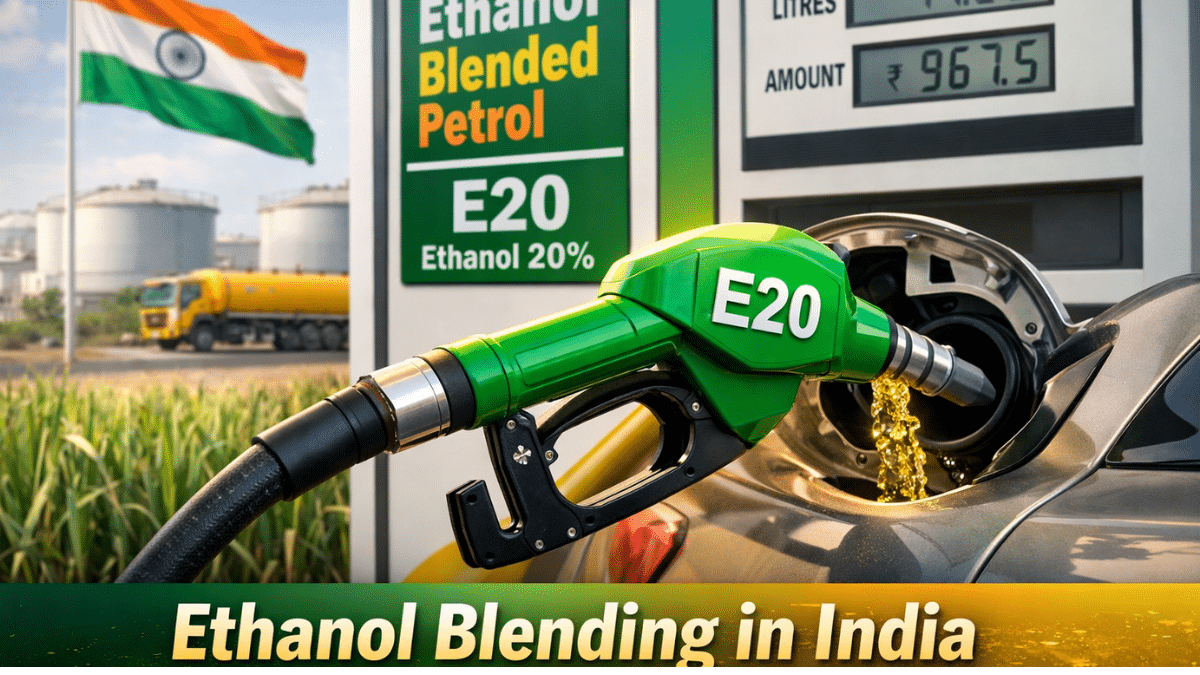

India is increasingly relying on ethanol blending as a strategic approach to deal with rising global oil prices and reduce dependence on imported crude oil. With global energy markets often affected by geopolitical tensions and supply disruptions, the use of biofuels such as ethanol has become an important part of the country’s long-term energy strategy.
Ethanol blending involves mixing ethanol, a biofuel produced from agricultural sources, with petrol. By replacing a portion of conventional petrol with domestically produced ethanol, India aims to lower its reliance on imported fossil fuels while promoting cleaner energy alternatives.
India currently imports a large portion of its crude oil requirements, making the country vulnerable to global price fluctuations. When international oil prices increase, the impact is often reflected in higher fuel costs and increased pressure on the national economy. Expanding the use of ethanol in fuel helps reduce the amount of crude oil that needs to be imported.
Over the past decade, India’s ethanol blending programme has expanded significantly. The share of ethanol blended with petrol has grown rapidly, moving from very low levels a few years ago to nearly 20 percent today. The government has set a target of achieving E20 fuel, which means petrol containing 20 percent ethanol.
🚀 Join Our Tech Community!
Get the latest news, updates, and tech trends delivered straight to your phone. Never miss an update!
Higher blending levels are also being explored for the future as the country strengthens its biofuel ecosystem. Increasing the proportion of ethanol in petrol not only helps reduce oil imports but also contributes to lowering certain types of vehicle emissions.
To support this programme, India has expanded its ethanol production capacity across multiple feedstocks. Ethanol is now produced using a variety of agricultural sources such as sugarcane, molasses, maize and surplus food grains. Diversifying raw materials helps ensure stable supply and reduces dependence on a single crop.
The ethanol blending initiative also provides economic benefits to farmers and rural communities. Agricultural producers gain an additional source of income by supplying crops used for ethanol production. This helps improve rural economic stability and supports the country’s agricultural sector.
The automotive industry is also adapting to higher ethanol blends. Vehicle manufacturers in India have been developing engines that can operate efficiently on E20 fuel. Some companies are also exploring flex-fuel engine technologies that can run on even higher ethanol blends.
Despite the progress, the programme faces certain challenges. Infrastructure for ethanol storage, transportation and blending still needs further development. Ensuring a consistent supply of ethanol across different regions of the country remains an important priority.
Another challenge is improving the utilization of existing ethanol production capacity. Although installed capacity has increased significantly, actual production levels need to rise further to meet future blending targets.
Even with these challenges, ethanol blending is expected to remain a central element of India’s energy policy. By expanding the use of domestically produced biofuels, the country can reduce exposure to global oil price shocks while promoting cleaner transportation fuels.
In the long term, ethanol blending could play an important role in building a more sustainable and resilient energy system. As India continues to invest in biofuel production and infrastructure, ethanol is likely to become an increasingly important component of the nation’s transportation fuel mix.