
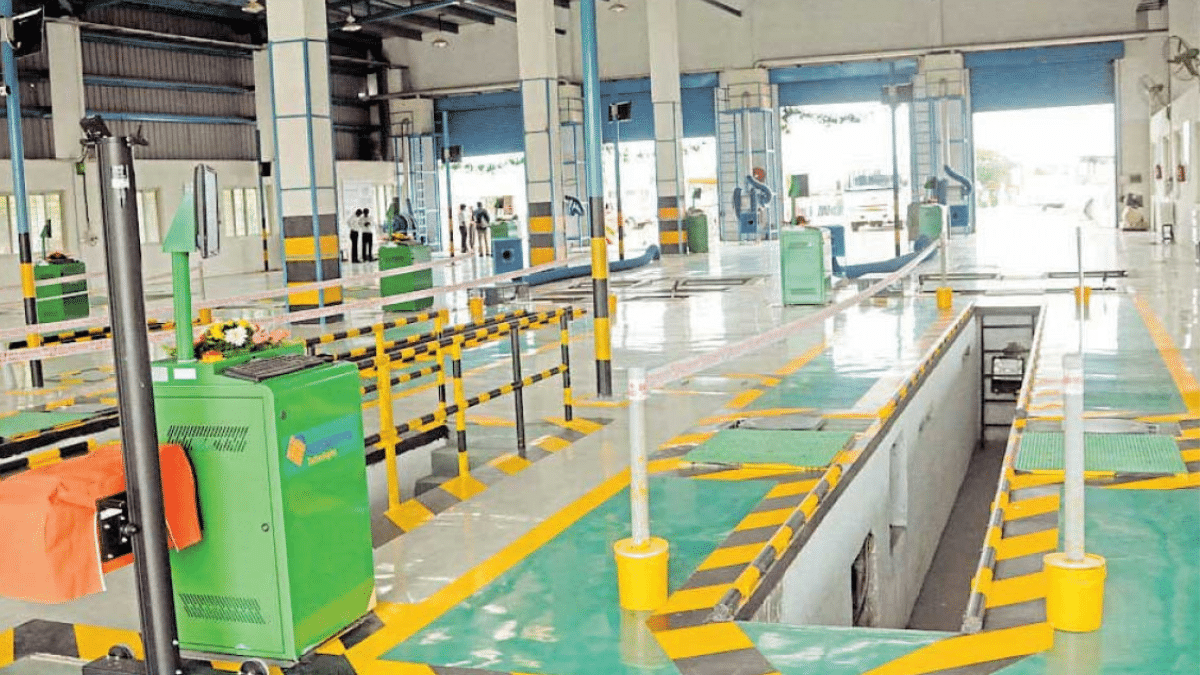

Fitness testing for commercial vehicles has been halted in some regions after Regional Transport Offices (RTOs) were forced to suspend the process due to the unavailability of Automated Testing Stations (ATS). The situation has created difficulties for transport operators who require valid fitness certificates to keep their vehicles on the road.
The issue has emerged because new regulations require commercial vehicle fitness tests to be conducted only at Automated Testing Stations. Since many districts do not yet have these facilities in place, RTO authorities have been unable to carry out inspections.
Previously, vehicle inspections were conducted through manual testing facilities managed by transport departments. However, after the introduction of the new system, manual testing has been restricted in several locations, leaving many vehicles waiting for certification.
In some regions, hundreds of commercial vehicles were inspected daily before the testing process was stopped. With the new rules in effect and limited ATS facilities available, a large number of vehicles are now waiting for fitness certificates.
🚀 Join Our Tech Community!
Get the latest news, updates, and tech trends delivered straight to your phone. Never miss an update!
The backlog has created operational challenges for truck owners and transport companies. Commercial vehicles must have a valid fitness certificate to operate legally on public roads. Without this certification, vehicles risk penalties during enforcement checks.
Transport operators have expressed concern about the delay in inspections. Many vehicle owners depend on their trucks and buses for daily operations, and the inability to obtain timely certification can lead to financial losses.
Automated Testing Stations are designed to modernize the vehicle inspection process. These facilities use specialized equipment to evaluate various aspects of a vehicle’s condition. The automated systems check parameters such as braking efficiency, suspension performance, emission levels and structural safety.
The introduction of ATS facilities is intended to improve transparency and accuracy in vehicle inspections. Automated systems reduce the chances of human error and ensure that vehicles meet safety and environmental standards before receiving a fitness certificate.
However, the transition to automated testing has highlighted infrastructure gaps in several areas. In many regions, ATS facilities are still under development or awaiting approval, which has delayed the implementation of the new inspection system.
Transport officials have reportedly requested temporary permission to resume manual testing until more Automated Testing Stations become operational. This would help clear the backlog of vehicles waiting for certification and allow transport operations to continue smoothly.
Authorities are also working on establishing additional ATS facilities to expand testing capacity. Once more centres become operational, the automated testing system is expected to function more efficiently.
The situation highlights the challenges that can arise when regulatory changes are introduced before the required infrastructure is fully in place. While the automated testing system is expected to improve vehicle safety in the long term, the immediate shortage of testing facilities has disrupted the fitness certification process for commercial vehicles.
In the coming months, the development of new Automated Testing Stations will be critical to restoring the inspection process and ensuring that commercial vehicles can obtain their fitness certificates without long delays.