


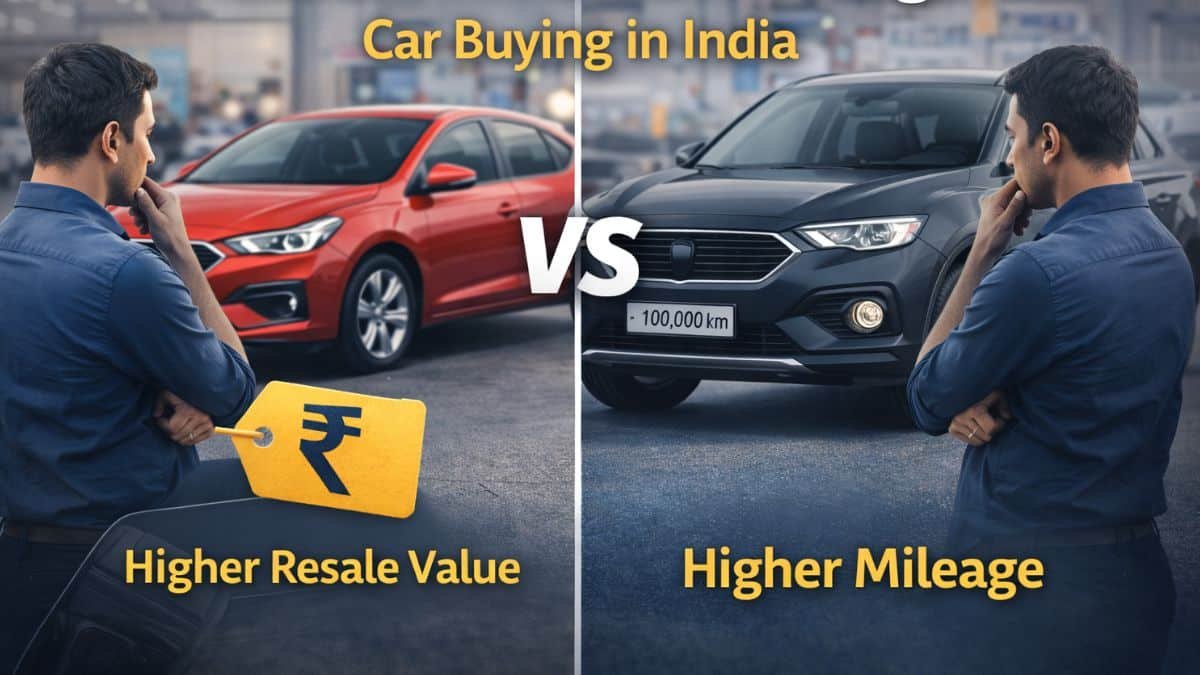
For decades, mileage was the first question Indian car buyers asked. How much does it give per litre often mattered more than features, safety, or long-term value. But in 2026, that mindset is changing quietly but decisively.
With fuel efficiency gaps narrowing across segments and ownership costs becoming more complex, resale value is emerging as a more powerful decision factor than mileage for many buyers. The money recovered at the time of selling the car is now influencing purchase decisions almost as much as the cost of running it.
This shift is reshaping how Indian buyers evaluate cars.
Mileage No Longer Tells the Full Cost Story
Modern cars are more efficient than ever.
🚀 Join Our Tech Community!
Get the latest news, updates, and tech trends delivered straight to your phone. Never miss an update!
Whether petrol, diesel, hybrid, or electric, most mainstream vehicles today deliver acceptable fuel economy for daily use. The difference between a “good” and “average” mileage figure often translates into relatively small monthly savings.
At the same time, ownership costs have expanded beyond fuel to include:
- Insurance
- Maintenance
- Compliance-related expenses
- Depreciation
As a result, mileage alone no longer defines affordability.
The Rising Importance of Exit Value
Resale value determines how much of the original investment a buyer recovers.
In 2026, many buyers are factoring in:
- How quickly a car will depreciate
- Demand in the used-car market
- Ease of resale after 4–6 years
A car with slightly lower mileage but strong resale demand can end up costing less overall than a highly efficient model with weak resale appeal.
Used-Car Market Has Become More Influential
The Indian used-car market has grown more organised and transparent.
Buyers today have access to:
- Online pricing benchmarks
- Wider choice across cities
- Better awareness of long-term ownership costs
This has shifted power toward vehicles that:
- Are easy to resell
- Have predictable ownership histories
- Are trusted for long-term durability
Mileage still matters, but resale confidence matters more.
Changing Powertrain Preferences
Resale value is also being shaped by changing powertrain perceptions.
Diesel cars, once resale champions, now face:
- Reduced availability
- Changing policy sentiment
- Higher maintenance concerns
Petrol cars continue to offer stable resale in most markets, while EV resale value is increasingly linked to battery health rather than running cost alone.
Buyers are starting to think ahead, asking not just how cheap a car is to run, but how easy it will be to sell.
Ownership Duration Is Getting Shorter
Another key factor is how long buyers keep their cars.
Urban buyers are:
- Upgrading more frequently
- Switching segments faster
- Responding to new tech and safety updates
With ownership cycles shortening, resale value has a bigger impact on total cost of ownership than small differences in mileage.
Insurance and Repair Costs Add Pressure
Higher insurance premiums and repair costs are also influencing resale trends.
Cars with:
- Expensive body panels
- Complex electronics
- Costly spare parts
tend to lose value faster, even if they are fuel efficient. Buyers are becoming more cautious about long-term repair exposure, which directly affects resale demand.
EVs Are Redefining Value Calculation
Electric vehicles are changing how value is measured.
EV buyers are:
- Less concerned about fuel savings alone
- More focused on battery warranty and condition
- Thinking about resale in terms of remaining usable life
This has accelerated the shift away from mileage as the dominant metric of value.
What Buyers Are Doing Differently in 2026
Instead of asking only about mileage, buyers are now asking:
- How easy will this car be to sell later?
- Will this model still be in demand after a few years?
- Are spare parts affordable and available?
These questions directly shape purchase decisions and are slowly redefining “value for money” in the Indian market.
The New Reality of Smart Buying
In 2026, the smartest buyers are those who think beyond daily fuel costs.
Mileage still matters, but resale value often decides whether a car is truly economical over its life. The car that returns more money at exit can outweigh small savings made at the fuel pump.
That’s why resale value is no longer an afterthought—it’s a primary decision factor.