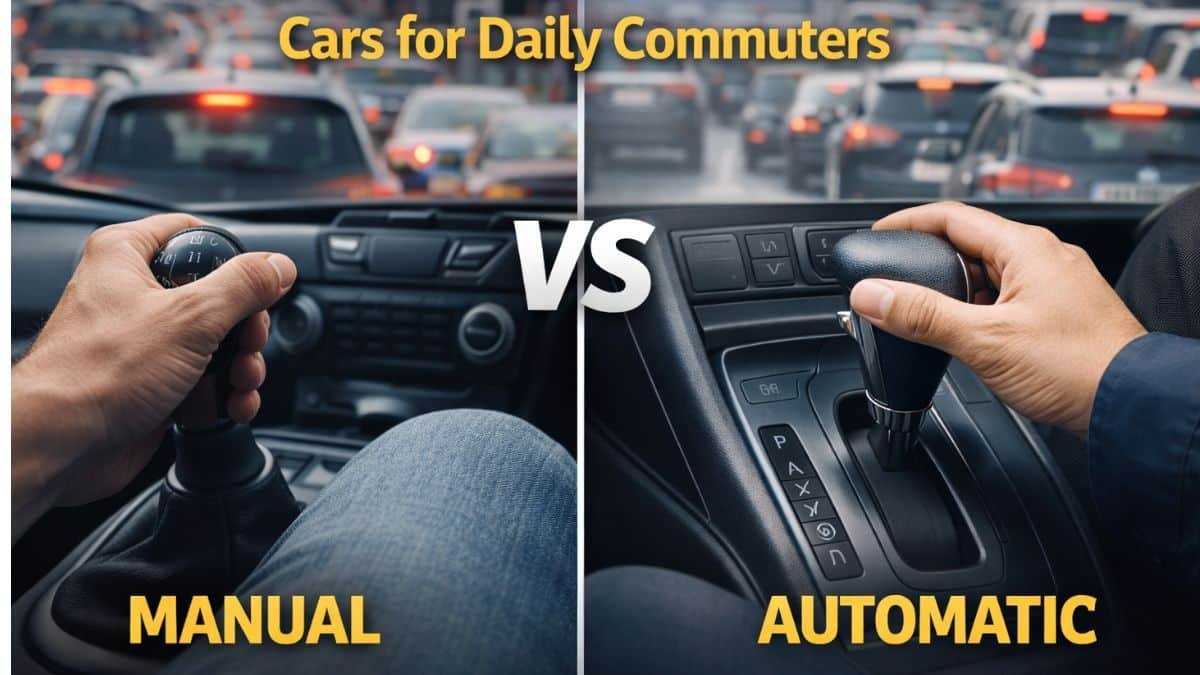

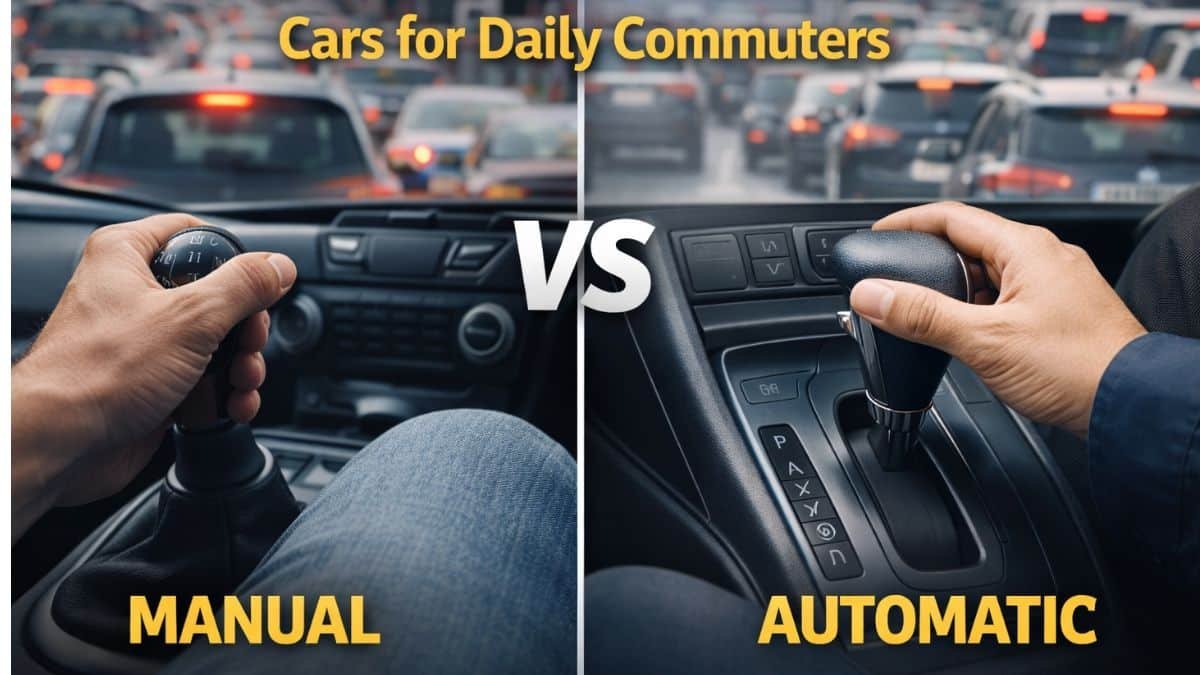
Daily commuting in India has changed dramatically over the past few years. Traffic density is higher, average speeds are lower, and commute times are stretching even for short distances. In this reality, the long-running debate between manual and automatic cars is no longer about driving pleasure alone—it’s about fatigue, costs, reliability, and long-term convenience.
In 2026, automatic cars are no longer a niche choice, but manuals haven’t disappeared either. For daily commuters, the decision now depends less on personal preference and more on how, where, and how often the car is driven.
Here’s how the choice really plays out for Indian commuters today.
How Indian Commutes Have Changed
Urban commuting is no longer predictable. Even a 10–15 km daily drive can involve:
🚀 Join Our Tech Community!
Get the latest news, updates, and tech trends delivered straight to your phone. Never miss an update!
- Frequent stop-and-go traffic
- Long idle times at signals
- Congested flyovers and service roads
In such conditions, constant clutch use has become one of the biggest sources of driving fatigue. This single factor has quietly pushed many buyers toward automatic cars, even in budget segments where manuals once dominated.
Traffic Fatigue: The Biggest Differentiator
For daily commuters, physical effort matters.
Manual cars require:
- Continuous clutch engagement
- Frequent gear changes
- Higher mental load in traffic
Automatic cars reduce this effort significantly by eliminating clutch work entirely. Over months and years, this translates into:
- Less leg strain
- Reduced driving stress
- Better comfort during long traffic jams
For buyers who spend more than an hour a day behind the wheel, this difference becomes hard to ignore.
Fuel Efficiency: The Gap Has Narrowed
One of the strongest arguments in favour of manuals used to be mileage. That gap is now much smaller.
Modern automatic gearboxes have improved significantly, especially in city conditions. While manuals may still deliver slightly better efficiency on paper, real-world commuting often tells a different story.
In heavy traffic:
- Manual drivers struggle to maintain optimal gear usage
- Automatics operate more consistently
- Mileage differences shrink in slow-moving conditions
For daily commuters stuck in traffic, the fuel cost penalty of automatics is often lower than expected.
Maintenance and Long-Term Reliability
This is where many buyers hesitate.
Manual cars are:
- Mechanically simpler
- Cheaper to repair
- Easier to maintain over long ownership periods
Automatic cars involve:
- More complex gearboxes
- Higher repair costs if something goes wrong
- Greater dependence on authorised service centres
However, for commuters who drive mostly in cities, clutch wear in manual cars is becoming a real cost factor. Frequent clutch replacements over years can partially offset the lower maintenance advantage of manuals.
Learning Curve and Ease of Use
For first-time drivers or those upgrading after many years, ease of driving matters.
Automatic cars:
- Are easier to learn
- Reduce stalling anxiety
- Allow drivers to focus more on traffic than gear changes
Manual cars still offer better control on highways and hilly terrain, but for routine office commutes, the simplicity of automatics often wins.
Cost Difference at the Time of Purchase
Price remains a deciding factor for many Indian buyers.
Manual variants:
- Are cheaper upfront
- Offer better value at lower budgets
Automatic variants:
- Command a noticeable premium
- Push some cars into higher tax or insurance brackets
For buyers on a strict budget, manuals still make sense. But for those who can stretch slightly, the daily comfort of an automatic often justifies the extra cost over time.
Resale Value and Market Preference
The used-car market is slowly shifting.
Automatic cars are seeing:
- Rising demand in urban areas
- Faster resale in metro cities
- Better acceptance among new buyers
Manuals still dominate in smaller towns and rural markets, but for city-based commuters, automatics are no longer seen as risky resale bets.
So, What Should Daily Commuters Choose in 2026?
Manual cars make sense if:
- Your commute is relatively traffic-free
- You drive less daily
- Budget is the top priority
- You prefer long-term mechanical simplicity
Automatic cars make more sense if:
- You face heavy traffic daily
- Comfort and ease matter more than minor fuel savings
- You plan to keep the car for city use
- Driving fatigue is a concern
For many Indian commuters in 2026, the question is no longer “Is an automatic worth it?” but “Why struggle daily if you don’t have to?”