


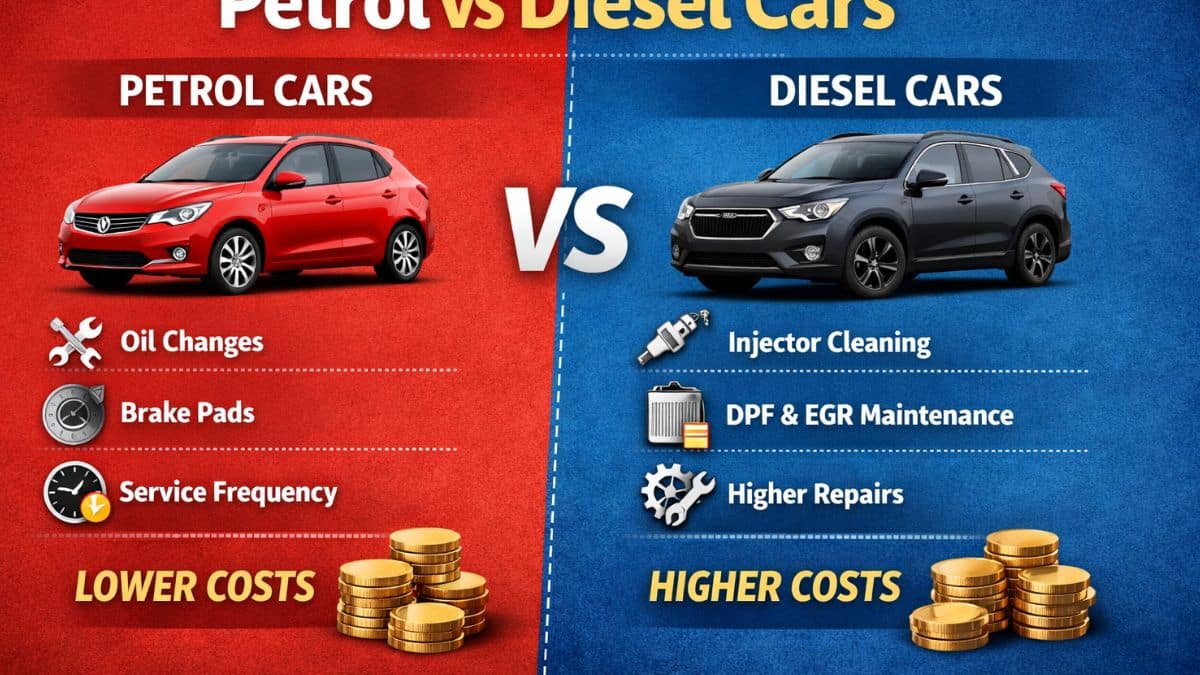
For years, Indian car buyers were told one simple rule: buy diesel if you drive more, petrol if you don’t. But in 2026, that advice is no longer as straightforward. With stricter emission norms, rising service costs, and shrinking diesel options under ₹12 lakh, many buyers are unsure which engine type actually makes financial sense over long-term ownership.
The purchase price gap between petrol and diesel cars has narrowed, but what happens after the showroom delivery is where the real difference shows up. Maintenance, service frequency, parts replacement, and compliance-related expenses quietly decide which option costs more over five years.
This is what ownership really looks like today.
Why Maintenance Costs Matter More Than Mileage Now
Mileage figures are easy to compare. Maintenance costs are not.
🚀 Join Our Tech Community!
Get the latest news, updates, and tech trends delivered straight to your phone. Never miss an update!
Most buyers focus on fuel efficiency because it’s visible and measurable every week. Maintenance expenses, on the other hand, appear slowly—during annual services, unexpected repairs, or major component replacements after a few years. By the time owners realise the difference, the money is already spent.
With modern petrol engines becoming more complex and diesel engines getting cleaner but costlier, the old assumptions don’t always hold true.
Scheduled Service Costs Over 5 Years
For cars priced under ₹12 lakh, scheduled service costs form the base of ownership expenses.
Petrol cars typically require:
- Lower service bills per visit
- Simpler engine layouts
- Fewer emission-related components
Diesel cars usually involve:
- Higher labour charges
- More expensive engine oil
- Additional emission system checks
Over five years, a typical petrol hatchback or compact SUV may cost noticeably less in routine servicing compared to its diesel counterpart, even if service intervals are similar.
Engine and Component Wear in Real Indian Driving
Indian driving conditions play a major role in long-term maintenance.
Petrol engines generally handle:
- Short trips
- Stop-and-go city traffic
- Low daily running
Diesel engines are designed for:
- Longer drives
- Consistent operating temperatures
- Highway-heavy usage
When diesel cars are used mainly for city commutes, certain components experience faster wear. This leads to higher long-term costs that many buyers don’t anticipate at purchase time.
Emission Systems and Their Cost Impact
This is where the cost gap has widened the most.
Modern diesel cars use complex emission control systems to meet current norms. These systems are effective but expensive to maintain and repair, especially when usage patterns are not ideal.
Petrol cars also have emission equipment, but the overall system is simpler and cheaper to service. Over five years, emission-related maintenance can quietly tilt ownership costs in favour of petrol for low-to-medium mileage users.
Clutch, Gearbox, and Driving Style Costs
Driving style affects both fuel and maintenance expenses.
Diesel cars often produce higher torque, which can put more stress on clutches if driven aggressively in traffic. Replacement costs tend to be higher due to heavier-duty components.
Petrol cars usually feel lighter and smoother in city conditions, resulting in:
- Less clutch wear for urban drivers
- Lower gearbox-related service costs
Over time, these differences add up, especially for daily commuters.
Spare Parts and Availability
Parts pricing is another overlooked factor.
Petrol car parts are:
- Generally cheaper
- Easier to source
- More widely stocked across service centres
Diesel-specific components often:
- Cost more
- Have longer waiting periods
- Vary more in price depending on brand and region
For owners in smaller cities or towns, this can translate into longer downtime and higher repair bills.
5-Year Cost Reality: Who Should Choose What
For buyers driving:
- Less than moderate daily distances
- Mostly within city limits
- With occasional highway trips
Petrol cars tend to offer:
- Lower maintenance stress
- Predictable service costs
- Better peace of mind
Diesel still makes sense for:
- High monthly running
- Regular highway usage
- Buyers planning long-term ownership beyond five years
But under ₹12 lakh, the margin is thinner than ever.
The Decision Buyers Should Actually Make
Instead of asking which engine is better, buyers should ask how they will use the car.
A petrol car with slightly lower mileage but cheaper upkeep may cost less overall than a diesel that promises efficiency but demands higher maintenance discipline.
In 2026, maintenance reality matters as much as fuel economy—sometimes more