
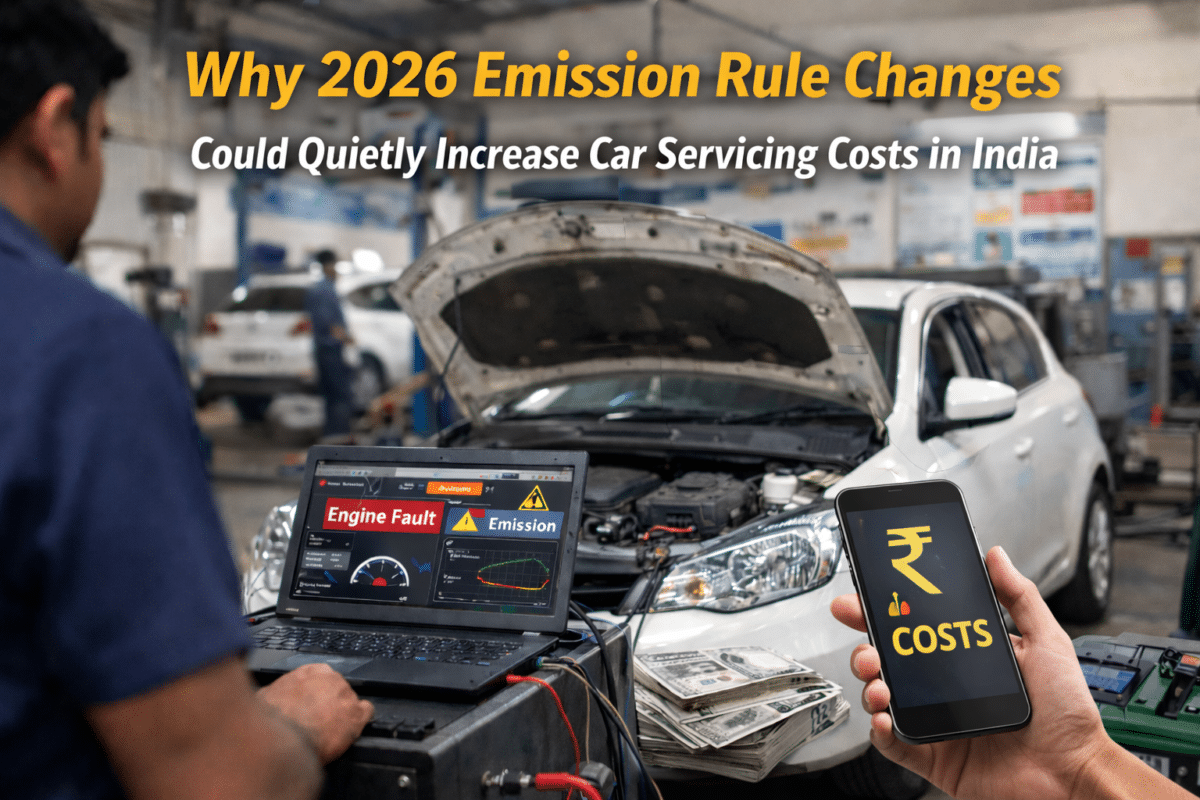
Emission regulations are usually discussed in the context of new car prices or upcoming launches. What often gets overlooked is how these rules gradually change the cost and complexity of owning and servicing a car after purchase.
The emission-related updates expected around 2026 are not sudden or dramatic for buyers. Instead, they introduce technical shifts that slowly influence servicing routines, diagnostic requirements, and long-term maintenance costs for petrol and diesel vehicles.
Emission Rules Affect Ownership Beyond the Showroom
Modern emission standards do more than control tailpipe output. They require vehicles to constantly monitor how cleanly they operate in real-world conditions.
This leads to:
🚀 Join Our Tech Community!
Get the latest news, updates, and tech trends delivered straight to your phone. Never miss an update!
- More sensors tracking emissions performance
- Stricter fault detection systems
- Higher dependence on electronic diagnostics
While manufacturers design cars to meet these rules, the responsibility of maintaining compliance over time rests with owners.
What Is Changing Around 2026
The next phase of emission tightening focuses on real-world usage rather than laboratory testing.
Key changes include:
- More sensitive onboard diagnostics
- Tighter thresholds for emission-related warnings
- Increased monitoring of exhaust and engine behaviour
These updates are intended to reduce pollution over a vehicle’s full life cycle, not just at the time of sale.
How Servicing Costs Can Increase Quietly
Servicing costs may rise gradually rather than suddenly.
Owners may notice:
- More frequent diagnostic scans during routine service
- Longer service visits due to troubleshooting
- Higher labour costs for sensor-related work
- Increased replacement of emission-linked components
Individually, these costs may appear small, but over several years they can noticeably increase total ownership expense.
Impact on Petrol Car Owners
Petrol cars remain the most common choice for city buyers, but newer emission systems demand greater maintenance discipline.
For owners, this means:
- Skipping services becomes more expensive than before
- Low-quality fuel can trigger warning systems more easily
- Independent workshops may require updated equipment
This is especially relevant for low-usage city owners who expect minimal maintenance involvement over time.
Diesel Owners May Feel the Effect Earlier
Diesel engines operate closer to emission limits, particularly in stop-and-go urban traffic.
As a result:
- Emission-related components experience more stress
- Regeneration cycles become more frequent
- Warning lights and forced service visits increase
For long-term diesel owners, maintenance planning becomes more important after the mid-life of the vehicle.
Existing Cars Will Not Be Penalised
It is important to clarify that:
- Older vehicles will not be banned due to new rules
- Registration validity remains unchanged
- Insurance and resale processes continue normally
However, workshops may increasingly follow newer diagnostic standards, which can raise servicing effort even for older cars.
Comparison With EV Ownership Complexity
While EVs avoid exhaust-related maintenance, they are not free from regulatory influence. Battery health monitoring, safety checks, and future recycling norms introduce their own ownership considerations.
In this sense, emission-driven servicing complexity for conventional cars mirrors how EV buyers must plan for long-term battery-related costs and diagnostics.
Who Should Pay Closest Attention
Emission-linked servicing cost increases matter most if:
- You plan to keep the car beyond seven or eight years
- You drive mainly in dense city traffic
- You rely heavily on non-authorised workshops
- You delay or skip routine maintenance
Short-term owners are less affected, but long-term keepers should budget realistically.
Final Perspective for Car Buyers
Emission rule changes are not a reason to rush or delay purchases. They are a reminder that modern cars require more structured ownership than older-generation vehicles.
Understanding how servicing costs evolve allows buyers to:
- Choose ownership duration wisely
- Maintain vehicles proactively
- Avoid unexpected expenses later
Regulations may be set at a policy level, but their impact depends on how long and how carefully a car is owned.