
Chinese electric vehicle manufacturer BYD is exploring the possibility of local assembly in India as it looks to address supply constraints and strengthen its presence in the country’s growing EV market. The move is aimed at overcoming import restrictions and high duties that currently limit volumes, despite rising demand for BYD’s electric models.
According to industry-level information, BYD is evaluating semi-knocked-down or similar assembly routes rather than full-scale manufacturing at this stage. The company is also working on regulatory approvals and safety certifications for additional models intended for the Indian market. At present, these plans are still under consideration and have not been formally announced.
The push for local assembly comes at a time when India restricts imports of fully built electric vehicles through quota limits and high customs duties. Under current norms, each imported EV model is subject to a fixed annual cap, and fully built units attract duties that can go beyond 100 percent. These factors have become a bottleneck for brands relying primarily on imports.
Despite these constraints, BYD’s sales in India have grown sharply over the past year. The company has seen strong interest in its electric SUV and sedan lineup, with dealers reporting healthy bookings. This demand growth has made supply limitations more visible, prompting the company to reassess its India strategy.
🚀 Join Our Tech Community!
Get the latest news, updates, and tech trends delivered straight to your phone. Never miss an update!
Local assembly could significantly reduce the cost burden. Vehicles assembled from imported kits typically attract much lower duties compared to completely built units. For BYD, this could translate into better pricing flexibility and improved availability, without immediately committing to a full manufacturing facility.
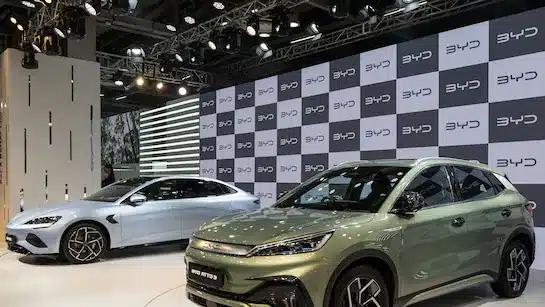
BYD’s current India portfolio spans multiple body styles, including electric SUVs, a sedan, and an MPV. Some of these models have already received special approvals that allow limited imports beyond standard thresholds. Even so, the company’s ability to scale sales remains tied to regulatory limits and cost structures.
Earlier, BYD had explored the possibility of setting up a manufacturing plant in India, but those plans did not move forward due to regulatory and investment scrutiny. Local assembly is now being seen as a more practical interim solution, allowing the company to increase volumes while staying within policy frameworks.
The development also reflects broader changes in India’s EV landscape. As demand grows beyond early adopters, global manufacturers are being pushed to localise operations to remain competitive. Import-heavy strategies are becoming harder to sustain, particularly in price-sensitive segments.
For Indian consumers, any move toward local assembly could eventually mean improved availability and more stable pricing in the premium EV category. While BYD currently operates in higher price bands, cost reductions from assembly could help the brand strengthen its position against existing and upcoming rivals.
For the wider industry, BYD’s evaluation signals that India remains a priority market for global EV players, even amid regulatory complexity. How companies balance localisation, compliance, and cost control will play a key role in shaping the next phase of India’s electric mobility transition.
At this stage, BYD has not confirmed timelines or locations for any assembly operations. Any further clarity is expected only after regulatory processes and internal evaluations are completed.