
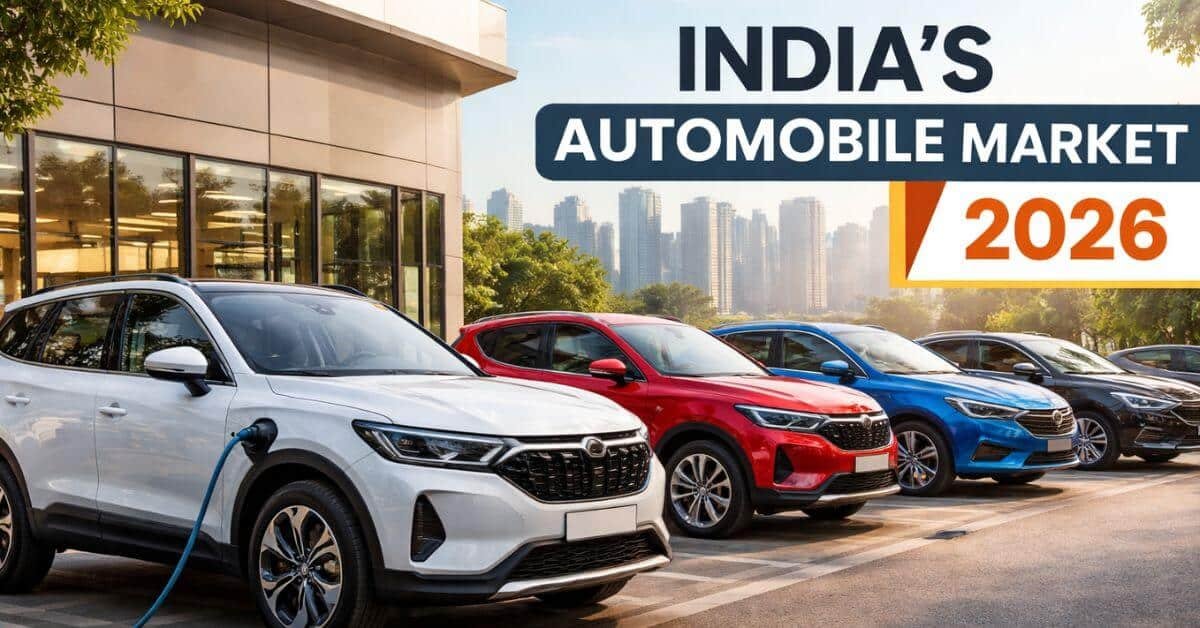

India’s automobile industry is currently one of the most dynamic sectors in the economy, with strong consumer demand, shifting buyer preferences, and major strategic moves reshaping how vehicles are sold and used across the country.
One of the most notable developments is a solid recovery in retail auto sales. Retail sales in December 2025 jumped about 15% year-on-year as tax incentives and festive offers encouraged buyers to make purchases before potential price adjustments in 2026. Passenger vehicles saw a particularly strong rise, with car sales up nearly 27% over the same period. This surge signals sustained demand momentum heading into the new year.
An important trend within this growth is the rising contribution from rural buyers rural passenger vehicle purchases have been growing faster than in urban centres. This shift highlights how improved affordability and rising aspirations in smaller towns are expanding India’s car market beyond traditional urban strongholds.
Electric vehicle adoption is another major trend shaping India’s automotive landscape in 2026. EV wholesales in 2025 showed strong gains, with both electric two-wheelers and passenger EVs experiencing significant year-on-year growth. This broader acceptance suggests that electric cars are moving beyond niche early adopters toward more mainstream consideration among Indian consumers.
🚀 Join Our Tech Community!
Get the latest news, updates, and tech trends delivered straight to your phone. Never miss an update!
Alongside overall market growth, premium and luxury brands are also recalibrating their India strategies. BMW, for example, has announced plans to launch around 10 new models spanning traditional combustion vehicles, EVs, and vehicles under its MINI brand. Increasing local parts sourcing is expected to reduce costs and strengthen the automaker’s competitiveness in India.
Despite promising sales and product strategies, some challenges persist especially in the supply chain. India’s automobile industry remains strategically dependent on imported rare-earth materials like neodymium magnets used in EV motors. This dependence on external suppliers, particularly from China, could affect production costs and long-term supply security unless domestic alternatives are developed.
For prospective buyers, this evolving landscape matters in several ways. A growing range of vehicles from affordable petrol and diesel cars to EVs and premium models means more choice than ever. Rising rural demand could also influence resale values and service networks, while the stronger emphasis on electrification broadens the options for environmentally conscious buyers.