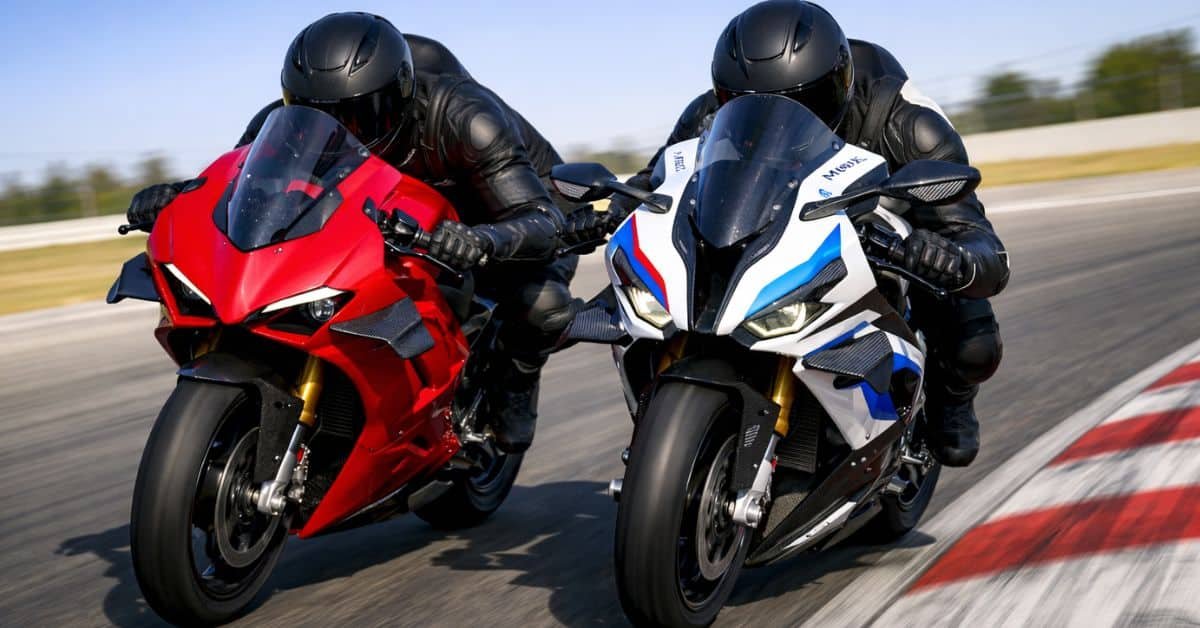

The global superbike segment continues to be dominated by homologation specials, and few motorcycles represent this philosophy better than the Ducati Panigale V4 R and the BMW M 1000 RR. Built to meet WorldSBK regulations, both machines sit at the very top of their respective line-ups, offering race-derived engineering with limited compromises for the road.
While they target the same performance-focused audience, the two bikes take noticeably different approaches in execution and ownership appeal.
Engine Philosophy Sets Them Apart
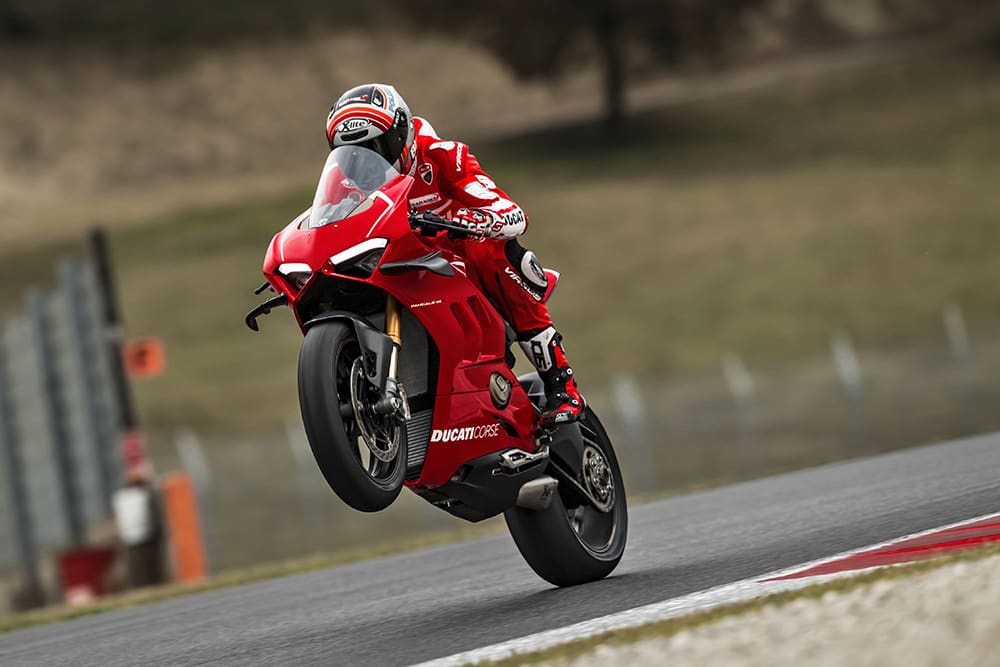
At the heart of the Ducati Panigale V4 R is a 998 cc V4 engine designed specifically to comply with racing displacement rules. The motor is tuned for extremely high revs, delivering peak performance near the redline and offering a riding experience that closely mirrors Ducati’s factory race bikes. The character is aggressive, demanding, and unmistakably track-focused.
In contrast, the BMW M 1000 RR uses a 999 cc inline-four engine derived from the standard S 1000 RR but heavily upgraded under BMW’s M division. While peak power figures are slightly lower on paper, the BMW engine is known for its strong mid-range, smoother power delivery, and broader usability across different riding conditions.
🚀 Join Our Tech Community!
Get the latest news, updates, and tech trends delivered straight to your phone. Never miss an update!
Chassis, Aerodynamics and Track Focus
Both motorcycles rely heavily on aerodynamic assistance, with carbon-fibre winglets now a defining feature. Ducati’s aero package is directly inspired by its MotoGP and WorldSBK programmes, prioritising front-end stability during heavy braking and corner exits.
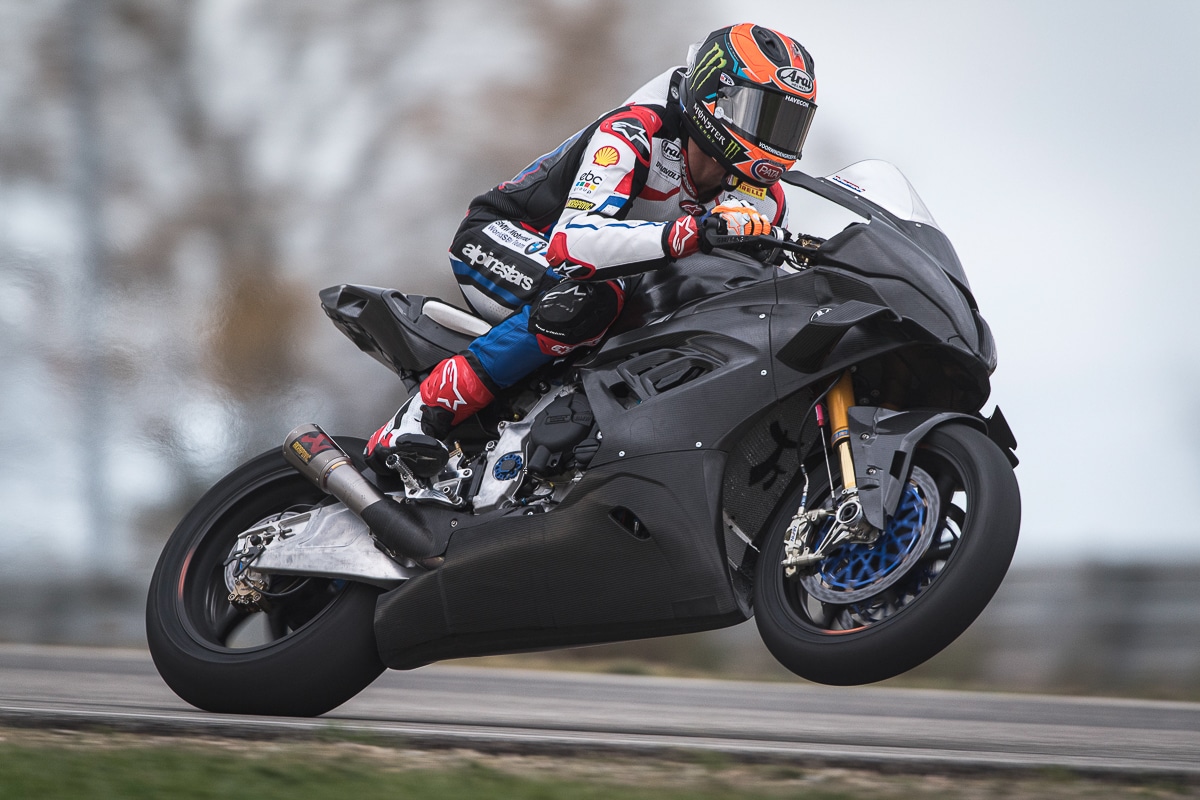
BMW counters this with a comprehensive carbon-fibre package of its own, including wings, wheels, and body components aimed at reducing weight while maintaining stability at high speeds. The M 1000 RR is often described as more forgiving at the limit, particularly for non-professional riders on track days.
Electronics and Rider Control
Electronically, both bikes are packed with advanced rider aids such as traction control, wheelie control, slide control, engine brake management, launch control, and race-focused ABS systems. Ducati’s setup leans heavily toward circuit use, requiring rider familiarity to extract maximum performance.
BMW’s electronics are generally considered more intuitive, with clear feedback and adjustability that suits both track riding and limited road use. This difference plays a key role in how accessible each bike feels to its owner.
Price and Ownership Reality
In markets like India, pricing becomes a significant differentiator. The Ducati Panigale V4 R commands a substantially higher price, reflecting its exclusivity, limited production numbers, and closer alignment with factory racing machinery. Maintenance costs and service intervals also lean toward race-level ownership expectations.
The BMW M 1000 RR, while still expensive, positions itself as a comparatively more attainable homologation superbike. Lower acquisition costs and a wider service network make it a more practical option for riders who intend to combine track use with occasional road riding.
Two Superbikes, Two Philosophies
Ultimately, the comparison highlights a clear philosophical split. The Ducati Panigale V4 R is unapologetically extreme, built for riders who want the closest possible connection to professional racing hardware. The BMW M 1000 RR focuses on precision, balance, and broader usability without sacrificing outright performance.
Both machines represent the pinnacle of modern superbike engineering, but the choice between them depends less on specifications and more on how much race intensity a rider is willing to live with beyond the racetrack.